The Whitlingham Bird Report for 2025 is now available to download from the Bird Reports page or from here

Showing posts with label Weeting Heath. Show all posts

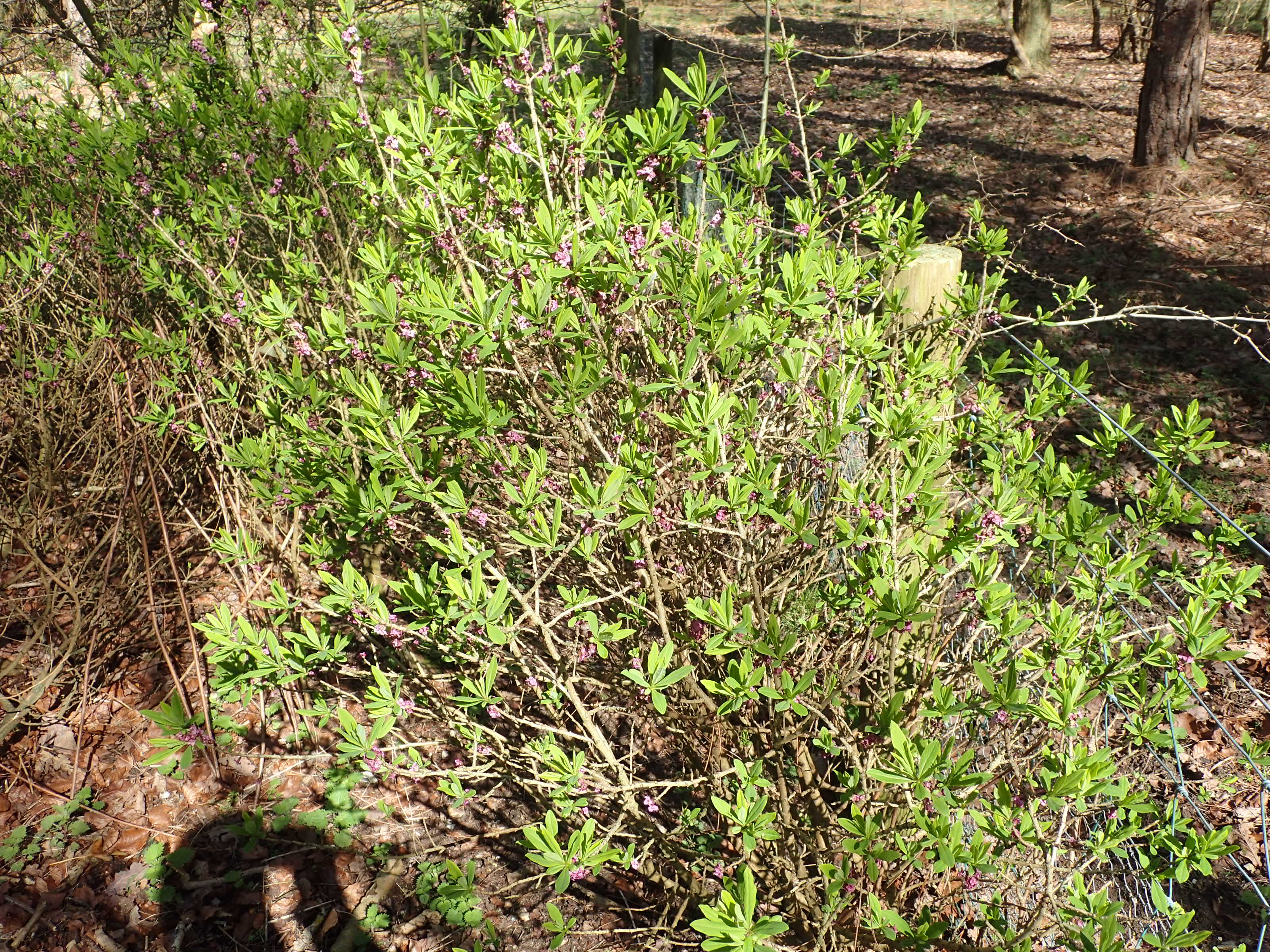
BRECKLAND: Mezereon and a Rookery

2nd April 2023

One of my target species for the spring was to see a pink-flowered plant called Mezereon, so we headed down to the Brecks and Weeting Heath, where thanks to some good directions we found quite a bit of it. The unexpected highlight was the rookery, which is stretched out either side of one of the paths. Rooks are one of our favourite birds (there is a picture of one up in the house!) and it was great to look up and see them wheeling overhead as they swooped down onto their nests. We also found several eggshells on the path, allowing us to get a close up view of an egg you would normally only see if you were in the treetops.


BRECKLAND: Weeting bioblitz

22nd July 2018

A while back Chris Packham announced that he would be doing a series of bioblitzes around the UK. Looking at the detail I was a little bit sceptical - Chris is a very knowledgeable and passionate naturalist, but it seemed to be trying to cram in too much. The marketing information suggested creating a benchmark for each reserve, but with five reserves a day that's not a great amount of data. The tagline 'reserves are not enough', whilst in itself very true, also seemed rather odd considering most of the sites being visited were nature reserves. Scanning down the list the only Norfolk venue was Weeting Heath and was listed as invite-only, so I didn't give it any more thought.

A few weeks later I was invited to help out. It turned out that although Chris and his team would only be present at each site for a few hours, the idea was that local naturalists did the actual recording and then there would be interviews and footage of some of the more interesting finds. I was asked to help record fungi, although as it happened the weather was so dry there wasn't any, so I just recorded as many miscellaneous species as possible.

The warden at Weeting, James, was an excellent host, and briefed the assembled group about the plan for the day, and also left cake and tea making facilities in his dormitory. I opted to stay near the visitors centre whilst the moth trap was emptied in the hope of seeing some Breckland specialties. As it was I didn't see any new macro moths (I was hoping for Tawny Wave or a late Cream-spot Tiger, but Oblique-striped and Mere Wainscot were the main Breckland species). I did however see quite a few new micros as several were retained for checking, and Oak Eggar is always nice to see.


Heading across the road it didn't take long for me to realise that I hadn't brought enough drink, as the heat was scorching. I began by checking the flowerheads, mostly Ragwort and Yarrow, and soon saw a Brassy Longhorn moth (Nemophora metallica) and several Forester moths.


I was also able to take advantage of the numerous experts present to identify some of the things I didn't recognise. Pip Collyer and Helen Smith were looking at an attractive spider, Neoscona adianta, whilst Nick Owens identified a solitary wasp I'd caught as Oxybelus uniglumis. Steve Lane helped with the beetles, with Gastrophysa polygoni, Galeruca tanaceti and Silpha laevigata all seen.


Returning to the visitors centre I caught up with Joe Harkness and Andy Musgrove & family. After re-hydrating I had a quick look around, seeing the Broad-leaved Helleborines and noting the leaf mines of Bucculatrix frangutella on Buckthorn. Chris Packham arrived at around 17:45, and after introducing himself and getting distracted by a dog, he gave a passionate address about the need to act now to protect and enhance our wildlife, which will culminate in a walk for wildlife in London (click here for more details). He also said that some of the sites visited had never had a bioblitz or wide-scale recording before, so for some sites at least they do indeed now have a benchmark for the future. All in all despite the heat it was an enjoyable day, and many thanks go to James and the NWT staff for their organisation.


BRECKLAND: Weeting speedwells and invertebrates

5th April 2018

Breckland has a range of rare plants, but many of them are restricted to a handful of sites, and even when you are in the right place they can be hard to find. I was therefore delighted when the Norfolk Wildlife Trust held a spring flora walk at Weeting Heath, which as far as I know is the only place in Norfolk where Spring Speedwell grows. The area where this plant, along with other scarce speedwells (Fingered Speedwell and Breckland Speedwell) is on arable land just off the reserve boundary but managed by the reserve staff. This area, like most of the reserve, has no general public access. The only slight problem was the recent weather - the late spring meant that only one of the three species was in flower.

Having picked up Ian, Jeremy and Vanna we arrived at Weeting to a sunny but cool morning. James the warden took us across the road and we spent two hours looking at the speedwells, seeing several flowering Fingered Speedwells and leaves of the other two.

 Fingered Speedwell, Veronica triphyllos
 Breckland Speedwell, Veronica praecox
 Spring Speedwell, Veronica verna

I had been hoping for one of the scarcer shieldbugs or Coreid bugs, but did manage a Stiltbug, Neides tipularius, and a sawfly, Dolerus gonager. I also noticed some small spiky weevils that I think must be Otiorhynchus ovatus.


Back in the car park a Brimstone flew past, my first butterfly of the year. James showed us some bark mines that he had found in a young Oak tree. They are the sort of thing that must be going overlooked in the county, looking like faint veins in the bark. There are two possible causers, Ectoedemia atrifrontella and Ectoedemia longicaudella. Both would be new to Norfolk, although the undetermined mines have also been seen at Santon Downham. As we went to get in the car Ian looked down and noticed a Sooty Cup fungus (Helvella leucomelaena) growing beside the car! Thanks to James for running the walk.


BRECKLAND: Weeting Moths

17th June 2017

Saturday was initially the date for a fungus study group foray at Sculthorpe Moor, but this had been rescheduled. There were a range of places I could have gone, but I had settled on a moth and butterfly event at Weeting in the hope of seeing some Breckland specialist moths. Cathy had agreed to come with me, although she perhaps regeretted it when it became evident how hot it was going to be. Two of the main species I hoped to see were Lunar Yellow Underwing and Cream-spot Tiger moth, rare and spectacular respectively.

The event was advertised as 10-12, so I assumed that this would be about an hour going through a moth trap, followed by a short walk to look for butterflies and day-flying moths. This turned out to be a mistake on my part, as when we arrived the moth trap had been checked and the species were neatly laid out on a table, complete with labels. We had a look at them, then were taken out for a two-and-a-half hour walk!


Sadly there was no Cream-spot Tiger, but Lunar Yellow Underwing had been caught. There were several other new species for me as well, including Brown Scallop, Satin Wave, Four-dotted Footman and Plain Wave. Festoon was also new, and slightly ironic as Gary had caught one in Norwich the previous evening and invited me round to see it that afternoon.


The walk started well, I found a new plant bug, Capsus ater, and Cathy found a Dune Chafer, a nice metallic species which depsite the name does occur in some sandy inland areas like the Brecks. A bit further on a couple of birders got a Stone-curlew in their 'scope for us. After that most of the walk could be summarised by the phrases 'very hot' and 'another Meadow Brown'. It was interesting to see an area of the reserve that I'd not walked along before, including a recently reverted field. There were quite a few Small Heath butterflies, Cathy spotted two Grey Partridges and a Brown Plume was a new moth to add to the earlier ones. Once we got to Hockwold Heath we turned round, and despite the heat made it back to the car in good time.


By now rather hungry, we called in at the Brandon Country Park cafe for lunch before heading back to Norwich.