The Whitlingham Bird Report for 2025 is now available to download from the Bird Reports page or from here

Showing posts with label Wells. Show all posts

NORTH NORFOLK: A day out in Wells

Early June 2022

Having barely been to the coast in the past few years, I was back for the second time in a week, this time at Wells. I could probably spend several happy days (at least!) recording wildlife amongst all of the different habitats here, but had to make due with a walk up and down the quayside and the nearest part of the dune system. Still plenty of time for some some interesting finds, including some species new to me. The highlight though was a Broad-bordered Bee Hawk-moth found nectaring on Viper's Bugloss. I've seen one before, but they are such amazing moths.

Attulus saltator - a tiny and well camouflaged jumping spider, found amongst Marram whilst looking unsuccessfully for Marram Pseudoscorpions.
Broad-bordered Bee Hawk Moth
Clanoptilus barnevillei - a rare relative of the Malachite Beetle
Coccidula rufa, an inconspicuous ladybird
Cuneopalpus cyanops, a barkfly found on Pine
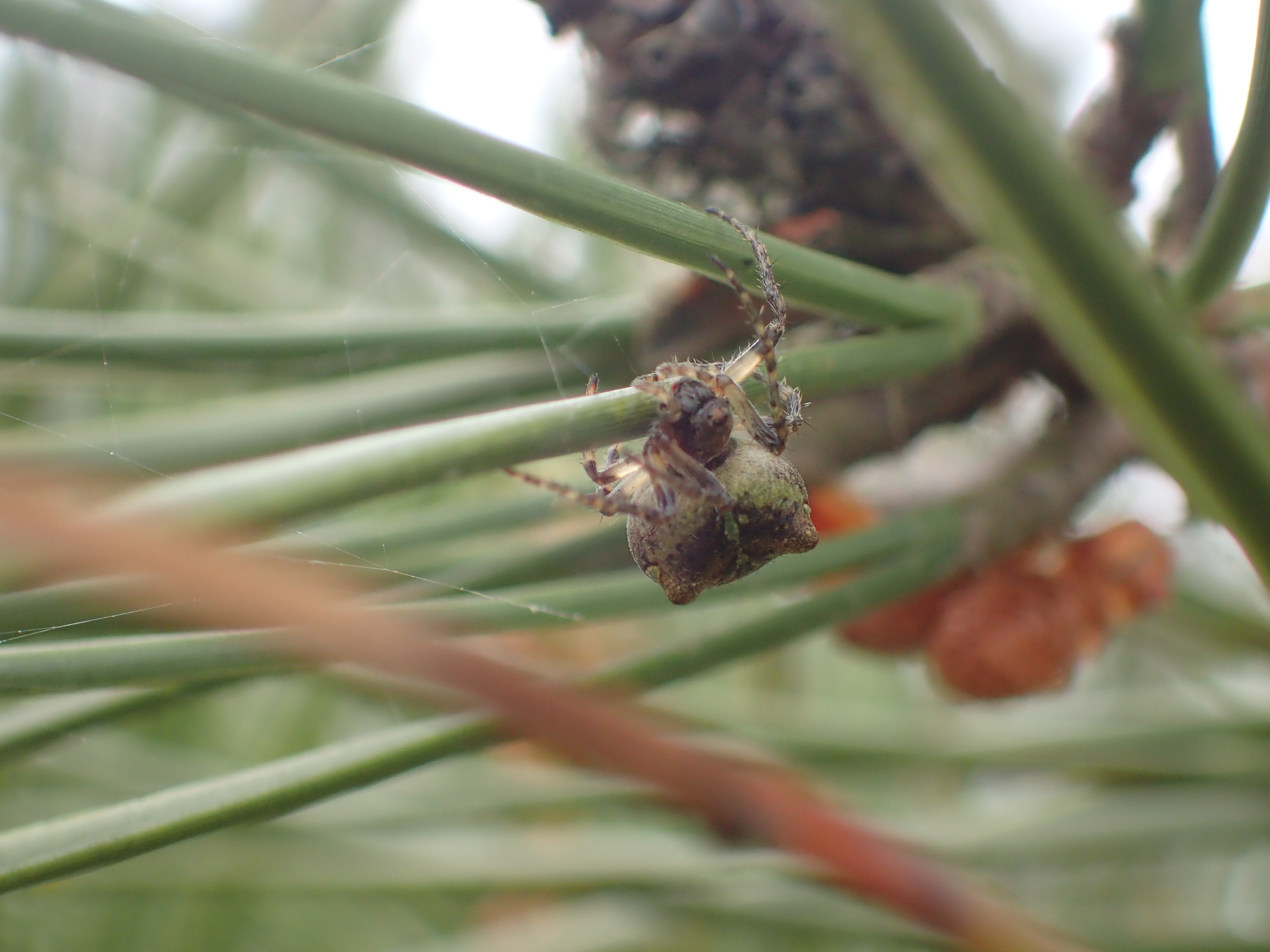
Gibbaranea gibbosa, a rather large and unusually shaped spider, found on pine
Marram Thatcher, Demetrias monostigma, a small dune-specialist ground beetle
Pine Jelly Fungus, Exidia saccharina
Podagrica fuscicornis - one of two similar flea beetles found on Mallow sp in coastal habitats. They can be separated by leg colour.
Sea Lavender rust fungus

NORTH NORFOLK: Wells warbler & fungi

17th September 2017

I didn't have any plans for Sunday, so when an Arctic Warbler was found at Wells Woods I decided to head over and have a look. It was raining on the way up, but by the time I got there the sun was out, creating a marked difference between the waterproof wearing birders and the beach going tourists. After a brisk walk to the area of birches that the Arctic Warbler was frequenting I got brief views before it flew further back into the trees. Rather than go round I decided to stay and wait for it to come back, and was rewarded with good 'scope views as it worked its way up through the trees. It was a bit too mobile for my digiscoping so I didn't bother trying, but others were clearly getting some good photos.

After a while (and conscious of the fact I'd only paid for two hours of parking) I wandered back. At the edge of the birches I stopped to look at a Brown Birch Bolete, and closer to the dell I found several more. These latter ones had darker caps, but turned out to be the same species. A Small Copper landed briefly on the path, and two Bitter Waxcaps were growing in the Dell amongst lots of Eyebright. I also noticed some sawfly caterpillars feeding on Birch leaves on my way back. A pleasant trip for my first coastal birding of autumn, and belated my first new bird of the year.


NORTH NORFOLK: Burnham Overy Dune fungi

18th October 2015

Whilst at work during the week, I had read about the recent influx of migrant birds, particularly along the north Norfolk coast, with a degree of envy. On Sunday I had kept the day clear to attend a NNNS walk at Burnham Dunes, which would include the opportunity for a bit of birding, but was more aimed at plants and fungi. As I had been looking forward to this walk I decided to go ahead as planned, but to leave early and spend a bit of time in Wells Woods first. 

Upon arrival I was surprised that dog walkers outnumbered birders, but this state of affairs didn't persist for too long. I decided to devote the bulk of my time to looking for the Blyth's Reed Warbler found earlier in the week, and after hearing it call for a while I eventually got brief views. With time running out before I had to head to Burnham I walked west along the main track, stopping at regular intervals to admire the Goldcrests that adorned many branches. Despite Connor telling me that the Hume's Warbler and Pallas' Warbler were still present further along, I was unable to see either in a brief look before heading back to the car.

I parked up at Burnham Overy Staithe and met Tony Leech who was leading the NNNS walk. We were also accompanied by Andy Bloomfield, who works on the Holkham estate. On the walk out to the dunes Andy stopped to look at a bunting he had seen, which he had heard give a ticking call. Unfortunately it flew out of sight, but he called a friend to come and check it out, and they confirmed that he had found a Little Bunting! As at Wells there were lots of Goldcrests, only here they were flicking about in the Sueada, and later on also amongst the moss and lichen of the dune slacks.

One of the groups that the dunes here are particularly known for are the Earthstars. We saw a minimum of two species, possibly two more (there can be quite a bit of overlap between species, so Tony took samples of two to check microscopic features before confirming their ID). The two definite species were both new for me, Tiny Earthstar (Geastrum minimum) and Dwarf Earthstar (Geastrum schmidelii). The latter species was found in a restricted area of the dunes that we were able to enter whilst accompanying Andy. Here we also saw a pond containing Natterjack Toad tadpoles. Apparently the toads had spawned late, and unfortunately these tadpoles are likely to perish as the weather gets colder.

Tiny Earthstar
 Dwarf Earthstars
Natterjack tadpoles

In addition to the Earthstars we saw a number of other species associated with nutrient-poor grassland. These included five Waxcap species (Blackening, Dune, Snowy, Spangle and Parrot), a yellow spindle sp and some Enteloma sp. Back in the old dunes we came across a large area of Winter Stalkballs (Tulostoma brumale), a species I saw for the first time last year at Holme Dunes.

 Snowy Waxcap
 Spangle Waxcap
 Winter Stalkball

Having searched the old dunes, we headed northwards into the loose sand of the yellow dunes. We had a rough idea of the sort of species we hoped to find here, and managed to see almost all of them. I was pleased to see Dune Stinkhorn, as my only previous sighting had been of a dessicated specimen at Holme a year ago. Field Bird's-nests were common, growing on old Marram debris. Dune Mushroom, Dune Cavalier and Dune Brittlestem were both expected, but the small ink cap Coprinopsis ammophilae growing amongst the sand caused excitement, as it appears to be the first Norfolk record (there are no records on the county database, but a separate national one has to be checked too). 

 Dune Stinkhorn
 Field Bird's-nest
Coprinopsis ammophilae

On the way back it was good to meet Robert Yaxley on the coastal footpath. A crowd had gathered to look for the Little Bunting, which was currently out of sight, but after a full day I decided to head home rather than wait for it to show.

NORTH NORFOLK: Alpaca trek

10th August 2015

On Monday Cathy & I headed to Wells. We had chosen a rather novel activity for our wedding anniversary, Alpaca trekking along the coast footpath. We arrived just before 11 and met our guide, Ian, who gave us a bit of information about his Alpacas, before heading out. We probably looked rather odd walking them through the outskirts of Wells, although I'm sure the locals are used to it by now. We soon emerged onto the coast footpath, and had a very pleasant couple of hours walking towards Warham. The fields and saltmarsh were awash with colour, and it was a lovely sunny day to be out. The Alpacas were generally well behaved, and when we got back we fed the them some chopped up apples, which went down very well. Arriving back at the car a few Swifts headed over the town.


[Edit] Also a reminder to anyone interested in celestial phenomena that the Perseid meteor shower peaks tomorrow evening (Wed 12th). It is usually one of the best annual displays of meteors, along with the Geminids in December.

More snowy bird fun

4th December 2010

With snow still on the ground I had initially planned to stay in the city over the weekend, but a Hume's Warbler at Wells seemed to be worth a morning out. Having got the early train back to North Walsham, Gary drove us to Wells. There were only a couple of cars in the carpark when we arrived, so we set about searching the area around the toilet block. This proved more hazardous than you might expect, with large lumps of snow falling like missiles from the branches of the trees overhanging the path. We notched up flythrough Woodcock, Sparrowhawk and Barn Owl, but no sign of the Hume's. A thorough search of the undergrowth revealed a large number of Wrens, plus Goldcrests, Treecreepers etc. With more people now searching we went to check the redpoll flock, but only succeeded in seeing Mealys, whilst not too far away the trumpet of a Northern Bullfinch sounded. In the end the conclusion was that the Hume's Warbler had probably snuffed it, although what excuse the Arctic Redpoll had for leaving I don't know. As we went to leave a man with a voice as loud as Brian Blessed was returning from the beach with a shovel announcing that when he died he'd like to be buried in Wells Woods. "It's lovely here, isn't it?" his wife said. "YES. SUPERSONIC!". He replied. Strange times.
.
With a bit of time left until we had to be in Norwich, we stopped at the Dun Cow for a quick drink (only coffee, the ambient temperature was too cold for ale). We got a welcome pub tick as a Woodcock was flushed by a walker along the iron road, and a saw Snipe for the second time in a row here. Back in North Walsham, two Brambling were on Gary's feeders, and finally a small flock of Waxwing were in a tree near Anglia Square carpark.


The Dun Cow garden had seen busier days...


The view from the Dun Cow

Northern Birds & Pubs

Apologies if you have been diverted here looking for the Yorkshire page of the Lonely Planet guide.

27th November 2010

Having spent the week humming and harring about trying to see the Northen Harrier, the fact that it was being seen regularly in the Thornham area was enough to make up my mind to give it a go. Titchwell takes about the same time to get to as London via public transport (seriously, both are c2.5 hours from Norwich), so it was fortunate that Gary "I laugh in the face of driving in snow. Ha ha ha. Just like that" White agreed to go and give me & Adam a lift. After an uneventful journey (Buzzard near Worstead, an exclusion zone of no snow around Sheringham the two points of interest) we arrived at Thornham Harbour and set up our 'scopes near Connor. We had to wait a little while as the harrier was sensibly sheltering from the cold wind and occasional snow flurries, and were entertained by a covey of Grey Partridges that flew overhead. Eventually the Northern Harrier flew up and gave a nice flypast, the dark upperparts particularly standing out. We tracked it around the marshes and across Holme before losing it in the distance.
.
After waiting a while there was no sign of the harrier returning, so we went to Titchwell for a hot drink. As the cafe had only just opened, I even managed to get a sausage roll, a real rarity. Our vigil by the bird feeders was productive, with a Brambling in the leaf litter and a Lesser Redpoll on the feeders to add to an unseasonal Chiffchaff in the woods between the carpark and seats. We decided to work our way back along the coast, next stop Wells.
.
Arriving at the carpark in Wells we scanned Abraham's Bosom (ooh matron) and found some Goldeneye and Little Grebes. The word on the street (woodland path) was that there was a male Northern Bullfinch doing its trumpety thing, plus a possible Siberian Chiffchaff and Northern Treecreeper. On our first walk down the left hand track we heard a number of "normal" Bullfinches, but no Northerns. We walked back down the track and finally heard it, a Bullfinch with a toy trumpet. We located the bird, which flew across the path and into the trees. Perched up it was big and bright, everything you could want in a Bullfinch. We managed to locate the Bullfinch flock, but heard no more trumpeting. A few of the females may have been Northerns too, but at distance there was no easy way of telling. We also saw some Redpoll sp. before setting off to have a look for the Chiffchaff, which we had been told was in scrub near the toilet block. There was no sign after a brief search, and deciding that it probably wasn't a good idea to keep loitering around the toilets, we moved on.
.
With some good birds under our belt, we hoped to continue the good work from the pub garden at the Dun Cow. For some reason we had the garden to ourselves, and soon clocked up some common stuff. Adam picked out a Snipe, a pub tick for both of us (Gary had one here previously), and soon they were everywhere, including three which flew over the pub. That was to be our only new pub bird, although I picked out a flock of Snow Buntings on the shingle ridge west of the Little Eye, and a Barn Owl made a welcome appearance. Arriving in North Walsham with 45 minutes to kill before our train we went to the Bluebell for another drink. The garden was snowbound and we saw very little, House Sparrow the dubious highlight.