The Whitlingham Bird Report for 2025 is now available to download from the Bird Reports page or from here

Showing posts with label Psyllids. Show all posts

SOUTH NORFOLK: Dickleburgh Moor insects & fungi

18th May 2024

An enjoyable visit to the nature reserve at Dickleburgh Moor with the Norfolk Fungus Study Group, seeing a good mixture of insects and fungi. Invertebrate highlights included the hoverfly Chrysotoxum cautum, the weevil Dorytomus hirtipennis and a psyllid new to Norfolk, Aphalara maculipennis, whilst in terms of fungi the rust Puccinia conii on Hemlock and Woolly Woodwart were both new for me.


Aphalara maculipennis on Amphibious Bistort. Seemingly a rare species in the UK, this was the first Norfolk record.

BROADS: A trip to Trinity Broads looking for fungi

Mid June 2023

In June the Norfolk Fungus Study Group visited Trinity Broads, specifically an area of woodland near Rollesby. The dry weather meant that there wasn't much in the way of 'cap and stem' fungi, but we did find quite a few interesting things in a relatively small patch of wet woodland, as well as enjoying some nice views over the broad. Some of the new species for me included Podosphaera mors-uvae (American Gooseberry Mildew), Hymenoscyphus salicellus, Vibrissea filisporia and Pandora dipterigena (the latter a fungus on mosquitoes).


Afterwards we had a quick walk around the boat club woods, where we also had permission to record. Here I saw the bug Cyllecoris histrionus for the first time. The visit was also quite good for psyllids - the total of seven species is the most I've recorded in a single day. All were fairly common species - Baeopelma foersteri and Cacopsylla fulguralis were the most notable ones.


NORTH NORFOLK: Bacton Woods June invertebrates

Mid June 2023

A family walk around Bacton Woods. Despite overcast conditions there were plenty of interesting invertebrates, including a new psyllid for me, Cacopsylla brunneipennis. Other things pictured here include Apteropeda orbiculata beetle mines in Wood Sage, Coleophora albicosta on Gorse, the hopper Ditropis pteridis, aphids Mindarus abietinus on Fir and Bronze Shieldbug.


CENTRAL NORFOLK: Gressenhall museum & farm

Early June 2023

I'd not visited the Museum of Rural Life at Gressenhall since I was a child, so a visit seemed long overdue. There was something of interest for everyone, taking in the museum, old workhouse, farm and some of the rewilded land along the river. I was particularly keen to have a look around the orchard, but was a bit underwhelmed at how big it was! I failed to find my main target species, the psyllid Cacopsylla mali that feeds on apple, but did find a Plum  Longhorn beetle and some very nice barkflies, Mesopsocus sp (probably M. immunis).


Along the river I noticed some beetles egg-laying on the lily pads, making them Galerucella nymphaea (there are similar looking ones that feed on other plants). The scarcest sighting of the visit was probably a weevil associated with Bird Cherry, Furcipus rectirostris. Back in the main grounds I just had time to check some Eleagnus and found Cacopsylla fulguralis, new to west Norfolk.


THORPE MARSHES: Late spring visit

Late May 2023

A couple of hours spent around a sunny Thorpe Marshes. A good sign that it wasn't too busy was a Grey Heron beside the path out onto the marsh, which reluctantly flew as I approached. Two recently fledged Stonechats could be seen further across the marsh, pleasing to see this species is still hanging on in this urban-ish location. The highlight of the visit was a new bug for me, Pachybrachius fracticollis, but there was plenty else of interest including lots of European Chinchbugs, several Anasimyia lineata hoverflies and great views of a settled Hairy Dragonfly. A smut fungus, Anthracoidea subinclusa, was found on Carex riparia, whilst on Hawthorn were some adult Cacopsylla peregrina psyllids.


WHITLINGHAM: New hide, fledged herons and another psyllid

21st May 2023

The most notable thing about May's Whitlingham WeBS count was getting to see the new hide. From a distance it looks very nice, blending in with the landscape. Unfortunately as an actual bird hide there are a few issues. The curved roof means that you cannot stand up near the edges of it, so you can only use it by sitting down. There is one moveable bench to allow you to do this - I really hope that this is treated respectfully and remains there, but the idea of having an unfixed bench on an urban nature reserve is not one I would have suggested.


In terms of birdlife, two sets of juvenile Grey Herons were visible (there were three nests this year, I'm not sure if young fledged from the third one), a Cuckoo was calling and I heard my first Reed and Garden Warblers of the year as both had been absent during my April visit.


I checked quite a few willows for psyllids, and was rewarded with my first Cacopsylla ambigua.

NORWICH: Psyllid - Livilla variegata on Laburnum

Mid-May 2023

This year I have taken on the role of county recorder for psyllids, bugs resembling small leafhoppers although more closely related to aphids. An article and county list will be published in NNNS Transactions either late 2023 or early 2024.

All but a handful of gall-causing species are under-recorded in Norfolk, so I have been checking possible host plants all around the city. I had no luck checking the Laburnum trees in Waterloo Park, but one on the edge of Clapham Wood held a small population of Livilla variegata, a rather distinctive species due to the narrow wings and angle that the wings are held at.


WHITLINGHAM: Lots of Little Egrets and a new psyllid

19th February 2023

Highlight of the February WeBS count was seeing 9 Little Egrets, a new record count for me. There were three roosting on the Little Broad plus one active bird, then another four roosting on the Great Broad with another one further along. A redhead Goosander was also of note, and a Coal Tit was singing alongside the path. I also got amazingly close up views of an Otter, having noticed it a few feet away before it saw me, and managed to find my first Spanioneura fonscolombii, a psyllid associated with Box.


NORTH NORFOLK: A nice day out at Holkham

Late October 2022

We spent a lovely family day at Holkham during the half term holiday, exploring the Holkham experience (a museum/explanation of how the land is managed), Holkham Hall and the walled garden. I found some psyllids, Cacopsylla pyricola, on Pears in the walled garden. A Raven flew over whilst we had coffee, and we ended the visit listening to a Fallow Deer bellowing at the herd, which had come close to the car park.


NORWICH: July Psyllids and Aphids

Early July 2022

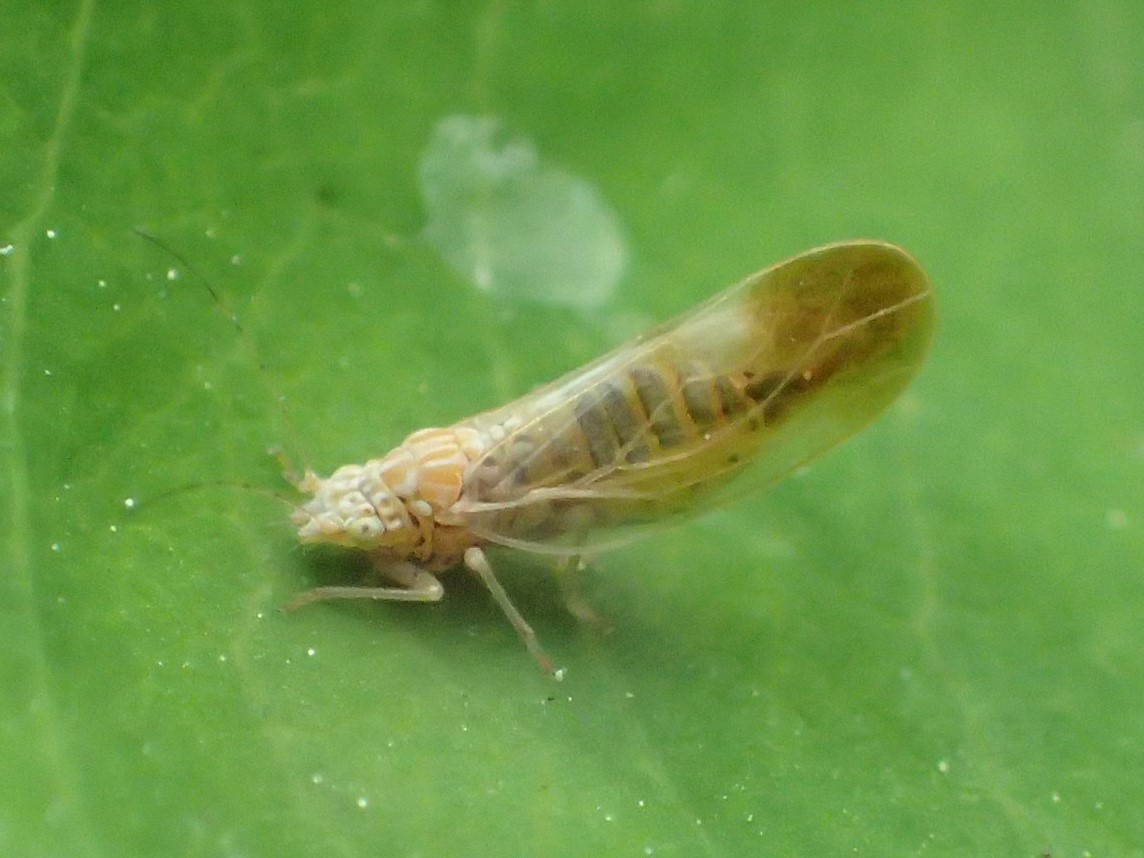
Some close scrutiny of various trees resulted in some new species on my daily walks to and from work. Firstly Alder, where I managed to find the psyllid Baopelma foersteri, a slightly yellowier version of the common Psylla alni. On Ash I had recorded Psyllopsis fraxini as an agg from both the galls and an adult, but I took the time to check an adult male and confirmed it was definitely that species. I also found a green psyllid on Ash, which as expected turned out to be Psyllopsis fraxinicola. The British Spiders Twitter account had mentioned that it was a good time of year to look for the tiny spiders and eggsacs of Paidiscura pallens and Theridion varians. I already find lots of the former, but with a bit of hunting I managed to find the latter as well at Wensum Park. A brood of Egyptian Geese and a Grey Wagtail were also seen in Wensum Park.


Elsewhere in the city new aphids included Knotgrass Aphid Aphis polygonata, Mullein Aphid Aphis verbasci and Lupin Aphid Macrosiphum albifrons.