The Whitlingham Bird Report for 2025 is now available to download from the Bird Reports page or from here

NORWICH: Some more interesting bees

Late July 2019

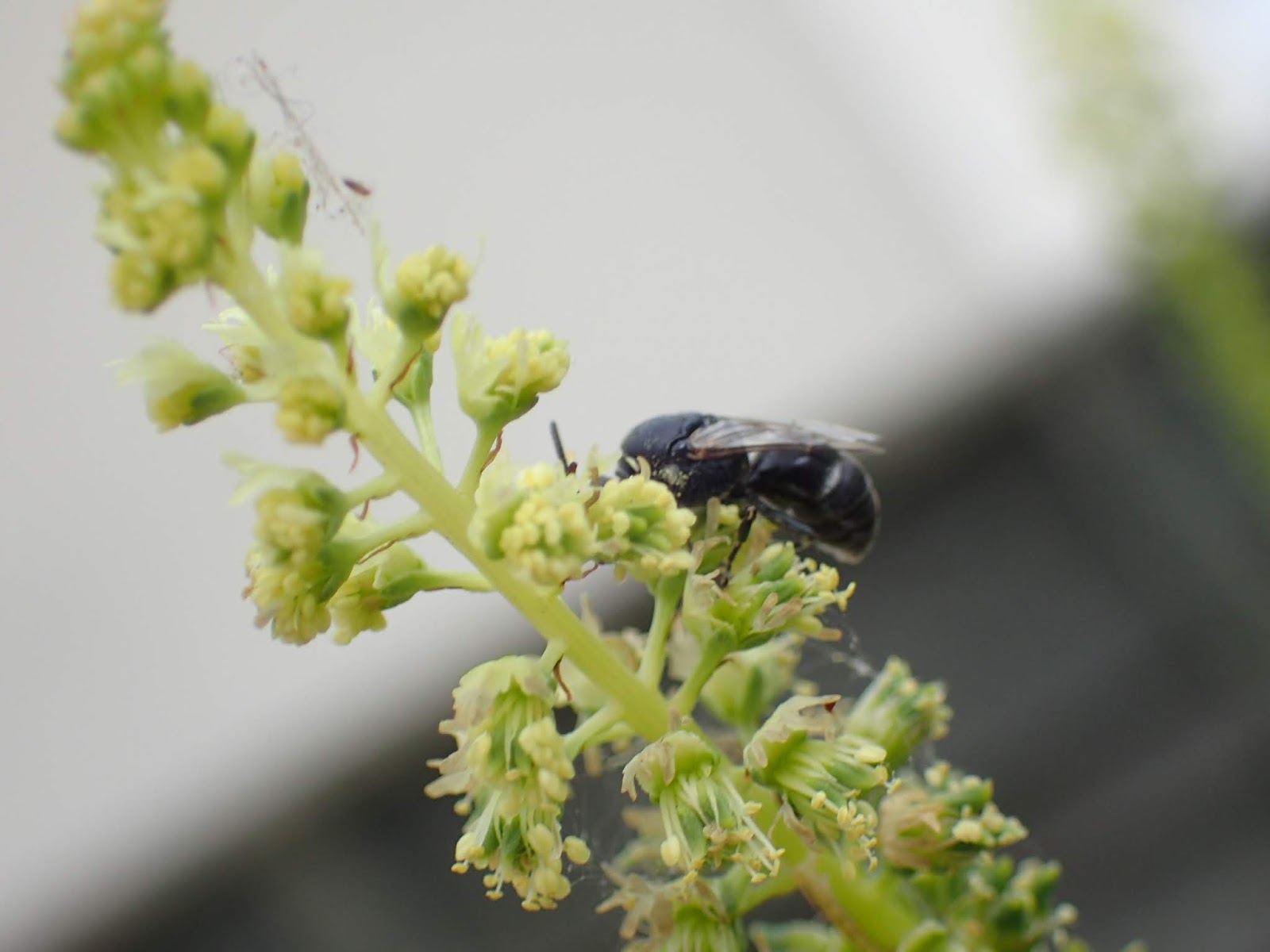
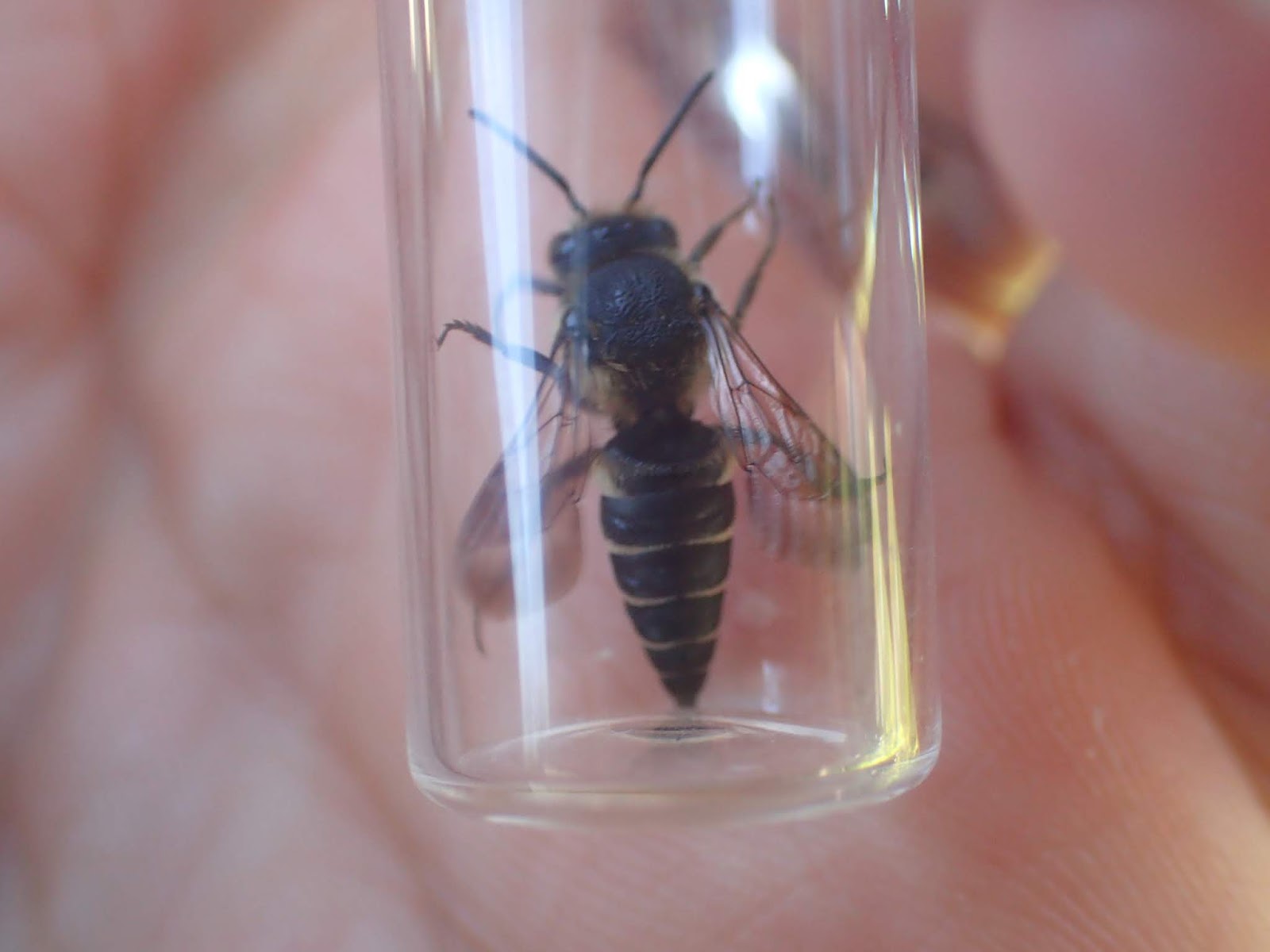
Another evening visit to the Bartlett's Bee Paradise garden, where Vanna had found Nomada flavopicta. Whilst we were there we saw plenty of other things, including a Clover Melitta bee feeding on White Clover and a male Pantaloon Bee that roosts in the garden. Cheilosia caerulescens, a hoverfly associated with House Leeks was a new species for me, as was the tiny Bellflower Scissor Bee (Chelostoma capanularum).


MID NORFOLK: Foxley Wood - return of the Purple Emperor

Late July 2019

In recent years the Purple Emperor butterfly has been spreading away from core populations in the East Midlands, with new records (or new modern records) at sites in Northamptonshire, Cambridgeshire, Suffolk, and more recently Norfolk. Whilst there had been occasional sightings in the past, records of both male and female Purple Emperors at Sheringham Park, combined with sightings nearby at Beeston Common in the past three years had suggested that they were present in low numbers and probably breeding nearby.

With this background, I was rather surprised when Butterfly Conservation released a press release to announce the official return of the Purple Emperor. Partly it seemed odd wording (either its back or it isn't, the official part seems redundant, rather like most uses of the word literally), but also this was before any sightings had been reported from Norfolk in 2019, so why now? All became clearer about a week later. Photos of Purple Emperors started to be shown on social media - clearly they were now present somewhere else, but there was a seemingly unecessary secrecy about it. This didn't last long - the location was Foxley Wood, the location of the last Norfolk population that died out in the early 1970s. The reason for initially keeping it quiet wasn't revealed. Foxley is a great place and thanks to sympathetic woodland management seems in a good place for the population to rebuild. The NWT wrote about the return here: https://www.norfolkwildlifetrust.org.uk/news-and-articles/news/all-news/2019-07-17-the-emperor-returns

Patrick Barkham also wrote about the Foxley Purple Emperors for the Guardian. One of the interesting bits here is the local who remembers last seeing them in 1971 - pertinent only because one prominent Purple Emperor finder was keen on the theory that they had been present but unreported in woods across East Anglia for the past 50 years, a theory rejected by almost all local naturalists (partly because there was no real evidence for it and partly because it was a bit insulting to suggest that nobody else was seeing them despite these woods being well watched and visited sites) https://www.theguardian.com/environment/2019/jul/30/butterflywatch-the-return-of-the-dazzling-purple-emperor

Anyway, with a few hours free one morning we went on a family visit to Foxley, hoping to see a Purple Emperor. It was during a hot period so not ideal whether for either us or the butterflies, but not long after arriving we did see a Purple Emperor as it flew majestically out of a large Oak, across the ride we were on and off towards an area of sallows. We also saw several Purple Hairstreaks and at least five Silver-washed Fritillaries.

The Hogweed was covered in insects - sadly I can't identifiy many of the flies, but there was also some common hoverfly species too plus Chrysotoxum bisinctum. Elsewhere in the wood I found a leafmine of the sawfly Heterarthrus wuestneii on Field Maple, which might be a new record for the site, and got excited by a large greyish Longhorn Beetle. I assumed it was something I'd never seen before, so was surprised when my database showed a previous record. That was from Tasburgh the previous month and the explanation was simple, this was a Variable Longhorn beetle, and the one I'd found looked nothing like the yellowy-brown seen the previous month. 


WHITLINGHAM: Late July visit

Late July 2019

A brief call in to Thorpe Marshes followed by Whitlingham C.P. A handful of new patch species were seen at Thorpe, including the mine of Agromyza albitarsis in hybrid Black Poplar, Striped Slender Robberfly and a Coelioxys sp, probably C. inermis.


At Whitlingham I heard a Nuthatch and saw feeding signs of Elm ZigZag sawfly. I had a look at the new bee hotel area above the cycle racks and was pleased to see a few small (and unidentified) bees inspecting the holes. Rather unusually the commonest insect on the blocks was Nettle Ground Bug, which were all over the wood blocks.


MID NORFOLK: Buxton Heath orchids

Late July 2019

On my way back to Norwich from Sustead Common I worked out I had a bit over an hour spare. Considering where I could go for a productive walk in that time I chose Buxton Heath. I have visited last year in early August, so I hoped that I might see a few different things this time and was pleasantly surprised. Walking to the edge of the mire there was much less knapweed in flower than last year, but some Heath-spotted Orchids were still in flower (not a species I see very often) and some Marsh Helleborines and Marsh Fragrant Orchids were also in flower. I saw some tiny white flowers further round and it turned out they were Round-leaved Sundew, and a big Marsh Gentian was also a delight.


After a brief chat with local birder Mike, I headed onto the drier bit of the heath where I located a few rather skittish Silver-studded Blues. Whilst here I noticed a relatively small and bristly Robberfly, which I photographed. A few weeks later I attempted to key it out using the excellent Dutch Robberflies book. I tentatively reached Breckland Robberfly, which unlike some species is actually geographically limited in line with its name, so I assumed I'd made a mistake and posted it on the Soldierflies & allies Facebook page. To my surprise I heard back that it was Breckland Robberfly, and if the scheme accepts the record then it will be a new VC27 (East Norfolk) record, which is excellent.


NORTH NORFOLK: Sustead Common wildlife survey

Late July 2019

Local conservation charity the Felbeck Trust had recently held an official opening for Spurrell Wood, a small north Norfolk woodland that they had purchased. It adjoins Sustead Common, and area that they also manage for wildlife. I have visited the area in late summer and autumn before, but had promised to make a visit in late spring to do a bit more wildlife recording. I spent some time walking around and checking the various different habitats and plants, putting together a list of around 70 invertebrates that I have passed on to the trust. Some of the more interesting ones included the weevil Curculio venosus, the hoverfly Leucozona laternaria and leaf mines in Spear Thistle caused by the fly Pegomya steini.


NORTH NORFOLK: Titchwell Semipalmated Sandpiper

21st July 2019

A family trip to Titchwell, my first visit of the year. The weather was nice, and as we walked down the main path I noticed a Bloody-nosed Beetle at the side. We soon saw the Dunlin flock, and after a scan through managed to locate the Semipalmated Sandpiper that had been found a few days before. This was my first new bird of the year (the result of now much birding in spring rather than having a large list it should be pointed out) and it was nice to share it with Cathy & Rose, who was lifted up to view through the telescope and then pointed out at the distant flock to show where she had been looking. A Curlew Sandpiper and Spotted Redshank were also present on the freshmarsh, and we got good views of a Spoonbill that flew overhead. I'd noticed a few clegs landing on us as we stood around, and not wanting her to get bitten we moved on, noting a few more invertebrates as we headed back.


NORTH NORFOLK: Cley NNNS walk

Mid-July 2019

As part of the NNNS 150th anniversary celebrations some joint walks with the NWT had been organised, mainly at Cley Marshes. These were all focused around a wildlife group that wasn't birds, so that if any birders wanted to develop their ID skills by looking at another group then they could. I had booked on one of these walks with Nick Owens, author of the Bees of Norfolk. The walk was intended to be looking at bees, hoverflies and grasshoppers, but with a knowledgeable group we ended up looking at all manner of invertebrates.

We saw a good range of invertebrates, including some quite scarce beetles, but the highlight for me was probably Flecked General, one of the large soldierflies that I'd never seen before. A handful of photos from the day are included below.

 Yellowtail moth caterpillar
 Coremacera marginata - a snail-killing fly
 Cystiphora sonchi galls on Sow-thistle
Flecked General

NORWICH: Cherry Bark Moth

Mid-July 2019

Whilst checking an apple tree for leaf mines after work one day I noticed a micro moth resting on a leaf. Overlooking the small size it was beautifully patterned, and a species I'd not seen to boot. It was a Cherry Bark Moth (Enarmonia formosana).


NORWICH: Some new bees

Mid July 2019

We have some excellent bee habitats in Norfolk, but in terms of number of species one of the best has to be the wildlife garden of Jeremy & Vanna Bartlett in west Norwich. As well as the general planting Jeremy sometimes plants particular plants in the hope of attracting specific bees. One example of this was some Weld, one of the main plants associated with Mignonette Yellow-face (Hylaeus signatus). I'd been checking some Weld on my way to work and not seen any bees on it, but Jeremy and Vanna had up to six attending their plant, so Cathy & I went round to have a look. Despite the overcast conditions a couple were present on our visit, including one male clutching the top of the plant like a miniature King Kong.


We popped round later in the month too, when Vanna had found Nomada zonata, previously a rare new colonist but now spreading across southern England. One of the sharp-tailed bees, Coelioxys inermis, was also new for me.


NORWICH: Local lepidoptera

Early July 2019

An exciting new addition to my butterflies-on-faeces list when a Comma landed on some cat poo on our front lawn. On my way home from work I saw a large dark lepiodpteran flying down the road and hoped that it might be a Camberwell Beauty (a rare migratory butterfly), but when it landed it turned out to be an Old Lady (a silly named moth).


WHITLINGHAM: July counts and a new hoverfly

6th July 2019

The July WeBS count fell early in the month, and I headed to Thorpe Marshes first. There was very little on St Andrew's Broad, but I did see two new species that I was very pleased about, the hoverfly Chrysotoxum verralli and a Lesser Earwig - the first time I've seen any earwig species other than Common Earwig.


Then it was round to Whitlingham, where there was much more wildfowl, but nothing unusual. Selected counts below:
Mute Swan: 108 (2018: 114)
Geylag Goose: 91 (2018: 72)
Canada Goose: 71 (2018: 9)
Egyptian Goose: 31 (2018: 8)
Mallard: 83 (2018: 83)
Tufted Duck: 2 (2018: 2)

Some nice synchronisity about the duck counts compared to last year and the Canada Goose count was of note as there were no 50+ counts in 2018.

Having counted both sides I didn't really have the time to look for insects, but the bug Deraeocoris flavilinea was a new one for me. Walking back through the car park I noticed that a new bike shelter had a 'green roof' and lots of drilled holes in wood to attract bees. This struck me as a nice touch, and hopefully next year there will be some new bee records generated from it.



NORWICH: Dusky Brocade

6th July 2019

My garden moth trapping has been infrequent this year, partly due to the weather and partly due to the need to cherish any extra sleep I can get in the mornings before my daughter wakes up. This time I initially wondered why I'd bothered having only found eight species of moth in the trap. On closer inspection though one of them was a Dusky Brocade, a new species for me let alone the garden.


EARLHAM CEMETERY: Plant walk & random invertebrates

30th June 2019

June's Friends of Earlham Cemetery walk was led by Mike Crewe with a focus on plants. There were a few new grasses for me (unsurprising given my lack of expertise with them) but it was also good to pick up some general ID tips from Mike. One of the first yellow composites we saw was Beaked Hawksbeard, which I'd never recorded before but suspect is probably in my lawn! Nomada fabriciana, a leaf mine of the moth Leucoptera laburnella on Laburnum and Puccinia cnici on a thistle were all new records from the walk.


NORTH NORFOLK: Natural Surroundings anniversary

29th June 2019

Natural Surroundings had a 30th anniversary celebration programme of events, and we attended early to see the small mammal trap opening and the moth trap opening. As it happened only two Field Mice had been caught, although it was still nice for Rose to see her first wild rodent having seen the captive Harvest Mice several times. The moth trapping also was a bit short on numbers - a Nematopogon, probably N. schwarziellus, was the only thing that was new for me, although Small Angle Shades is something I don't see often. We then had lunch and watched the birds on the feeders and noticed a Figwort Sawfly in the polytunnel.