The Whitlingham Bird Report for 2025 is now available to download from the Bird Reports page or from here

MID-NORFOLK: A visit to Hoe Rough

Mid-August 2019

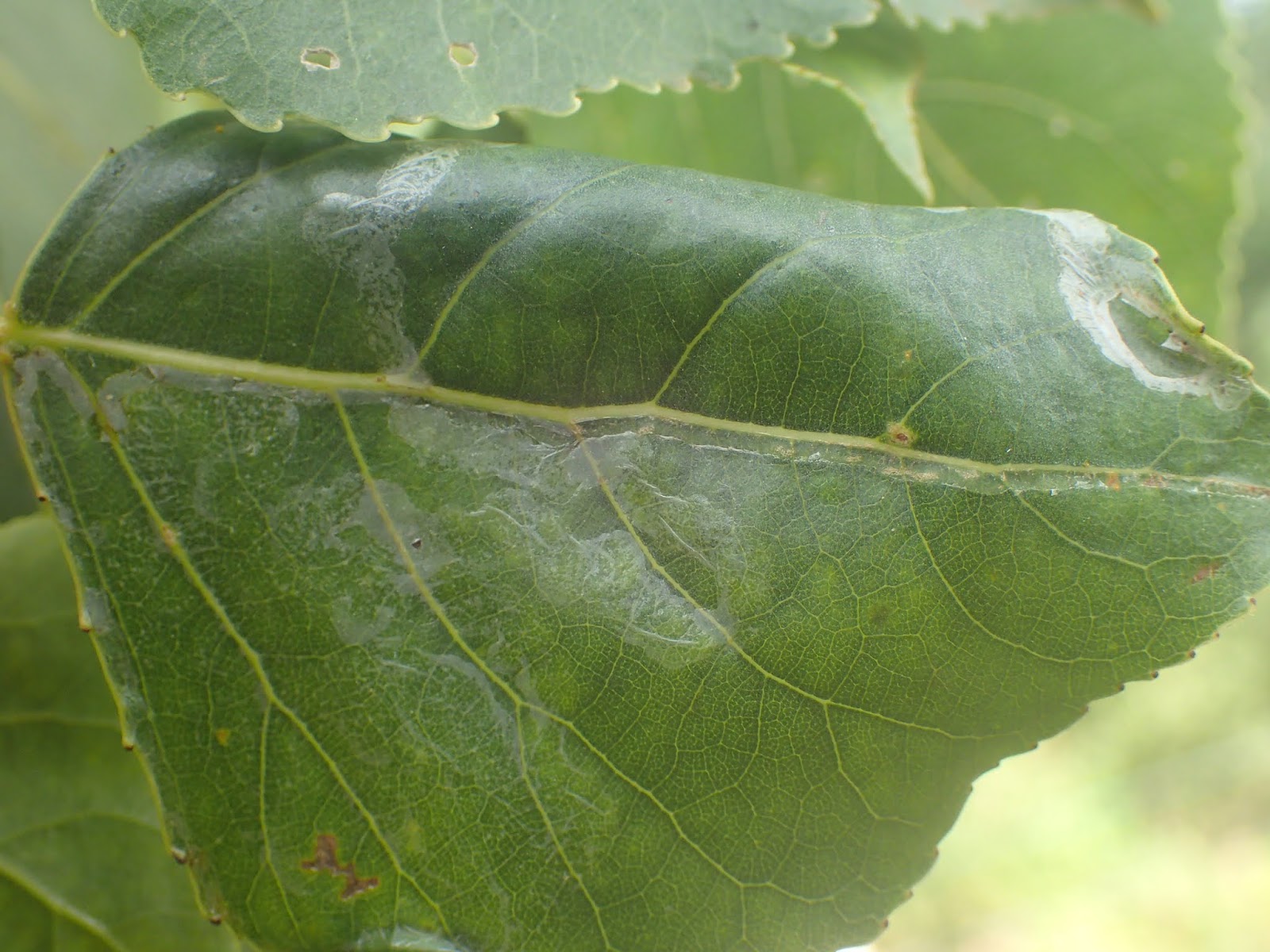
Cathy was visiting a friend in Dereham, so with a bit of time to spare I decided to check out the nearby NWT site at Hoe Rough. Upon arrival I heard a Nuthatch calling from across the river, and walking in that direction I noticed several large poplars. Checking them for leaf mines I found those of Stigmella trimaculella and Phyllocnistis unipunctella. There were various other mines, including Phytomyza conyzae in Fleabane and Phylloporia bistrigella in Birch leaves.


Heading back on to the drier grassland I spent most of my remaining time checking out the insects visiting the flowers. A good range of hoverflies were present, the best of which was Chrysotoxum festivum.


BROADLAND: Catfield Hall Fen fungus foray

Mid-August 2019

I'd not attended the summer Fungus Study Group forays due to other commitments, but was keen to go to this one at Catfield Hall Fen, a private area of the Ant Marshes managed sensitively for wildlife. The site had been the focus of a period of intensive recording by the Norfolk & Norwich Naturalists' Society, culminating in an occasional publication that was sent out to members in 2008.

Andy Beaument was our guide, having visited the site regularly, and we went on a loop taking in a range of habitats. In total I saw around 20 new species, many of them plant fungi as a result of the expertise of Stewart and Chris. There were three new agarics, Russula faginea (one of the species with a smell of crab), the small white Delicata integrella and Bog Waxcap (Hygrocybe coccineocrenata). Stewart pointed out cases of the Eyelet Sober moth (Thiotricha subocellea) on Water Mint, and we found an Otter in the river that borders the site.


YARE VALLEY: In search of the Cowbane Rust

Mid-August 2019

The Norfolk Fungus Study Group meets regularly throughout the year to survey sites for fungi, but the group also conducts ad-hoc searches or monitoring for particular species as suggested by the Lost & Found fungus project here: http://fungi.myspecies.info/content/lost-found-fungi-project-rusts-smuts-and-allies. In recent years we have successfully found the (previously considered) rare rust Puccinia cladii on Saw Sedge, and it was suggested that the group should look for the rust on Cowbane, Puccinia cicutae. Cowbane is quite a scarce plant nationally, but is locally common in the Broads along the edge of waterways.

With all this in mind, the group had obtained permission to survey Wheatfen in the hope of finding Cowbane Rust. This meant going out on a boat, as most of the Cowbane isn't accessible from the paths. The amount of waterweed meant motor vessels were out, and before our visit the warden had found that there was too much vegetation for the work boat to go out either. It was therefore down to six of us to take out three small boats that could still get down the dykes that link Wheatfen Broad and Deep Waters. I should point out that any form of canoeing or boating is not allowed at Wheatfen other than for conservation purposes and with permission of the warden/Ted Ellis Trust.

Will and Kevin helped us launch the boats, and we spent a very pleasant couple of hours travelling along the dykes and edges of the larger waterbodies, checking every clump of Cowbane we encountered. Sadly for us it all looked healthy, although of course it could be that the rust would have developed later in the year, so another visit at some point might be wise.


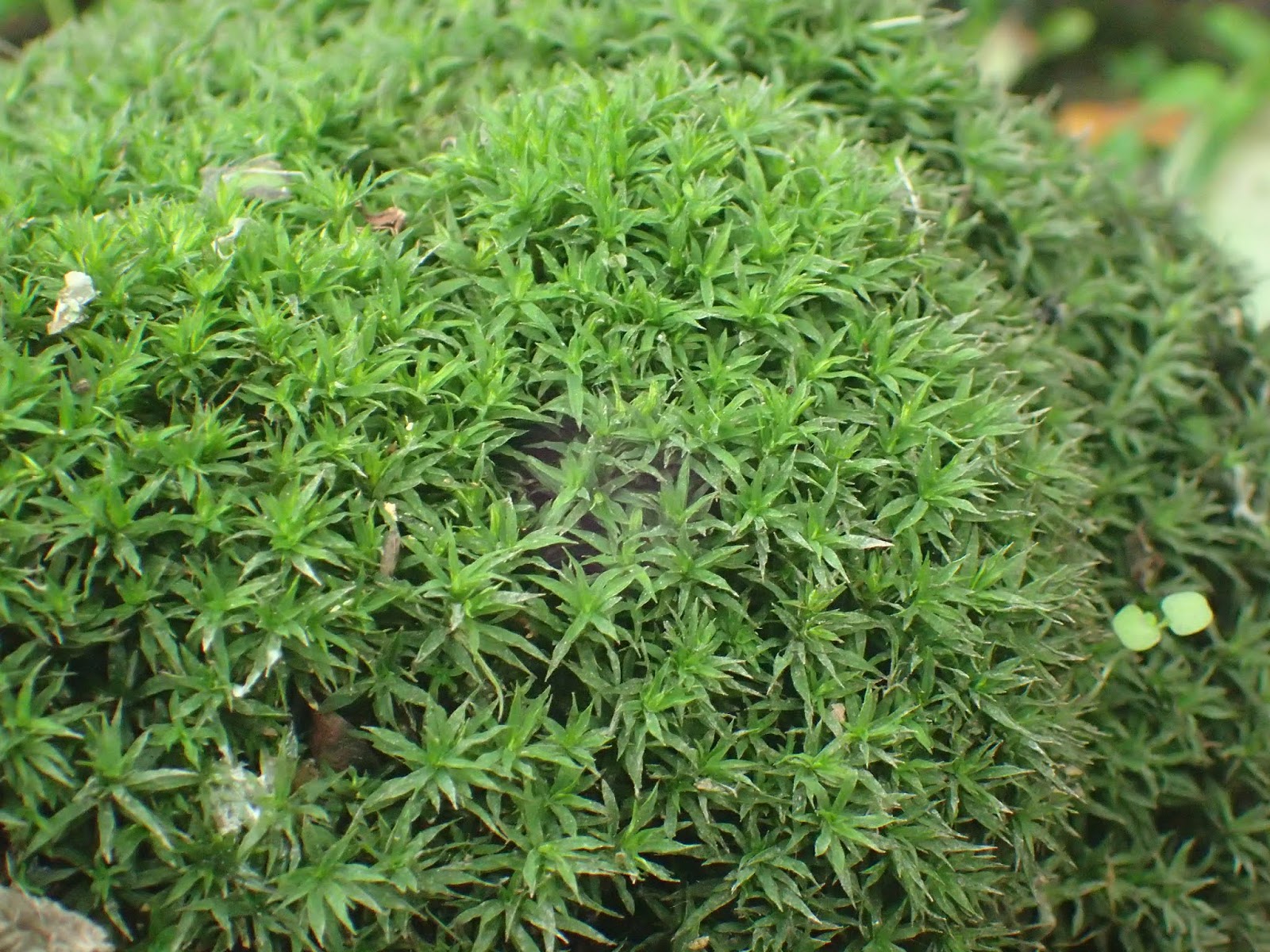
After a rest and a drink we then went out for a walk around part of the reserve. We were shown some of the plants that Ted Ellis had planted and have now naturalised, namely Greater Burnet-saxifrage and Broad-leaved Ragwort, which don't occur anywhere else in Norfolk. We were then taken off-piste into one of the boggy areas of tidal woodland, where after some searching and loss of wellies Will managed to locate a small population of the very rare moss Timmia megapolitana, whose only UK population is at Wheatfen.


Despite not seeing the rust I did see a new fungus - there hadn't been space in the boats for Neil so he had gone for a walk instead, and he returned with an Iodine Bolete (Boletus impolitus), which as the name suggests has a strong smell of Iodine at the base. 


Many thanks to Will and the Ted Ellis Trust for helping us with the survey and walk, it was a privilege to visit some new parts of this excellent site.

BRECKLAND: Invertebrates and plants part 2

Mid-August 2019

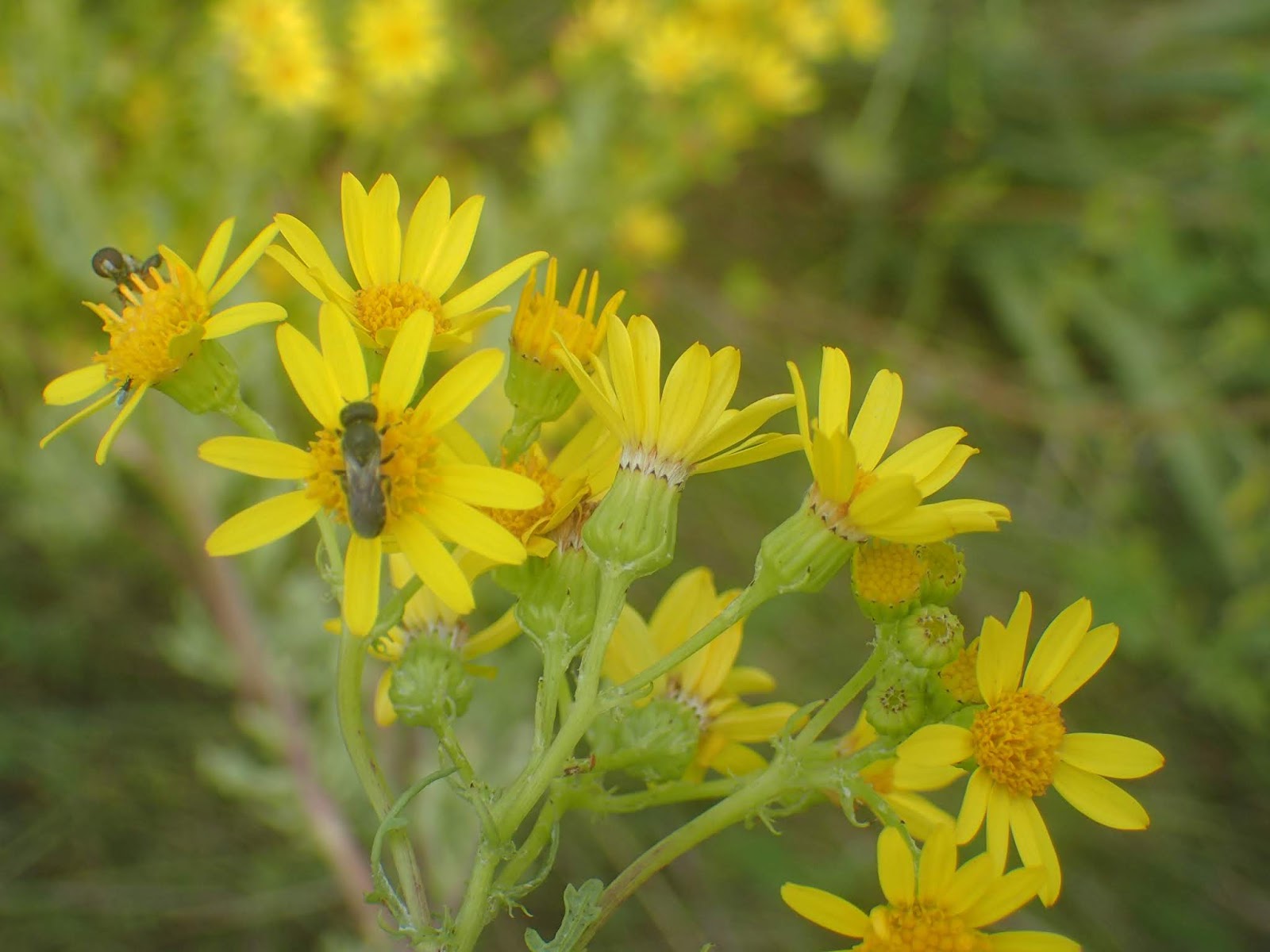
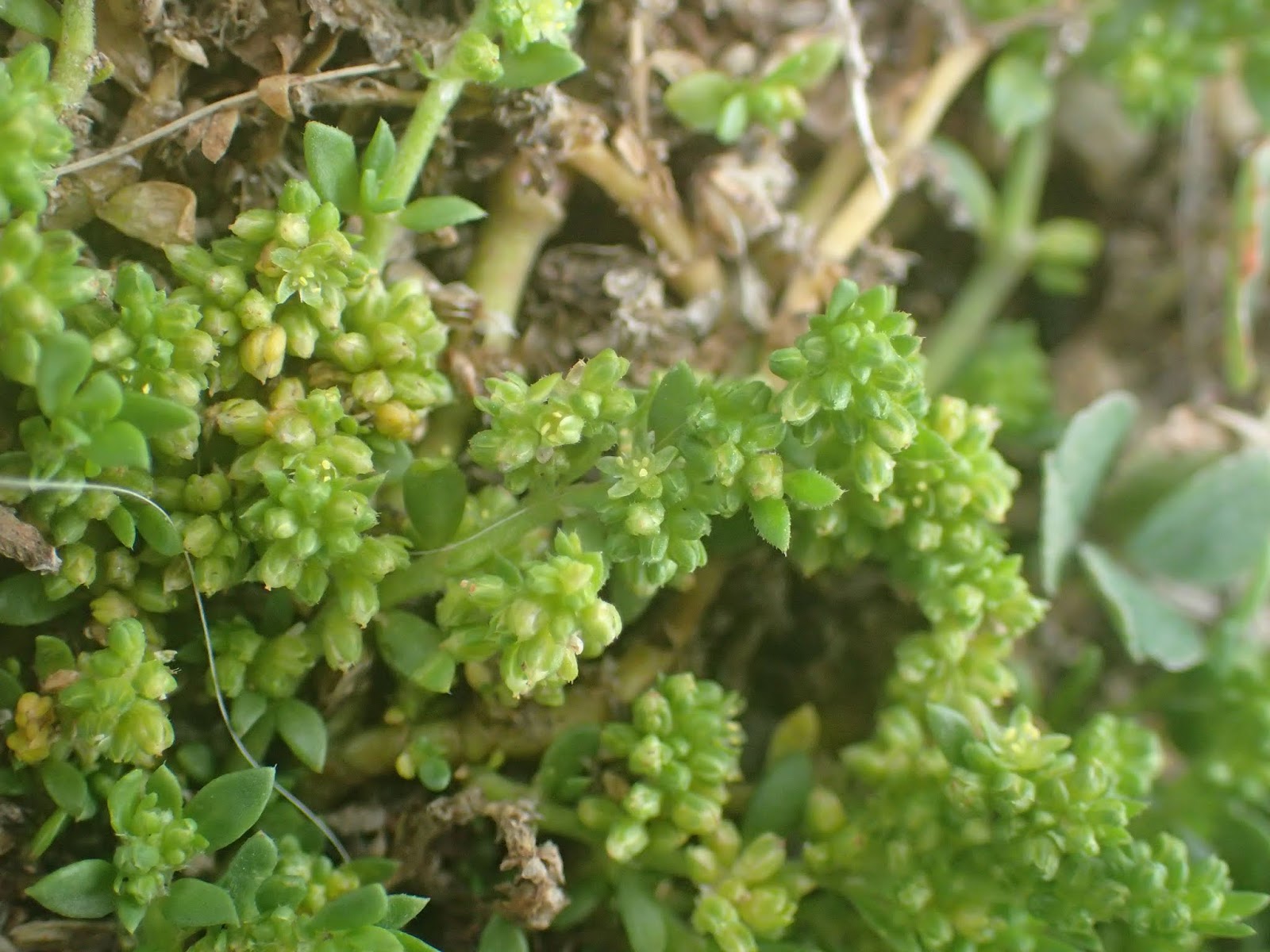
Moving on to the next site and some lovely forest rides with lots of Ragwort, Wild Parsnip and Scabious. A couple of new bees for me were Heriades truncorum and Andrena marginata, although sadly we seemed a bit early for the Nomad bee associated with the latter. Conops ceriaeformis was also a new species for me as was the sawfly Arge ustulata and the underwhelming but rare plant Smooth Rupturewort. A leatherbug raised my hopes that it might be Dalman's Leatherbug, one of my targets for the day, but it was actually Fallen's Leatherbug, a commoner (although still nice species).


Our final site of the day was meant to be very good for Leatherbugs, but in a quick visit we only saw more Fallen's. There were a handful of other species of note though, including Breckland Speedwell, Maiden Pink and the Yarrow-associated tortoise beetle Cassida prasina.


BRECKLAND: Invertebrate and plant day - part 1

Mid-August 2019

A multi-site trip to the Brecks with Jeremy & Vanna Bartlett began with a search for Perennial Knawel. This involved quite a lot of searching through the much more abundant Annual Knawel, but I think I managed to find at least one plant. Some Green-eyed Flower Bees were my first Norfolk sighting having seem them at Minsmere, and we also saw a handful of heather-related bees. Vanna noticed some treehoppers on Broom, which turned out to be Gargara genistae. This completes my set of Treehoppers (albeit there are only two UK species!)


The rest of the invertebrate highlights before we moved on included Breckland Plume Moth, Heather Neb, Tortoise Shieldbug, Heath Assasin Bug, Rhombic Leatherbug and a Weevil sp.


Stop two was a brief visit to see Wall Bedstraw - which was even stragglier that I'd imagined it would be!


WHITLINGHAM: August insects and new sightings

4th August 2019

Another early date for the monthly WeBS survey, and with Justin counting Thorpe I only popped in for a quick look before heading to Whitlingham. This was long enough to add a new species of damselfly to my patch list in the form of Small Red-eyed Damselfly. This species has been seen on a few dates in August over the past few years, but numbers have still to take off. This one was in the mooring basin alongside quite a few 'large' Red-eyed Damselflies. A young Tortoise Shieldbug was a surprise find, having previously only seen them in the Brecks or at Foxley Wood, but I found two at Thorpe and a further example at Whitlingham. A male Megachile (leafcutter) bee was also new to the patch list, although frustratingly I couldn't see it well enough to confirm an ID - M. centuncularis is the commonest local species whilst M. ligniseca is known to visit Burdock, so those are the main two candidates.


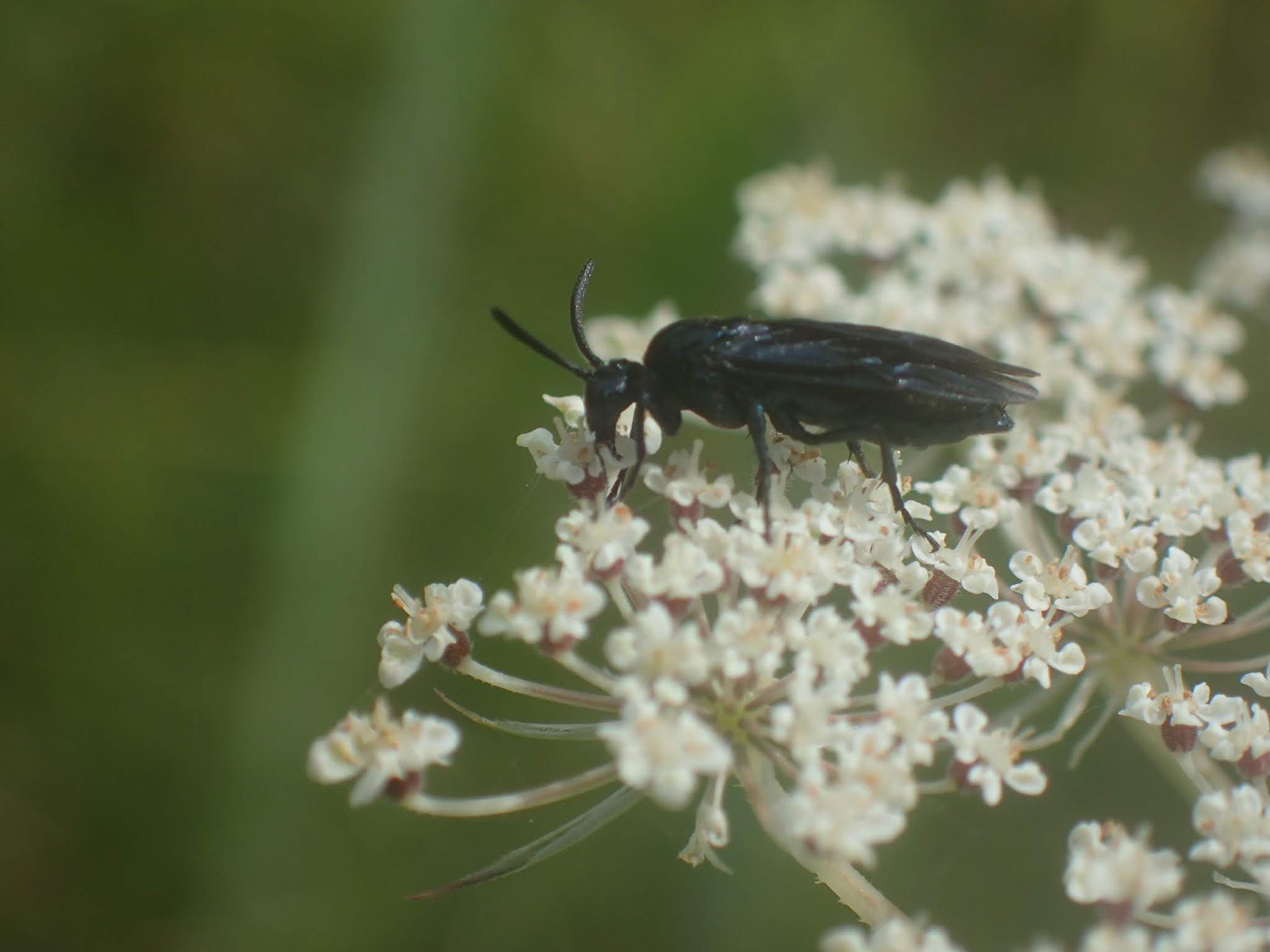
Round to Whitlingham and the number and species of wildfowl were all rather standard for the time of year. Mallard numbers just pushed three figures (101), no Gadwall or Tufted Ducks were seen and a gathering of large gulls on the Great Broad was mostly Lesser Black-backed Gulls (204) with a few Herring Gulls (10). Non-avian sightings included Four-banded Longhorn Beetle (an occasional find here) the distinctive ichneumon Gasteruption jaculator (new for me) and an all-black Arge sawfly (either A. berberidis or nigripes - a specimen needed for ID).


WEST NORFOLK: An unexpected weevil

Early August 2019

During a visit to a friend who lives on the edge of the Sandringham estate I found myself inspecting a Great Mullein plant that was growing in an area of wildflowers. I noticed some Cionus weevils, and initially expected them to be one of the species that I see at Whitlingham (Mullein and Figwort share a suite of related species feeding on them). Closer inspection showed that it wasn't, and in fact it turned out to be a fairly scarce species, Cionus longicollis, that I'd never seen before.


SUFFOLK: Minsmere bees

Late July 2019

In the last of my July entries I document an afternoon spent at Minsmere with Cathy & Rose. After having lunch in the cafe we walked along the north wall, where we spoke to a very knowledgeable volunteer manning the area of path that hosts a large population of solitary bees. I had seen the Bee-wolves and Pantaloon Bees here before but was keen to see Green-eyed Flower Bees (Anthophora bimaculata), the only one of the four East Anglian Anthophoras that I'd not seen. We soon saw one, but not before we heard it - a good ID feature to separate this from Anthophora quadrimaculata which also has green eyes is that A. bimaculata makes a shrill hum as it flies in!


We then walked towards the beach, where I hoped to find some Six-belted Clearwings on the Birdsfoot Trefoil. Unfortunately a storm was brewing and the wind was getting up, so there was no luck with finding any clearwings in a hurried search. I did find a new leafmine, Liriomyza centaurii, on the Common Centaury. We reached the sea before turning round as the rain began to fall, stopping briefly to see three Stone Curlews that a volunteer had in his scope.


NORWICH: Garden caterpillars and a Saltmarsh Plume

Late July 2019

To prove that sometimes we get interesting things in our own garden, checking some self-sown mustard near the shed I noticed caterpillars of both Small White and Large White on the seedpods, along with the weevil Ceutorhynchos assimilis.


I haven't had any particularly large catches of moths this year, but there was one interesting species in a recent effort, the Saltmarsh Plume Moth (Agdistis bennetii). As the name suggests this species is associated with Sea Aster so mainly found around the coast, but it does seem to wander inland at times. This was a new TG21 record, but other moth-trappers also recorded it around the same time in other inland squares.