The Whitlingham Bird Report for 2025 is now available to download from the Bird Reports page or from here

SOUTH NORFOLK: Ashwellthorpe anemone fungi

Late April 2021

Near the end of the month we went for our near-annual trip to Ashwellthorpe Lower Wood to see the Bluebells. Another tradition is for me to check all around the Wood Anemone plants in the hope of finding the scarce Wood Anemone Cup fungus that is sometimes found with it. Once again I drew a blank, but this increased scrutiny of Wood Anemone plants led to several new fungal finds, with the rust fungus Tranzschelia anemones and the smut fungus Urocystis anemones. I also noted the weevil Barynotus moerens, something I think I've seen here before but not been able to identify. There was also a couple of interesting sawflies, but they were from the tricky genus Dolerus, so without a specimen they could only be narrowed down to a species pair.


NORWICH: Biscuit Beetle and Eastern Rocket

Late April 2021

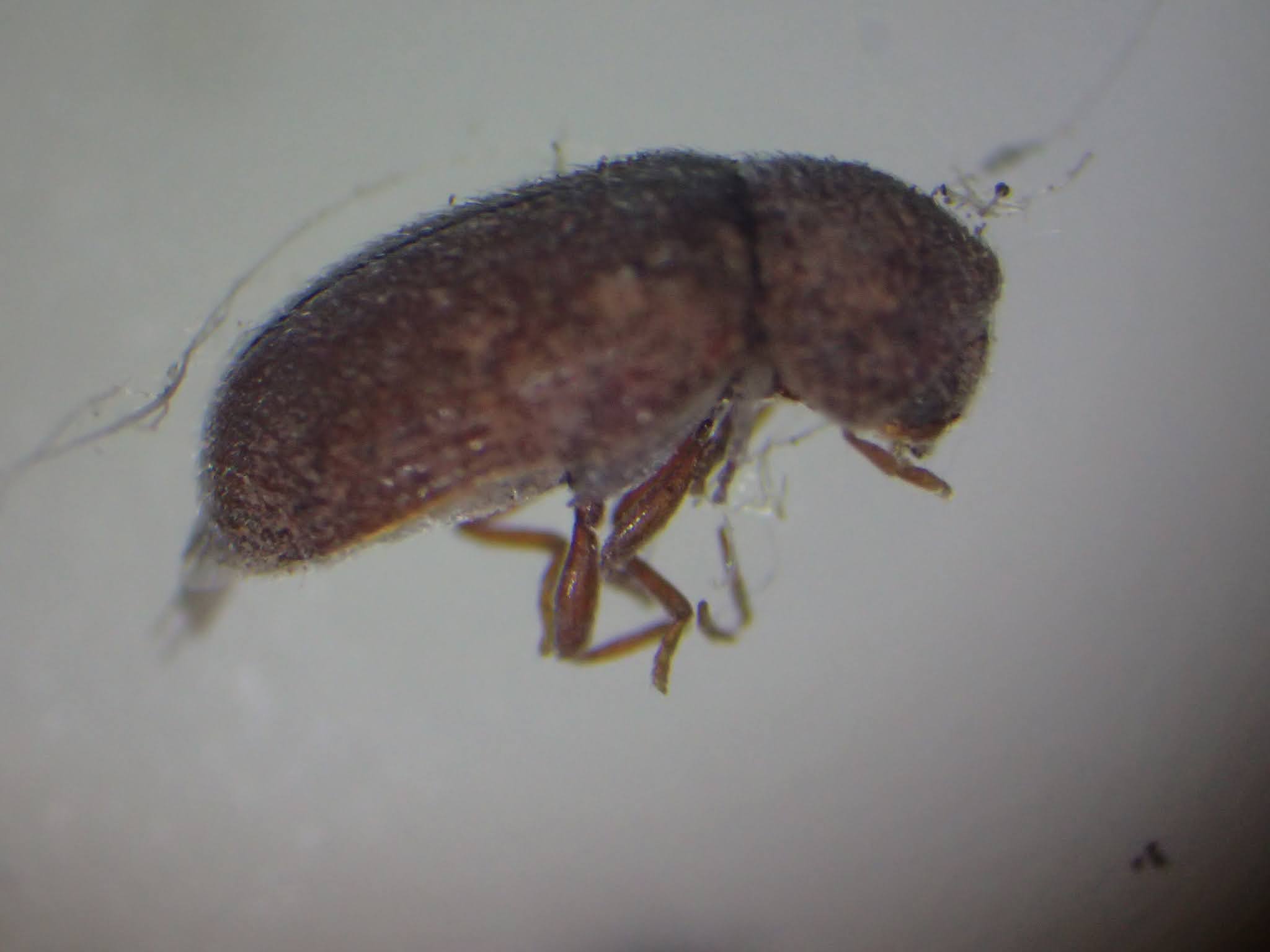
Noticing a tiny beetle dead on the windowsill at work, I stuck it under the microscope and identified it as a Biscuit Beetle. I was tempted to joke that it died of hunger because I would never leave any biscuits lying around, but its the larvae that are the voracious eaters so that doesn't really work.

On my way into work recently I had noticed some plants with yellow flowers at various points on my journey. They looked like wall-rocket species, but I hadn't stopped to examine them and find out exactly what they were. It wasn't until a week later when Louis and Chris had posted about seenig Eastern Rocket in Norwich that I suspected that was what these were - a thought confirmed when Chris gave me directions to some plants on Oak street, on my walk into work. The other ones I'd seen near New Mills were also this species, an alien that I'd not recorded before.


BROADLAND: Few fungi but a rare case-bearing moth

17th April 2021

After more than a year's absence, Fungus Study Group events recommenced with a trip to a private Broadland location, with numbers restricted to groups of six. It was a beautiful sunny day in an unspoilt area, and although the dry conditions restricted us to a small number of mostly tiny plant fungi it was really nice to be out with the group again. We watched some hares chasing in a nearby field, a couple of Cranes flew over and some Bearded Tits flew down a dyke. 

 Of the fungi, the new species were all aforementioned small obscure ones, including Rush Disco (Lachnum apalum), Ascodichaena rugosum (a black fungus on Oak branches) and Ophiognomonia ai-viridis (tiny black spikes along the petiole of dead Alder leaves).


 We stopped for lunch near a mass of flowering Gorse, which contained well over 20 Gorse Shieldbugs, loads of Gorse Weevils and my first Large Red Damselfly of the year. A Water Measurer was of note on a pool, whilst species of the day was an occupied case of the rare micro moth  Water Dock Case-bearer (Coleophora hydrolapathella)


NORWICH: City centre seal

13th April 2021

Over the past year there had been lots of sightings of a Grey Seal in the river in Norwich, and o the few occasions I had been able to go and look for it I had not seen it. A week or so earlier there had been another 'seal in the river' article in the EDP, but looking at the recent picture rather than the older ones also lumped in with it, it  was clear that this was actually a Common (Harbour) Seal, which come up the river into Norwich less frequently than Grey Seals. I kept an eye on Twitter and after work one day found that it had been seen nearby. After a bit of searching I found it near the Ribs of Beef pub. It was elusive, disappearing for 10 minutes at a time, but still a nice addition to my Norwich mammal list! Nearby a pair of Egyptian Geese had a gosling o the slipway.


WHITLINGHAM: April WeBS and stunning Kittiwake views

11th April 2021

April's wildfowl count took place with a mixture of sunny spells and hail showers. A Reed Warbler heard singing from one of the usual territories had first been heard by other birders a few days earlier, but still knocked about a week off my previous earliest patch date for this species. Elsewhere around the broad Chiffchaff, Blackcap and Willow Warblers were singing, but no Sedge Warblers were heard. In terms of breeding wildfowl four Mute Swan nests were noted (one on the Little Broad and three along the north shore of the Great Broad), but no goslings or geese on nests were seen. The Mandarin was again present, along with 78 Tufted Ducks, 2 Pochard and 43 Mallard.

The standout moment of the visit, and arguably of the last couple of years worth of visits, was 10 minutes in the close company of an adult Kittiwake. Having called in earlier in the week and seen it distantly with a flock of Black-headed Gulls, I reached this area and begun to scan out into the broad. I was disturbed by a splash, only to look up and see the Kittiwake, which had dived into the water just offshore. I was standing in a gap between the broadside trees, and it then proceded to fly back and forth along the broad edge, only a few feet above head height and at times easily within 10 feet of me. It wasn't flying particularly fast either, soaring and banking in front of me as I stood on my own. Absolutely magical. After a while it stopped flying around and floated on the broad, still quite close by. If this gets beaten as my favourite avian moment of the year then I will have seen something really special!


CENTRAL NORFOLK: Buxton Heath invertebrate selection

Mid-April 2021

Buxton Heath is probably our closest NWT reserve bar Thorpe Marshes, and has the added attraction for family walks of having horses, a favourite of my daughter. This area holds a wide range of insects, such that during spring and summer it would almost be a suprise not to see something new. During our couple of hours we saw six Buzzards kettling above the woods, a couple of Crossbills flying over, a Stonechat and a Meadow Pipit. I saw four new species, two of which are probably things that I have seen but not recorded in the past - Heather Beetle and Juniper Haircap moss. The other two were the larval stage of the Ling Case-bearer moth (Coleophora pyrrhulipennella) and a spider, Zora spinimana.


EAST NORFOLK: Birding curtailed by snow

Early April 2021

As restrictions started to be loosened I finally left Norwich to visit family and friends in North Walsham. Unfortunately the weather forecast for my trip to see Adam was rather unconducive to birding. We had intended spend some time near the local coastline, but the squally winds meant this plan was abandoned fairly early on, with a couple of Wheatears the only migrants seen. Heading inland a sunny spell meant a nice ten minutes of woodland bird song (Chiffchaffs, Willow Warbler, Blackcap and Marsh Tit), but this was followed by a snowstorm, at which point we gave up and headed for home.


WHITLINGHAM: A new rust, early House Martin and Kittiwake (eventually)

Early April 2021

A patch visit early in the month started well, with a mixed flock of hirundines containing House Martins, a week earlier than my previous earliest record here. At least two Mute Swans were on nests, and two Wigeon were on the Great Broad along with Mandarin, Mallard, Gadwall, Teal, Tufted Duck and Pochard. There was a large flock of 1st-winter Black-headed Gulls near the end of the broad, but I couldn't pick out anything else amongst them. Heading off into the wooded edge a Stock Dove was singing, and after checking a couple of patches of Moschatel I found some with Puccinia albescens, the second of the two rust fungi that specialise on it (having found the first one in Whitlingham Woods a few years ago).


I then headed round to Thorpe Marshes for my first visit of the year. The water levels were very high and the river had started to overflow onto the path, so I decided to do a quick lap. The pair of Stonechats that had overwintered were still present out on the marsh, and there was success on St Andrews Broad where a winter-plumaged adult Little Gull was with the Black-headed Gulls. At that point I found out that Justin had found two Kittiwakes on the Great Broad! He assured me that they looked very settled, so applying Sod's law it wasn't any great suprise that they had flown off 20 minutes later.

There was however a reprise, with an adult Kittiwake being found at Whitlingham a few days later. Rose and I took a walk along the southern shore of the Great Broad and eventually saw it at the east end. This was only my second live bird here (having also found a recently dead 1st year bird as well as an adult).

NORWICH: Early April at Mousehold Heath

Early April 2021

A family walk at Mousehold Heath was notable for the large number of Green Tiger Beetles seen - at least 20, probably quite a few more than that. They were very active, often first seen flying past and landing on a sandy bank. I kept an eye out for bees in the hope of finding my first Ashy Mining Bee, but only found a handful of species, including Orange-tailed Mining Bee. We also saw a couple of False Puffballs (Entiridium lycoperdon), slime moulds that form whitish half-spheres on tree trunks. Judging from social media it is having a good year. On our way back Cathy noticed a Treecreeper on a tree trunk close to the path, which showed very well.


NORWICH: Late March in the city

Last half of March 2021

The third week of March was rather quiet sightings wise, with a few flyover birds on my daily walk in to work including Grey Heron and a couple of Oystercatchers, whilst I heard my first Chiffchaff of the year singing along Lakenham Way on 23rd March. I saw a new beetle, by virtue of it landing on my desk, Two-spotted Carpet Beetle (Attagenus pellio). There was also an avian highlight with three Red Kites flying over Bethel Street seen at close quarters. Having seen the first one I then got closer and saw two fly over heading in the same direction. I assumed at the time that the first one had looped round behind me, but other observers on the other side of Chapelfield Gardens confirmed there were three individuals.


WHITLINGHAM: March WeBS cout & a new smut fungus for Norfolk

13th March 2021

The March WeBS count was rather uneventful, an exodus of ducks left around 100 Tufted Ducks, 4 Gadwall and 2 Pochard (numbers picked up later in the month, and a few Shovelers were seen the other side of the river at Thorpe on the same weekend). I delighted in prolonged views of a Jay in the wooded area near the Little Broad, and a hybrid Canada x Greylag Goose was on the Great Broad.


Having not visited the woods so far this year I had a quick walk in the nearest bit, hearing Treecreeper, Marsh Tit and Bullfinch for the first time this year. Spurge Laurel was in flower near the car park watchpoint. The most interesting point of the visit was a gall on Lesser Celandine. It didn't look like a rust so I examined it further, and as I suspected it turned out to be caused by a smut fungus, Urocystis ficariae. What I didn't realise at the time was that this is acutally quite a scarce species, and it appears to be new to Norfolk which is nice.


NORWICH: City centre sightings and a White-fronted Goose

1st week of March 2021

A busy week at work, compounded by the knowledge that a Black Redstart was present on my estate during a couple of the days and would have either been visible from the house or possibly even on top of it. Bird sightings on the way into the city have increased, with Sparrowhawks seen on several days, a Kingfisher along the river at New Mills and unexpectedly an Egyptian Goose on the building adjacent to Chapelfield Gardens!


Other wildlife sightings included a new site for Collared Earthstar (Geastrum triplex) - under some trees near the Sainsburys on Queens Road, and a small orange bryophilous fungus growing on a mossy wall, identified by George Grieff as Octospora coccinea s.l.


Throughout February there had been a flock of White-fronted Geese on the marshes at Postwick. These were quite close to Norwich as the crow flies, but quite a trek following footpaths or roads, so I had grudgingly ignored them. During the early part of March there seemed to be a movement of White-fronted Geese south of Norwich, including one that spent a few days at Marston Marshes. Marston is on the edge of Norwich a similar distance away to Whitlingham or UEA, so I went for a walk there and fortunately the White-fronted Goose was still present along the river, an excellent bird for the Norwich area. I also saw my first Ring-necked Parakeet of the year there, and some large aquatic snail shells on flood debris that Mike Hoit had already identified as Lister's River Snail.


NORWICH: Some mosses for the end of February

Last week of February 2021

This week's excursions were limited to a walk around the local park and the walk into work, neither of which resulted in any bird additions to the year list. A sunny spell did bring out a few insects though, with my first hoverfly of the year (Eristalis tenax), butterfly (Peacock) and bumblebee (too fast to be sure what species). Greenfinches and Chaffinches were also singing locally, whilst a Robin popped into the back garden on several days.

On Twitter Leif Bersweden had started posting information about common mosses, using the hashtag #couchto10mosses which encouraged me to look at some of the moss covered walls I passed, and I found a couple of the species mentioned, Wall Screw-moss (Tortula muralis) and Capillary Thread-moss (Bryum capillare).

Capillary Thread-moss (Bryum capillare)
Wall Screw-moss (Tortula muralis)
Unknown moss sp.

NORWICH: 3rd week of February and some Curlew at Hellesdon

3rd week of February 2021

I managed to get out for another local walk this week, choosing to go down onto the Marriott's Way and walk out westwards. Sweetbriar Marshes was flooded quite heavily in places (as you would expect from a floodplain) and I crossed over and went down Hellsedon Road for a while. It was nice to walk along the river, and Jay, Pheasant and Green Woodpecker were all new birds for the year. Scanning over the meadows between the river and Marriott's Way most of the birds appeared to be gulls, but further along a couple of Curlews were visible. They had first been seen a few days previously by Jo Dale, but I was pleased that they were still present given that I'd not seen any around Norwich before. I appeared to have timed it just right, because on my way home soemthing put up the gulls and the Curlews also took to the air, calling several times before flying off high north-eastwards.


Back at home the warm weather brought up my first Buzzard of the year distantly over the housing estate.


WHITLINGHAM: Snowy WeBS count and watching Redwings

2nd week of February 2021

A few days of heavy snow across the county meant not leaving the house on the basis that a pandemic is not a great time to have an ice related accident. Once things had began to thaw I did venture out, and walked to Whitlingham to get February's WeBS count done. The city was both pleasantly quiet and not as slippery as I had thought it might be. 

Arriving at Whitlingham the Little Broad was completely frozen, but most of the Great Broad was still open. There was a decent range of ducks (although typically a Smew and a Black-necked Grebe turned up on successive days after my visit). I counted 239 Tufted Ducks and around 120 Gadwall, with the long-staying 1st-winter Scaup plus Goldeneye, Wigeon, Shoveler, Teal, Wigeon, Pochard and Mallard also present. A Bittern had been seen earlier in the day, but wasn't on show and I didn't linger to wait for it. Several flocks of Siskins were in the Alders, and I heard my first drumming Great Spotted Woodpecker. The highlights were both seen as I walked back along Whitlingham Lane, getting prolonged views of a flock of Redwings feeding on Ivy berries, and finally a Woodcock flew over the road.


Elsewhere during the cold snap I had added three birds to the year list from the garden, Greenfinch, Goldcrest and a male Blackcap.