The Whitlingham Bird Report for 2025 is now available to download from the Bird Reports page or from here

NORWICH AREA: A range of insects on Common Mallow

I've fallen completely behind with blog updates, so will now try to lump some similar things together in order to get uptodate by the summer.

A few years back I was sent a link to a publication called Beetle News, which had an article about the types of weevils you can get on Common Mallow. There are four, two rather similar ones and two that are easy to identify. At various points during June and July I kept having a look at mallow plants around the city, and eventually found all four species. There is also a rare one found on Marsh Mallow that I have been  shown in the past at Minsmere, whilst a sixth species occurs on Hollyhocks but hasn't yet been found in Norfolk.

Pseudapion rufirostre - a blackish weevil with orange legs. The third commonest of the four locally, but still found fairly frequently when searched for.
Malvapion malvae. Grey at the front, yellowy-brown at the back, so distinctive when found on Mallow (apparently there are a few similar species on other host plants, but not that are likely to occur nearby). The second commonest of the four species around Norwich from the plants I checked.
Aspidapion radiolus. A black weevil with grooved elytra (wingcases) and a textured pronotum. When looked at carefully there is no groove between the eyes. By far the commonest of the four encountered, but until you get your eye in it does need examination under a hand lens or a really good photo to check the groove is absent and eliminate A. aeneum.
Aspidapion aeneum. Similar to the above species, but the elytra are less grooved, it is slightly wider and metallic blue rather than black. When looked at closely it has a groove between the eyes. Whilst possibly overlooked as A. radiolus (weevils typically drop off the plant into the udnergrowth when you go for a closer look!) it appears to be the scarcest of the four weevils around Norwich based on my observations.

The same article also mentions two flea beetles that occur on Common Mallow, Podagrica sylvestris (which as orange legs) and P. fuscipes (which has black). I've not found either yet, but Stewart Wright found P. sylvestris in his garden on the day of a fungus foray and showed me.


Whilst checking Hollyhocks in a garden centre, I also found a mallow-feeding leafhopper Eupteryx atropunctata for good measure.


THORPE MARSHES: A range of beetles and a rare case-bearer

Early June 2021

A couple of hours at Thorpe Marsh turned out to be very profitable for invertebrates. Dolerus aericeps, a sawfly associated with horsetails, was found on the permissive path, and was followed by a succession of 'new' beetles. Firstly the weevil Notaris scirpi, then whilst looking for Spotted Marsh ladybirds I noticed a peculiar-looking Monoceros Beetle, which was trumped shortly after by an Ant Beetle.


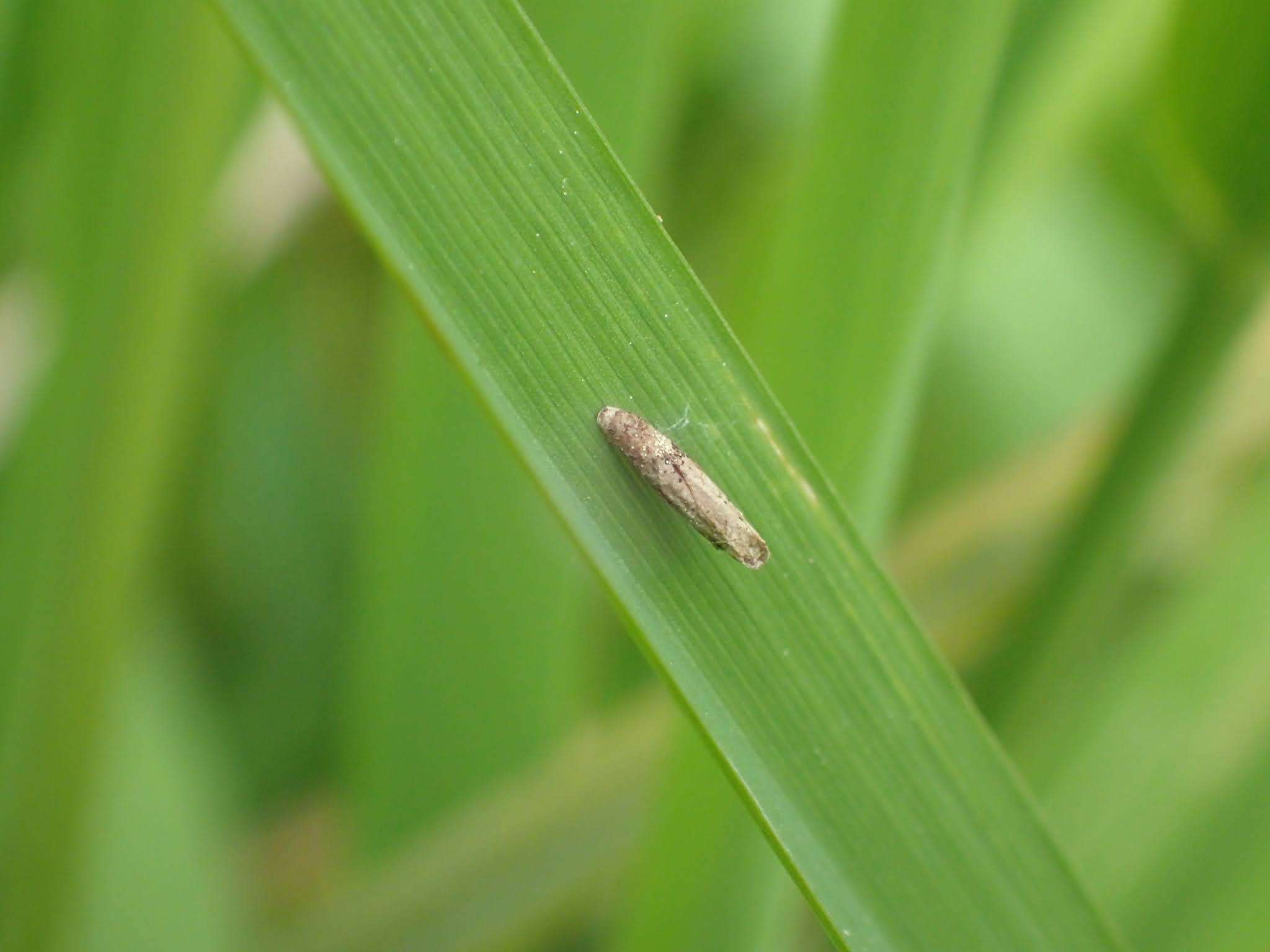
Whilst not as spectacular, in recording terms these were all trumped by a Coleophora larva, which Rob Edmunds identified as Sandy Case-bearer (Coleophora lithargyrinella), the first Norfolk record since 1874. Interestingly both this species and Monoceros Beetle are often found in drier, sandy habitats, but were present here at the edge of the grazing marsh.


NORTH NORFOLK: Natural Surroundings Rhagium mordax

Early June 2021

After over a year of avoiding busy places we now have a backlog of places to visit, and near the top of the list was Natural Surroundings at Bayfield. We took Margaret and had lunch before a good look around the grounds. A plant I didn't recognise was growing in the woodland near the car park, which was identified by Andy Musgrove as Fringecups. The undoubted wildlife highlight of the visit though was a longhorn beetle, Rhagium mordax, found by Cathy. For some reason this species has a slightly alien look about it and has long been on my target species list.


WHITLINGHAM: Early June insects

Early June 2021

A couple of early month visits to Whitlingham were pleasant but mainly social visits with others. Insect highlights included Anasimyia lineata, a 'beaked' hoverfly, Denticollis linearis (a click beetle) and Trypeta zoe, a leaf-mining fly.


CENTRAL NORFOLK: Buxton Heath spider wasps

30th May 2021

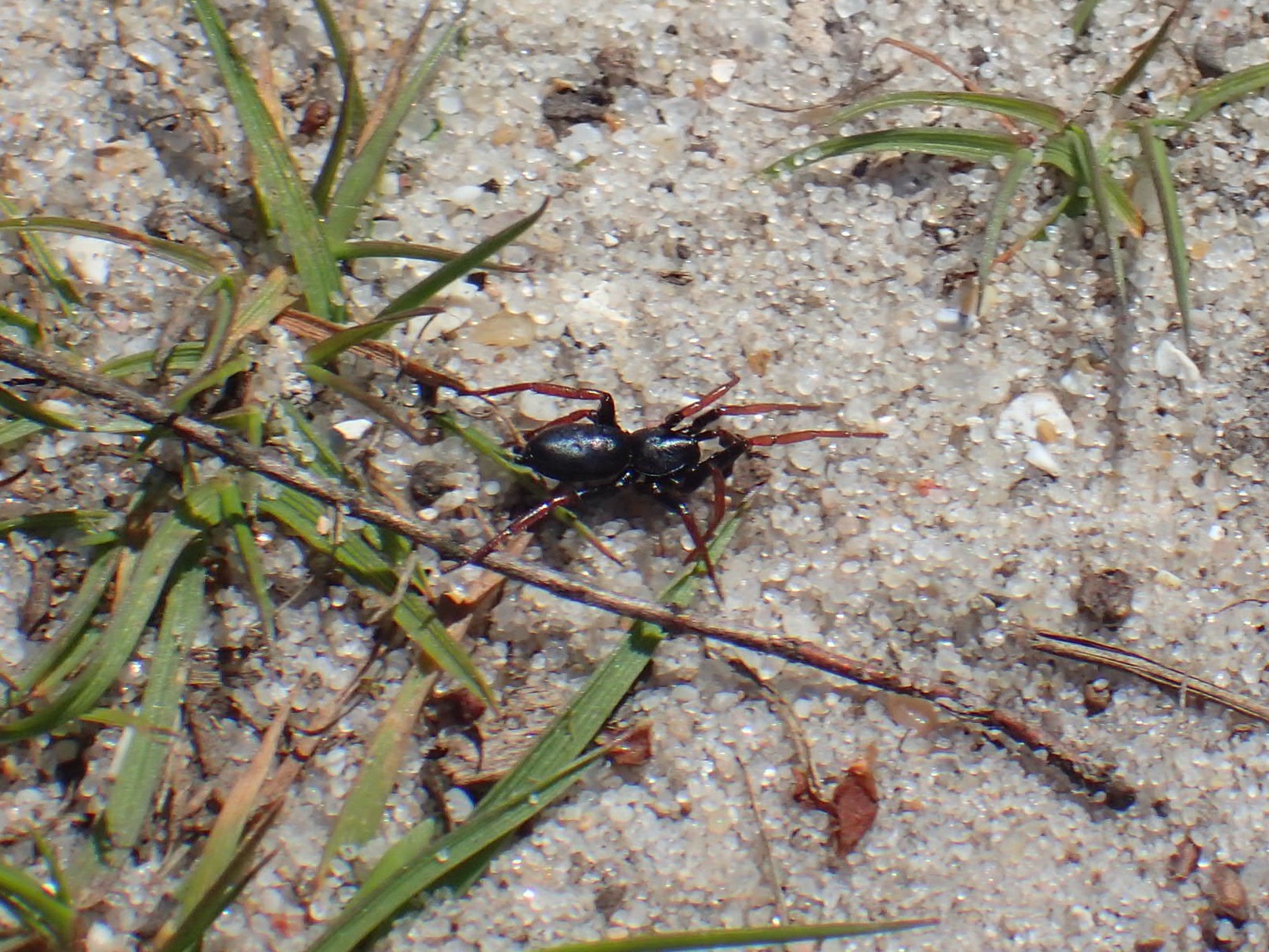
Buxton Heath is one of our favourite places to go for an afternoon walk, and even a family stroll down the main path along the heathland usually turns up something new. That was certainly the case on this occasion, where we must have seen about 20 Black-banded Spider Wasps, including one returning to a prey spider left motionless on the path. The spider Trachyzelotes pedestris was another new one for me, as was the beetle Onthophagus similis and leaf mines of the Pale Feathered Bright moth (Incurvaria pectinea). Throw in good views of Linnet, Stonechat and Yellowhammer, plus a flyby Cuckoo, and it was an eventful visit.


WHITLINGHAM: May WeBS - crow predation of Greylag gosling.

23rd May 2021

The May WeBS count got off to a dramatic start, as whilst counting the geese on the beach area a Carrion Crow picked up a Greylag gosling and flew off with it, flying across the path in front of me and dropping it onto the barn meadow, where it proceeded to kill and eat it! Whilst the Carrion Crows are an ever present in this area I had never actually seen them take a gosling before (and it wasn't a newly hatched one either). Since posting this observation on Twitter another observer told me that she had seen the same thing, and that actually the crows seem to have developed a technique for coralling the young against the shore. This could partly accout for the seemingly low number of fledged goslings this year.

Other than the gosling predation there wasn't too much of note, a brood of 6 cygnets had hatched and six Common Terns were present, whilst four Tufted Ducks were the only non-Mallard ducks. There was a good range of insects seen, including Aglaostigma fulvipes, a fairly common sawfly but a new one for the site, and a Stonefly (unfortunately not able to identify it to species level).


NORWICH: Mid May periwinkle fungi

Mid May 2021

The highlight of this weeks wanderings was to finally catch up with Subterranean Clover growing in Earlham Cemetery. Having initially walked past a large patch of it, Ian Senior was able to point out that I had almost been standing on a patch. Closer to the city I noticed some Greater Periwinkle with fungi on the leaves, which turned out to be a whole community of a mildew, Golvinomyces vincae, a rust Puccinia vincae and a parasitic fungus growing on the rust, Tuberculina sbrozzii


A couple of aphids were also of interest, Acyrthosiphon pisum on Broom and Callipterinella calliptera on Birch.


WHITLINGHAM: Missed Tern, new sawfly.

16th May 2021

Following the amazing find of a Caspian Tern at UEA Broad, Justin Lansdell managed to see the same bird briefly at Whitlingham. Unfortunately it didn't seem to take a liking to the latter site, heading along the broad and back to UEA. I given this flying about I spent an hour or so at Whitlingham in the hope that it would return, but sadly it didn't. Whilst there I noted a brood of six Canada goslings and three Greylag goslings, whilst the sawfly Monsoma pulverentum was new for me, and St George's Mushroom (Calocybe gambosa) was new for the site.


NORWICH: Snakefly and an unusual lichen

First half of May 2021

Various sightings on my walks to and from the city, culminated with the finding of my second ever Snakefly. Identification relies on the pattern of veins in the fore and hind wings - fortunately I managed to get a photo of the hindwing of this one to confirm that it was Xanthostigma xanthostigma.


Other sightings included Regal Piercer, a micro moth associated with Sycamore, the beetle Bruchus rufimanus and some Tawny Mining Bees. The first Swifts returned to our housing estate on 9th May, and on the same day I found an out of place Reed Warbler singing from scrub along a pathway at Waterloo Park, well away from any suitable habitat.


Finally, having seen it mentioned online I searched for and found Phylloblastia inexpectata. This is a foliicolous lichen (i.e. one that grows on leaves) and is almost certainly hugely overlooked, with this being the first VC27 (east Norfolk) record.


NORTH OF NORWICH: Bog Beacons and heather invertebrates

2nd May 2021

After leaving Earlham Marshes I headed to a site north of Norwich that is subject to a long-term NNNS Research Project. The site is currently being surveyed by a team of expert botanists, and a week or so ago they had come across a fungus that I had wanted to see for ages, Bog Beacon (Mitrula paludosa). This small but spectacular species is commoner in the north (where there are more bogs, funnily enough) but there were only a couple of previous Norfolk records. Armed with good directions from Ian I set off and found the area without much trouble, which was handy because the area has some rather deep boggy areas of mud.


Whilst on site I decided to sweep a bit of heather in the hope that I could find either of my long-term heathland target species, Heather Ladybird or Heather Shieldbug. I didn't see either, and actually didn't find too much. There were a few spiders, including Agalenatea redii, plus Small Heather Weevil and a Heath Rustic caterpillar.


NORWICH: Blue-headed Wagtail at Earlham Marshes

2nd May 2021

The thriving community of birders in west Norwich, including some excellent UEA birders, had produced a string of great bird sightings from Earlham and Bowthorpe Marshes this spring. I was finally tempted to go and have a look by a Blue-headed Wagtail on Earlham Marsh, which given that I've never even seen our usual subspecies around the city was a very good find. Walking out across the marsh from the dragonfly pond the water levels looked good, and scanning across I noticed a Little Ringed Plover towards the back of the marsh. A couple were just leaving and told me the area that the wagtail had been frequenting, and after a couple of scans I found it actively feeding in an area near the bund. It gave great binocular views, although was just a bit too far for my bridge camera. Nearby my first Sedge Warbler of the year popped up and sang. I even managed to avoid any problems with the local horse, that had been giving some other birders a bit of agro before being moved off the site.


SOUTH NORFOLK: Ashwellthorpe anemone fungi

Late April 2021

Near the end of the month we went for our near-annual trip to Ashwellthorpe Lower Wood to see the Bluebells. Another tradition is for me to check all around the Wood Anemone plants in the hope of finding the scarce Wood Anemone Cup fungus that is sometimes found with it. Once again I drew a blank, but this increased scrutiny of Wood Anemone plants led to several new fungal finds, with the rust fungus Tranzschelia anemones and the smut fungus Urocystis anemones. I also noted the weevil Barynotus moerens, something I think I've seen here before but not been able to identify. There was also a couple of interesting sawflies, but they were from the tricky genus Dolerus, so without a specimen they could only be narrowed down to a species pair.


NORWICH: Biscuit Beetle and Eastern Rocket

Late April 2021

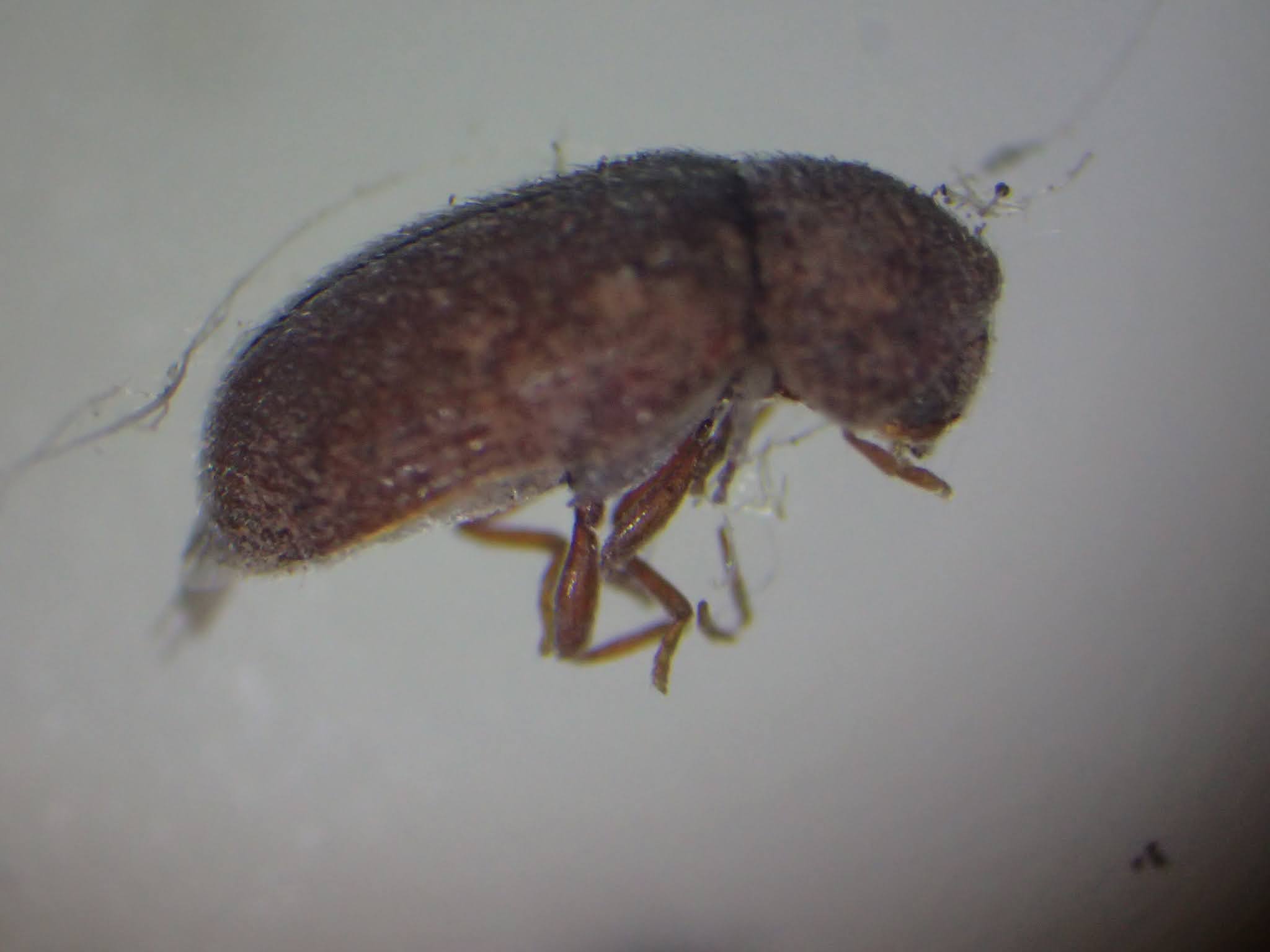
Noticing a tiny beetle dead on the windowsill at work, I stuck it under the microscope and identified it as a Biscuit Beetle. I was tempted to joke that it died of hunger because I would never leave any biscuits lying around, but its the larvae that are the voracious eaters so that doesn't really work.

On my way into work recently I had noticed some plants with yellow flowers at various points on my journey. They looked like wall-rocket species, but I hadn't stopped to examine them and find out exactly what they were. It wasn't until a week later when Louis and Chris had posted about seenig Eastern Rocket in Norwich that I suspected that was what these were - a thought confirmed when Chris gave me directions to some plants on Oak street, on my walk into work. The other ones I'd seen near New Mills were also this species, an alien that I'd not recorded before.