The Whitlingham Bird Report for 2025 is now available to download from the Bird Reports page or from here

NORTH NORFOLK: Fish & fossils

Late July 2021

A pleasant morning spent on a beach in north Norfolk looking for fossils with Adam. Having hardly been to the coast this year, a Sandwich Tern offshore was the first I'd seen in 2021. Fish darted about in sandy pools left by the tidy - mostly Common Goby I think. We found several fossils - mainly Adam to be fair, who has certainly got his eye in, and also some iron pyrites, which were the first I'd seen in the natural environment having owned a small pot of them bought from a museum or visitor attraction as a kid.


SOUTH NORFOLK: Gawdyhall Big Wood fungus foray

July 2021

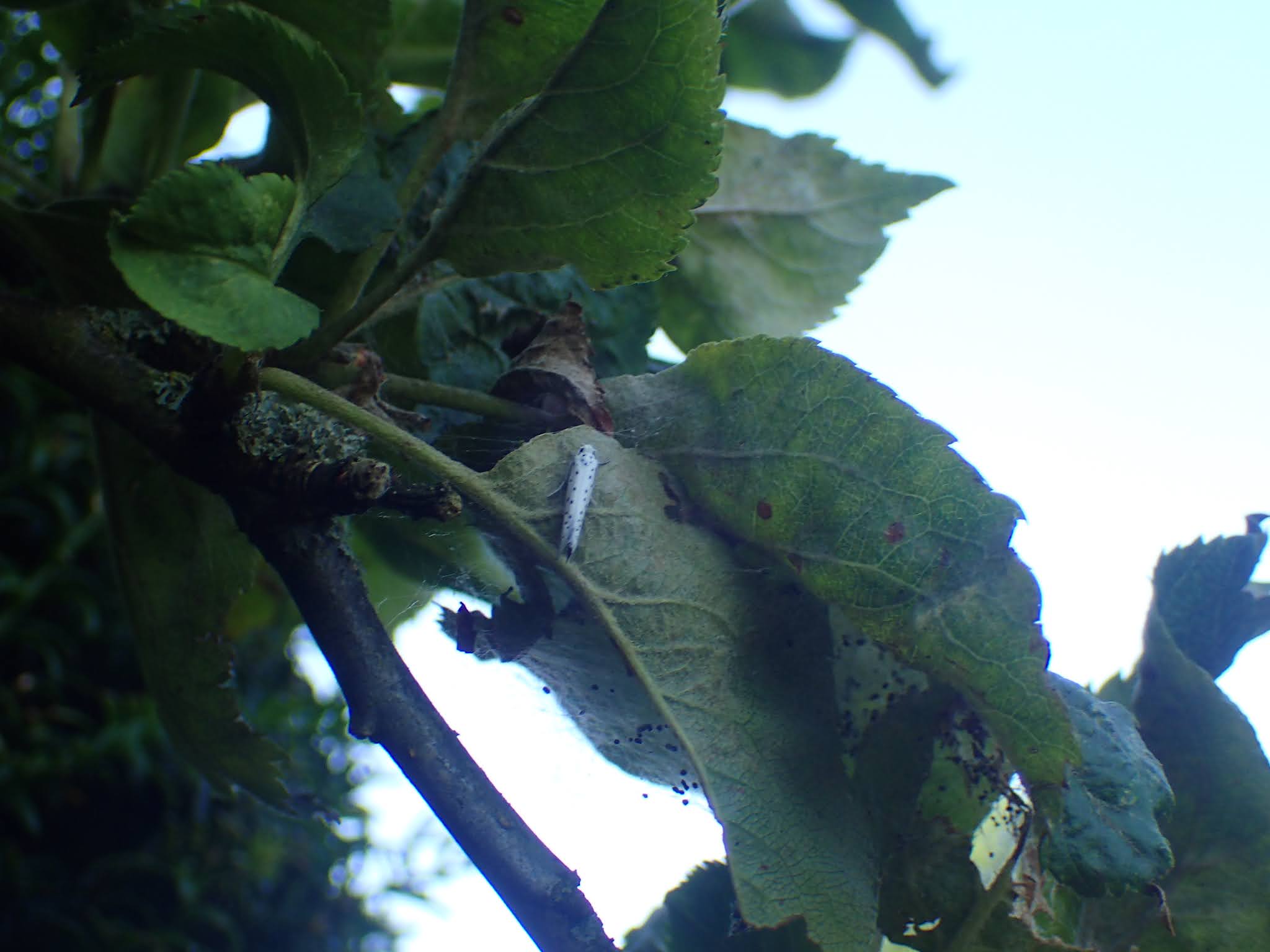
Last year I had been looking forward to a fungus study group event at Gawdyhall Wood, a prviately owned SSSI woodland with lots of Hornbeam in south Norfolk. It had been called off, and postponed agai this year, but we finally got in to have a look around in July. We had a quick look in the walled garden first, where an Ermine moth sp. resting on apple, next to a vacated larval web, was almost certainly Apple Ermine moth, although they are identical to at least one other species so it can't be recorded as such. Some tiny Box Bug nymphs were also of interest.


 The wood itself was large and with few formal paths. There were not too many large fungi, but we did see a few bits of particular interest including my first toothed cup, Tarzetta catinus, and Hornbeam Witches Broom, Taphrina carpini. On the way back to the cars I found a Purple Hairstreak resting, always a good find below head height!


THORPE MARSH: Toadflax Brocade caterpillars & insect highlights

Mid July 2021

Thorpe Marsh is the more neglected bits of my patch, so I made an effort to visit this month. Before going onto the marsh I walked around some of the local residential streets to check out areas of Purple Toadflax. My target was caterpillars of the recent colonist Toadflax Brocade moth (https://www.norfolkmoths.co.uk/index.php?bf=22230). These larvae were first recorded in Norfolk in 2019, and so far have not turned up in my own garden, but I was pleasantly surprised to find them on the second patch of plants I checked.


 I then spent a couple of hours walking around Thorpe Marshes. Little Egret was the pick of the birds, but I did find an overdue target species, Red Marsh Ladybird (Coccidula rufa). This species has been recorded here before, but I also hope at some point to find the other wetland Coccidula species here. At the Bungalow Lane end I found a new bug for me, Salicarus roseri, and a bit further along there were some Caliroa cinxia larva stripping the underside of an Oak leaf.


WHITLINGHAM: July visit summary

July 2021

I squeezed in three visits to Whitlingham during the month, hoping to hear or see a Ring-necked Parakeet that had been seen periodically around Thorpe Island. If they continue to colonise Norwich at a similar rate to the past few years then I'm sure it won't be long before I see one here, but for the time it eludes me. Not much else to report in the way of birds other than a few Swifts lingering and a pair of Linnet, although two Canada Geese had some extra white on the face (thought to be a pigment deficiency rather than signs of hybridism with Barnacle Goose).

Interesting non-avian sightings included several Brassica Bugs (aka Crucifer Shieldbug), a Lesser Stag Beetle, galls of Contatinia solani on Woody nightshade and Eucallipterus tiliae (an aphid on Lime trees)


NORTH NORWICH: Yellow Bird's-nest

Mid July 2021

I have a list of 'target' species that occur in Norfolk or Suffolk that I'd like to see at some point (admittedly mostly in my head rather than written down), and one of those species was Yellow Bird's-nest, a "myco-heterotrophic" plant, which means that instead of using chlorophyll to get its nutrition it parasitises fungi in the soil (Tricholoma species if I recall). I had previously looked for and not found this species at a couple of locations in north Norfolk, but having heard that some was flowering at our NNNS study site north of Norwich I called in, and with some good directions from Jo I eventually found a couple of flowering spikes. 

As this is a recording priority site I did have a look at the insects whilst I was there, and was particularly pleased to find a couple of new beetles, click beetle Ampedus balteatus and Black-striped Longhorn Beetle. There were also lots of Blushers beginning to fruit, and a Green Hairstreak caterpillar was the first time I'd found the larval stage of this species.


COTSWOLDS: Large Blue and some grassland specialties

Mid July 2021

Readers will probably recall that the majority of my wildlife observations come from East Anglia (well Norfolk and a couple of small bits of Suffolk) but I do try to go on one out-of-county excursion most years, often in search of new butterfly species. This year I went on one of Carl Chapman's tours to look for the Large Blue, a butterfly that was lost as a British species but subject to an extensive reintroduction project that involved restoring habitat to allow the part of the life cycle that requires particular types of ant.

We arrived at our destination in the Cotswolds to find some impressive limestone grassland, marked with large Woolly Thistles. One of the commonest butterfly species seen was the Marbled White, which living in Norfolk is still something of a novelty.We explored part of the site, seeing some nice flora and various butterfly species, but no Large Blues. We had just stopped for lunch when a call went up from a nearby footpath, as a male Large Blue had been spotted. Going over we managed to get our first views, including briefly perched up, before an obliging mating pair were also found!


One of the site volunteer wardens had come across to make sure that we had seen them, and I took the opportunity to ask him about one of the sites rare plants, Cut-leaved Germander. He very kindly took me to the area where it grows so that I could see this rare member of the Lamiaceae. Whilst up on the ridge we also saw Deadly Nightshade, and back down on the lower slope I foud some Clustered Bellflower.


A nice range of insects included a beetle on St Johns Wort, Cryptocephalus moraei, Downland Villa (a bee-fly relative) and lots of green Cryptocephalus beetles, probably C. aureolus.


NORWICH: Hurrah the fly up the window is a windowfly

Early July 2021

A couple of other interesting sightings from around Norwich. An emergence of flies in an old building is perhaps not unusual from time to time, but having seen a post online featuring something similar I realised that these particular flies were relatives of the soldierflies, and in an age with increasingly silly vernacular names being invented for books*, I was happy to find out they were called House Windowflies. The second species pictured here is a bug, Atractotomus mali, associated with Hawthorn or Apple.


* The logic of creating vernacular names is that learning the scientific ones puts people off learning groups of species that don't have vernacular names, and can thererfore make branches of natural history 'elitist' (although for this argument to be true, elite presumably means anyone who has taken time learning the names) and that people are more likely to care about things that they can name, which probably is probably true. There are however, some problems with this approach:

1) Personally I think the main thing discouraging people from learning about flies, beetles etc, is that there are thousands, many look very similar, no definitive field guide and many require dissection or microscopic analysis, rather than they have unfamiliar names

2) Quite a lot of these names are invented by one person (e.g. a field guide writer) and there is nothing to stop a different author also coming up with a completely different set of names, creating more confusion. Fungi is a notable exception, where a panel sat down together to come up with names for about 1000 species. Not all of the names are great, but at least they were agreed by consensus.

3) The best way of learning a new group is to go to events with experts and be shown things, yet most experts will have already learned the thousands of scientific names and are unlikely to be aware, or want to learn, thousands more made-up ones, that may or may not catch on. This actually risks creating a greater divide between the experienced and beginners.

Anyway, hobbyhorse stabled for now.

NORWICH: A selection of invertebrates (and a fungus) from Train Wood

Early July 2021

A very productive walk home via Train Wood led to sightings on an interesting chrysomelid beetle on St John's Wort and I finally managed to find a smut fungus that several other people had been noticing on False Oat Grass recently. A big group of Peacock caterpillars on nettles was nice to see too.

Dichrorampha petiverella
The leafhopper Eupteryx urticae and above it the psyllid Trioza urticae
Chrysolina hyperici
Ustilago avenae smut fungus
Peacock butterfly caterpillars

NORWICH: New to Norfolk - Haw Candlesnuff fungus

28th June 2021

Ending a good month for local wildlife sightings, I noticed some small white spikes growing by the path at Lakenham Way. They seemed to be localised beneath a single Hawthorn bush, and further investigation showed that they were growing on old buried Hawthorn berries. Fortunately Suffolk county fungus recorder Neil Mahler recalled an old journal article about them, Haw Candlesnuff (Xylaria oxycanthae). New to Norfolk, and an unusual species in that they seem to fruit in mid-summer and I've not noted them here despite walking this way into the city regularly for many years.


NORWICH: Goniglossum wiedermanni

24th June 2021

Another work commute highlight. A solitary bee associated with White Bryony has recently colonised Norfolk, and I was checking bryony flowers for it. I still haven't found it yet, but did find a fly associated with Bryony that is arguably better looking than the bee - Goniglossum wiedermanni.


NORWICH: Parasitised Mullein moth caterpillar

17th June 2021

On the way home from work I checked some Mullein plants and noticed the caterpillars of the Mullein moth. I've seen loads of these (although still not an adult moth), but also noticed that a couple of them were small and orange. I recognised the general appearance as having been 'mummified' by a type of parasitic wasp. I reared the wasp through, and it as identified online as an Aleiodes species. I then got in touch with national expert Mark Shaw, who asked for the wasp and the mummified caterpillar to be sent to him with a view to adding it to the collection at Edinburgh museum. When conditions allow it might be DNA barcoded, but his assumption is that it is likely to be Aleiodes leptofemur.


WHITLINGHAM: June WeBS cout and Tobacco-coloured Longhorn Beetle

June WeBS count 

Mute Swan - 78. Two families noted, one with one cygnet and another with two cygnets 

Canada Goose - 59. No young noted. It appears there was one brood hatched, but these were assumed predated at some point. 

Greylag Goose - 164. Only three of this years young noted. Carrion Crow predation of young goslings was seen this year - could it account for the loss of more broods? 

 Egyptian Goose - 50. Includes broods of two and three of this years young. 

Elsewhere Garden Warbler still in song and four Common Terns still present. A nice scattering of invertebrates, the highlight of which was a Tobacco-coloured Longhorn Beetle, previously recorded at Whitlingham but a new species for me.