The Whitlingham Bird Report for 2025 is now available to download from the Bird Reports page or from here

EAST NORFOLK: Lesser Emperor and other inverts

11th July 2015

In 2012 I had a very good year for odonata (dragonflies and damselflies). In terms of damselflies I saw Scarce Emerald and Small Red Damselflies for the first time, along with the recently colonised Willow Emerald and the vagrant Southern Emerald. Of the dragonflies I finally saw Black Darter, and also saw the now fairly regular migrant Red-veined Darter. These additions took me up to 29 Norfolk species (including Yellow-winged Darter from an invasion year in the 1990s). With this in mind I was interested to hear in 2014 when several Lesser Emperor dragonflies, a species that I hadn't seen, turned up in Norfolk at Felbrigg and Filby. I went to Filby to have a look, but didn't manage to see one.

Fast-forward a year, and Lesser Emperors were once again seen at Felbrigg and Filby. Feedback from an observer last week was that sightings were less frequest as the temperature dropped, so rather than trying after work I waited until the weekend, and luckily Saturday morning was sunny. Cathy & I arrived and set off along the boardwalk to look out over Ormesby Little Broad, which seemed to be more reliable for sightings than the Filby Broad boardwalk that I had tried last year. Several people were at the viewpoint and confirmed that there ad already been sightings that morning. Most of the dragonflies zooming past were Norfolk Hawkers, but it wasn't long before we got our first sighting of a Lesser Emperor flying past. A while later we got another look, once again flight views only. There didn't seem much chance of it settling, but I was just happy to get to see a new species.

On our way back to the car park we saw a wide range of invertebrates.The two highlights were the attractive hoverfly Chrysotoxum bicinctum, found by Cathy, and Four-banded Longhorn Beetle, of which I found two. There was also a range of bees, hoverflies and the commoner Yellow-and-black Longhorn Beetle. A White Admiral butterfly was also nice to see, although it dodn't stop to be photographed. A Common Emerald damselfly and a Brown Hawker were also new for the year.

Chrysotoxum bicinctum
Four-banded Longhorn Beetle
Yellow-and-black Longhorn Beetle

SUFFOLK: Bee-eater flock

9th July 2015

I seldom venture into Suffolk to twitch birds, but on Thursday evening I got a text from Ricky saying that he was going to Theberton, and as he was going to pass close by was I interested in coming? The target was a flock of ten Bee-eaters that had been in the area recently. No-one seems to know where they spend the day, so the idea was to head to the area that they had roosted the previous night in the hope that they would return. We left Norwich before there was any sign of them, but on the way we were able to check with Ben, who was on site and informed us that the whole flock were present.

It took around an hour to get to Theberton, and as we arrived lots of birders were leaving (seldom a good sign!). We quickly established that the birds were still present, but they were no longer showing well on telegraph wires, and were instead flying over some poplars before going to roost. Looking up as we walked along the lane we picked out the Bee-eaters, drifting and swooping above the trees. A few minutes later and they had all landed and vanished amongst the poplar leaves.

The group of birders that remained scanned through the poplars hoping to pick out some of the birds, and it didn't take long to pick out two, with a third occasionally visible when the wind blew the leaves back. Just like Golden Orioles they could be surprisingly cryptic, despite the bright colours.


Before leaving we tried a different viewpoint from a nearby road, and Ricky noticed that there were actually two birds roosting cheek-to-cheek. The Bee-eaters had gone to roost at just after eight, and despite the Swifts and hirundines still hawking insects past nine, they seemed quite settled and never flew out, even when a helicopter went over the trees. Birders trying on Friday night were unsuccessful, so it seems we were lucky to see and spend a lovely sunny evening with these birds. Thanks of course to Ricky for driving and Ben for letting us know they were still there.

NORTH NORFOLK: Sculthorpe Glow-worms

4th July 2015

On Saturday evening Cathy, Margaret & I went to Sculthorpe Moor for one of their organised Glow-worm walks. In the past Glow-worms were fairly widespread, even occurring at Whitlingham in the 1990s, but in recent years they have declined, and having not seen one for several years we decided to go on this walk. Incidentally the decline is a bit tricky to be sure about, as not that many people go out after dark during the summer surveying for Glow-worms.

We arrived just before nine and had a brief talk, before setting off for a walk onto the reserve. As it began to get dusk Woodcock began to fly over and we got brief views of a Barn Owl. We stopped to admire the new elevated boardwalk and hide, which is almost finished and due to open over the summer. We spent a bit of time at the hides at the end of the reserve to wait for it to get dark.


Once the light had gone we headed back in search of our quarry. Along the edges of the path we saw three adult female Glow-worms. It is the females that produce the best 'glow' to attract the males. The larvae also glow, however they can turn it on and off, producing blinking or disappearing lights rather than the steady light of the adult. We saw lots of larve (20+) as we walked back through the wooded areas, and also stopped to admire a bright orangey moon from the Whitley hide. I didn't get any good photos of the Glow-worms (I have included a picture just to show the light) but if you didn't read my blog back in 2009 then have a look at a photo I took then of a mating pair at Taswood fishing lakes: http://jamesbirdsandbeer.blogspot.co.uk/2009/07/taswood-lakes.html

 Glow-worm in the dark
 Pre-harvest moon

NORWICH: 10th ladybird of the year

7th July 2015

Without really trying, this year has become my most successful for ladybirds, with several new species already this year. On Tuesday I noticed another species in Norwich city centre, a 10-spot Ladybird. Like many of the species it is very variable, but this was the 'standard' form. Despite having seen ten species so far, there are still a number of species around that other Norfolk naturalists have seen of late, such as Larch, Cream-streaked and Adonis ladybirds. I'd also like to see Water Ladybird, which appears to occur in Norfolk, although I'm not sure of any specific sites for it so simply a case of keeping a look out.


WHITLINGHAM: Looking for a shiny moth

3rd July 2015

On Thursday Tim Hodge had seen a rare species of day-flying moth at Whitlingham. The Horehound Longhorn moth, an attractive purple-and-bronze coloured species has very few Norfolk records, although it seems to be having a good year this year. It can sometimes be found on the flowers of Hogweed, and as Whitlingham Lane has a good mixture of both Black Horehound (the larval foodplant) and Hogweed, I had been keeping an eye out for this species for the past couple of years without success.

After work on Friday I headed down for a quick look along the lane, bumping into James Lowen in the process. Despite searching every Hogweed plant we could get to, we had no luck. Still, knowing that it is present I shall put more effort into looking for it on future visits. This close attention to the Hogweed flowers did pay dividends though, with several new patch species. Some small yellow and black longhorn beetles turned out to be Fairy-ring Longhorn Beetles, and I also added a couple of Capsid bugs.

Fairy-ring Longhorn Beetle

Having failed to find the Horehound Longhorn, I had a quick look around the picnic meadow, where I still couldn't find the Bee Orchids that are meant to be there. I did find a single plant of Common Broomrape, which is fairly common around Norwich but was a new patch record. A large micro moth that I repeatedly flushed from the long grass looks like Rush Veneer to me, possibly a migrant.

 Rush Veneer moth (I think!)
Common Broomrape

NORWICH: Some more Norwich insects

w/c 29th June 2015

Despite work and the oppressive heat, I still managed to see some interesting insects this week. The first of these was a bug that flew in through an open window whilst I was at work. I potted it and took some photos, and was able to identify it as Deraeocoris flavilinea. As there were no Norfolk records showing up on the NBN maps* I contacted the county bug recorder, who informed me that it was only the second county record, so a good record.

Deraeocoris flavilinea

The next day nothing made it through the windows, but I did notice a ladybird on the outside of the window. I leaned round and potted that too. I recognised it as a Cream-spot Ladybird, my 9th ladybird species of the year so far.

Cream-spot Ladybird

The most pleasing insect of the week however was a new moth for me, Lilac Beauty. It was caught by my in-laws, who called Cathy having been unable to find it on their butterfly and day-flying moth guides. They kindly invited us over to have a look. Lilac Beauties have an interesting crinkled-wing look, presumably to help them camouflage themselves as dead leaves. On the same evening I was doing a bit of gardening when I found my first Soldierfly, a shiny green and blue species called Broad Centurion.

 Lilac Beauty
Broad Centurion

* NBN is the National Biodiversity Network. If you want to get an idea of how common (or not) a species is in your area, type in the latin name of you species followed by NBN into your search engine. It will bring up a page with the option to look at a map (top right of the page) showing all of the records submitted to the network. It gives a good indication of species range, but not definitive because some records haven't been updated or submitted.  
For my example, the page is here: https://data.nbn.org.uk/Taxa/NHMSYS0020920407

YARE VALLEY: Strumpshaw moths

27th June 2015

Today was the first of three public moth mornings scheduled at Strumpshaw Fen. Having previously been to ones in July and August, we had booked this June one in the hope of seeing some different species. So far the year has been relatively poor for moths, but the recent warm weather ensured a large catch (100+ species) spread across three traps. Some of the most 'crowd-pleasing' moths included four hawk moth species (Elephant, Lime, Poplar and Eyed), Drinker, Buff-tip, Swallow-tailed and Green Silver-lines. Several micros were new for me, along with three macro moths - Scorched Carpet, Pinion-streaked Snout and Scallop Shell. Many thanks to Ben for putting out the traps and going through them.

Scorched Carpet
Pinion-streaked Snout
Scallop Shell

Once we had gone through the moth traps we headed down towards the river. A couple of Red-tipped Clearwing moths had been seen here last weekend, and as I had never seen any of the clearwings it seemed a good place to look. We stopped near some large brambles, and quickly afterwards located a single Red-tipped Clearwing. Cathy & Margaret spotted one flying round, and I managed to find it again resting on the bramble leaves,  which was excellent. We couldn't find any more, and as it was rather hot and lunchtime we headed home.

Red-tipped Clearwing

NORWICH: Earlham Cemetery summer insects

Late June 2015

During the last week I have made three brief visits to Earlham Cemetery. The first one was a bit of a washout as there was a heavy shower. The second two visits were made during warm weather and I saw a range of insects. There had clearly been an emergence of Yellow-and-black Longhorn and Swollen-thighed beetles, both of which could be found visiting bramble flowers. Meadow Plant Bug was numerous but still a new species for me. I found a tortoise beetle Cassida vibex  on a Knapweed plant, a Malachite Beetle, and a Yellow Shell moth was flushed from the grass. On the final visit I also saw some Common Broomrape growing in one of the older grassland areas.


NORWICH: Interesting wildlife at home

21st June 2015

In recent weeks there have been quite a few Hummingbird Hawk Moths seen in gardens across Norfolk, quite often nectaring on Red Valerian. We have some Red Valerian in the back garden, so quite often in the morning whilst waiting for the kettle to boil I look out of the window checking for hawk moths. On Sunday morning I was looking out of the window, not seeing Hummingbird Hawk Moths, when a Little Egret flew over the garden. I'm only about half a mile from the River Yare, but as the bit inbetween is mostly houses it was not only unexpected but also the first time in I've got Little Egret on a garden list for any house I've lived in.

Having been out doing non-wildlife related activities we returned to the house late evening to find a small black ladybird on the door frame. Common species like Harlequin and 2-spot Ladybird have black forms, but based on the size and also the shape (it was rounder than the commoner ladybirds) this one looked different. Ladybirds are quite a distinctive group, and they also have a very efficient recording society. Cathy had the free iRecord Ladybirds app on her iPad, and flicking through the species guide she soon identified it as a Pine Ladybird. Having checked the features (small size, round body, ridge around the edge, two red comma shaped markings and two red dots) I agreed, and found that it was a new species for me. I sent the record to the UK ladybird survey via iRecord, and the record was verified a couple of days later.


THORPE MARSH: More invertebrates

19th June 2015

I popped down to Thorpe Marsh after work on Friday. Summer can be a bit of a quiet time for birds here and so it proved. Reed Buntings were the most obvious bird, with at least five seen. An Oystercatcher called and a couple of Lapwings were around. Reed, Sedge and Willow Warblers all sung occasionally.

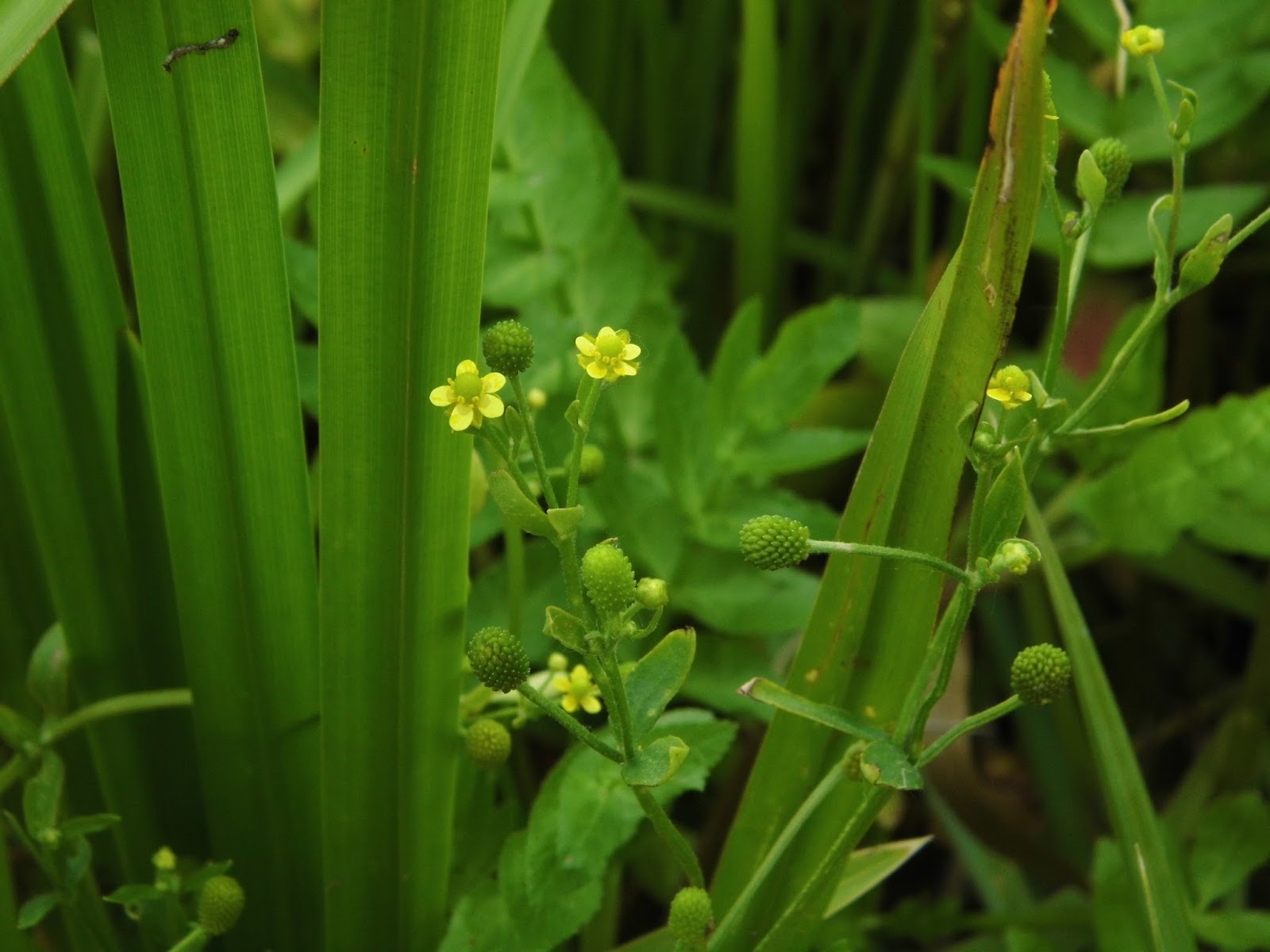
Turning my attention to plants and insects I noticed some Celery-leaved Buttercups in flower. A reed beetle seemed to have a purple sheen rather than the commoner copper colour. These beetles can be very variable, but I have tentitatively keyed this one out as Donacia semicuprea rather than the commoner Donacia simplex - let me know if you disagree! A Yellow-tail moth caterpillar was on a Hawthorn near the bird screen, a new patch caterpillar for me but not a new species as I have seen the adult moth at Whitlingham previously. Lots of Swollen-thighed Beetles and a few hoverflies were out on the Hogweed. I also located a new gall on some Ash trees, and a distinctive aphid species on Guelder Rose.

Celery-leaved Buttercup
 Donacia semicuprea (I think!)
Yellow-tail Moth caterpillar

WHITLINGHAM: June counts & meadow insects

12th June 2015

As I had a busy weekend planned I went down to Whitlingham on Friday evening to complete June's wildfowl count. A lone Mute Swan, a heard-only Moorhen and four sleeping Mallard were the only birds on the Little Broad, although I paused to check out a quiet Reed Warbler amongst the Alders, which didn't seem to be anything rarer.

It was a different scenario near the slipway on the Great Broad, where someone feeding the geese brought in a large proportion of the 177 Greylag and 44 Canada Geese present. Packed together they moved like a swarm of insects towards the food, although my description of them as a 'swarm' appeared to envoke a polite rebuke from a gentleman on Twitter. Lest any readers think the same, humour can be difficult to convey online, but in the majority of cases when I use a word out of its original context it is deliberate and used to convey an impression of my experience, rather than just a mistake. A pair of Mute Swans had one cygnet, there was no sign of any of the other nesting pairs. Three Common Terns screeched noisily back and forth, and one of the local Oystercatchers flew over. Sixteen Tufted Ducks remain.

I had heard that Bee Orchids had appeared in the picnic meadow last year, so I made a brief diversion to have a look for them. Not only are Bee Orchids lovely plants to look at, there are also several different variations that can sometimes turn up amongst the regular plants. Two in particular that I have never seen are the yellow-flowered form 'ochroleuca' and a pointed form 'trollii', sometimes called Wasp Orchid. I am still to see both, as I couldn't find any Bee Orchids at all. Whether I was looking in the wrong place or they haven't emerged I'm not sure.

Of course no time in a wildflower meadow is wasted if you are a naturalist. Having recently written a short guide to the plant galls found at Whitlingham (you can download it from my 'species guides' page, along with several other guides - I will add more over time) I was pleased to see a gall on Lime leaves that has been recorded previously but I hadn't seen. It takes the form of green or reddish 'pustules' on the upper surface of the leaf.


I was equally pleased to see a female Black-tailed Skimmer dragonfly on the meadow. The males used to be very numerous holding terrritory along the south shore of the Great Broad, but seem to have declined in recent years. I saw a number of different grasses, all of which I am ill-equipped to identify but will make the effort at some point. Other interesting sites included a Green Carpet moth, the hoverfly Eristalis arbustorum, the Soldier beetle Cantharis nigricans and what I think are young Common Green Capsid bugs.


NORFOLK: Bladderwort at Silfield

7th June 2015

Following our Suffolk sojourn, Dad & I called in to Silfield nature reserve on our way back to Norwich. Silfield is a small nature reserve on the opposite side of the A11 to Wymondham. It was constructed mainly as mitigation for the destruction of some Great-crested Newt habitat. I had been vaguely aware of its presence for a while, probably from reading it in the EDP years ago, but otherwise knew very little about it. This year, mainly as a result of some postings on the Norfolk wildlife facebook group I had heard more about it, in particular that one of the ponds has Bladderwort in it. Bladderwort is an interesting plant, it is insectivorous but also aquatic, trapping tiny water creatures in its eponymous bladders. This was a plant that I had wanted to see for a while, and Nick kindly sent me a message earlier in the week to tell me that it was in flower.

Having left the A11 at the wrong turning we had a bit of a long route round to get back to Silfield (I'd left my OS maps at home, which was a mistake), but we managed to find Burnthouse Lane and followed it along to the end where it widened out into space for a few cars to park. A footpath headed over the A11 to another set of ponds, but as we were only making a brief stop we headed east along another footpath and then through a gap in the hedge. A clearing opened out in front of us, with a very nice pond at the end. Amongst the pondweed there were lots of Bladderwort flowers on red stalks out of the water. Four-spotted Chasers and several damselfly species were also numerous. Having taken photos of the Bladderwort and Bogbean, we also noticed some fish with red fins (we think they were Rudd) close to the surface, and a Buzzard flew over. Once you blocked the traffic noise out it was a nice little reserve, which I shall endeavour to visit again at some point to look around properly.


SUFFOLK: Pub beetle

7th June 2015

Whilst out in the Waveney valley on Sunday, dad & I stopped for lunch at the Dolphin Inn at Wortham. It was lovely and sunny so we sat outside, and whilst eating I noticed a small black and red beetle flying in and running over the table. I got my camera out and managed to get a photo when it returned. At home I tentatively identified it as Glischrochilus hortensis. Andy Musgrove confirmed the ID, and interestingly mentioned that he too has seen this species outdoors at pubs, suggesting that it may be attracted by spilt beer. So next time you are sitting outside a pub having a drink, keep an eye out for this beetle!


SUFFOLK: Target species - Frog Orchid

7th June 2015

One of my target species for the past couple of years has been Frog Orchid, a rather unassuming greenish plant that has only one East Anglian site, a meadow in Suffolk. I had planned a visit with dad, but I was not confident of success. Orchid flowering times vary year on year, and a friend had visited earlier in the week and not seen any Frog Orchids. When I mentioned I was going to another orchid enthusiast he said "couple of weeks early maybe" and finally of course we actually had to find them amongst the vegetation.

On our way we made a brief stop to look for Bee Orchids, but didn't see any. They are out at some sites, so I put this down to bad luck and we carried on. Finding our target site, Wink's Meadow, also took a bit of doing. The site is small, in fact it is a tiny natural oasis amongst a sea of agricultural land, and accordingly it wasn't signposted from anywhere, keeping us guessing right up to our arrival when we passed the entrance board.

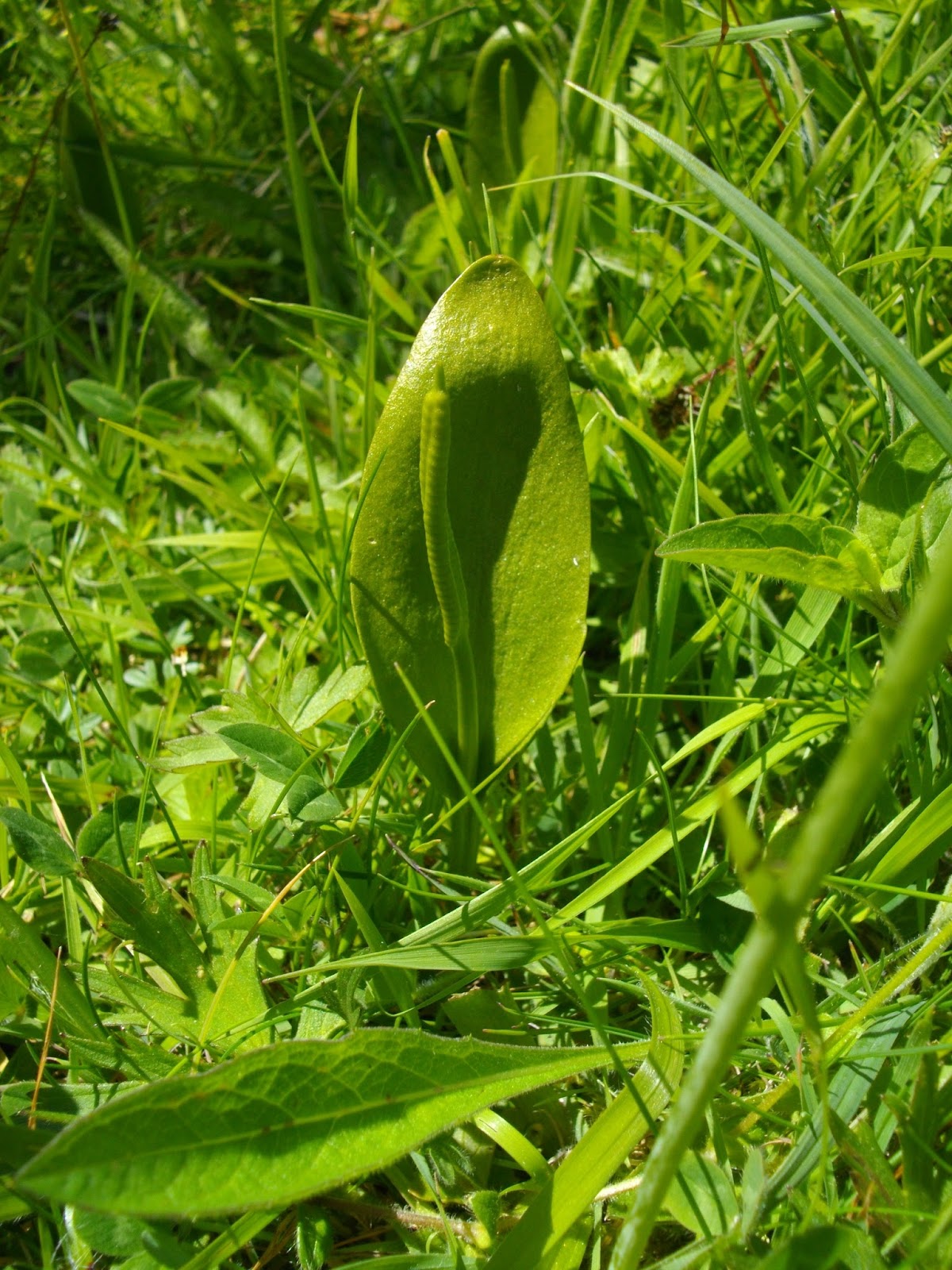
One of the reasons for coming, even if the Frog Orchids weren't flowering, was to see another orchid that grows here in large numbers, Green-winged Orchid. I had seen them before, but not seen the 'alba' variety, which has none of the pinky-purple colour, giving flowers that are white with the green streaks. We soon found several of these, along with many paler plants with largely white flowers but some pink markings. Many were going over, but there were enough plants to find some fresher ones. Dad spotted some Adder's Tongue ferns, unusual plants that resemble mini Cuckoo Pint. 


Eventually (and to my delight) I did find three Frog Orchid flower spikes. Two completely out and one with flowers at the bottom out and the rest in bud. Frog Orchids vary in colour from green to a dark red, but most flowers are somewhere in between. Interestingly the first one I found had a reddish hood but green lip, whilst the second two were reversed with a green hood and reddish lip. Thanks to those (particularly Dave & Chris) who gave me information about this site.


WEST NORFOLK: Snettisham Park Farm

30th May 2015

On Saturday Cathy, Margaret & I went to Snettisham Park Farm. It is a working farm, but probably best known for the deer park and trailer rides out to feed the deer. We had been when we were younger and decided to go back and have a look around. Having had a look at some of the animals we set off on one of the walks around the farm. We walked along the River Ingle for a bit, before heading along some grassland where we saw a Garden Chafer. There was also a sign with a horse that someone had painstakingly turned into a Zebra using tippex, which was impressive as far as graffiti goes.

 Garden Chafer
 Captive Red Deer herd
Caution: Man on Zebra

When we got back we went on one of the aforementioned rides out to the deer. We saw a pair of Shelduck with six ducklings on one of the ponds, and on the way back a Grey Partridge ran out of some long grass. Tufted Duck and Gadwall were also on one of the lakes.