The Whitlingham Bird Report for 2025 is now available to download from the Bird Reports page or from here

Showing posts with label Cley. Show all posts

NORTH NORFOLK: Cley and some Paston ichneumons

Late October 2021

Having met up with Adam in North Walsham we wended our way towards the coast, getting good views of Red Kited, Buzzards and Kestrels as we travelled through the villages. Our first stop was at a woodland near Saxthorpe where we had a look for some fungi, before heading to Cley. Having barely visited the coast this year there were a few common year ticks seen on Arnold's Marsh or the sea, including Dunlin, Grey Plover, Guillemot and Red-throated Diver, but the highlight was sitting on the shingle ridge as a flock of Snow Bunting flew low over our heads.

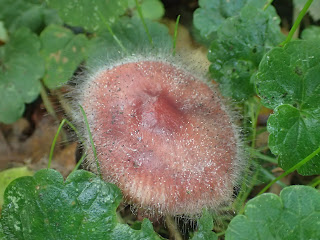
Rosy Bonnet infected with Bonnet Mould
Huge array of Birch Polypores

On our way back we stopped off at Adam's patch at Paston cliffs. The rather unexpected highlight here was a selection of different ichneumons, some found on the turf and others on Hogweed flowers. These included Amblyteles armatorius, Ichneumon sarcitorius and Stenichneumon culpator. A flock of around 120 Golden Plover were in in the middle of a nearby field and we heard Pink-footed Geese in the distance as we hurried back to the car to avoid a heavy downpour.


NORTH NORFOLK: Cley NNNS walk

Mid-July 2019

As part of the NNNS 150th anniversary celebrations some joint walks with the NWT had been organised, mainly at Cley Marshes. These were all focused around a wildlife group that wasn't birds, so that if any birders wanted to develop their ID skills by looking at another group then they could. I had booked on one of these walks with Nick Owens, author of the Bees of Norfolk. The walk was intended to be looking at bees, hoverflies and grasshoppers, but with a knowledgeable group we ended up looking at all manner of invertebrates.

We saw a good range of invertebrates, including some quite scarce beetles, but the highlight for me was probably Flecked General, one of the large soldierflies that I'd never seen before. A handful of photos from the day are included below.

 Yellowtail moth caterpillar
 Coremacera marginata - a snail-killing fly
 Cystiphora sonchi galls on Sow-thistle
Flecked General

NORTH NORFOLK: Cley art exhibition

6th January 2019

The old visitors centre at Cley hosts art exhibitions throughout the year, and the one over Christmas was by Steve Cale. Cathy & I are both big fans of Steve's work, so we were keen to go and have a look before it finished. We had lunch in the cafe first, before going through to have a good look. Steve was in residence and we had a good chat about his paintings and birding in general. It was also nice to have a chat with Bob from the CleySpy shop. Having bought a print that took our fancy we returned to the shop for a look around.

We decided not to go onto the reserve itself, but quite a few species were visible scanning out from the centre, including my first Black-tailed Godwits, Shelduck, Shoveler and Great Black-backed Gulls of the year. Sighting of the day was a Peregrine that had flown in and was visible on the ground near the back of the reserve (apparently on a kill, although we couldn't see that because of the vegetation).

NORTH NORFOLK: Mini birding pub tour

31st August 2018

Having earmarked this day to go birding with Adam, Gary and Jim, it was somewhat typical that the winds were uncondusive to seawatching or migrant birds. We had initially been thinking of getting a lift up to the coast and then using the Coasthopper bus to move between sites as a nostalgic reminder of birding before I passed my driving test. Unfortunately the lift would have meant starting very early, so I decided to drive.

Upon reaching North Walsham to pick up Adam we had a quick chat to plan the day, and decided to head for Blakeney. Adam suggested heading to the King's Arms, which seemed to be an odd place to start as it sits on the high street, but what we didn't realise is that the garden out the back is adjacent to a scrub-lined lane and National Trust owned meadow. Whilst having a drink we racked up around 20 species, including a Red Kite circling up with some Buzzards. The highlight was a presumably migrant Reed Warbler seen in the Hawthorn hedge.


The plan was to eat at the Dun Cow because of the marshland views, but it was still a bit early so we stopped off at the Three Swallows. A large group of House Martins were visible over the marshes, along with a few Swallows (some sort of pub-birding gold star here for seeing a species from a pub of the same name). Sparrowhawk, Carrion Crow, Coal Tit and Cormorant were also new here.


Moving on to the Dun Cow, seeing a Small Heath butterfly on the green, we got drinks and did an initial scan, picking up Mute Swan, Rook, Grey Heron etc. Looking back towards Cley we picked up Teal and Avocets in flight too. After looking at the menu we decided to head to Sheringham for some more basic food (I'm sure the food is still very nice, but it looked a bit posh for us. The website states that the aim is to be a pub that serves good food rather than a restaurant with a bar, but how many pubs offer Lobster Thermidor as an option?) The main reason we couldn't order though was the inclusion of Spam on the menu, making it impossible to actually say what we wanted (spam, spam, halloumi chips and spam...*)


Arriving in a rather busy Sheringham, we located ouselves at the Two Lifeboats where we had some bowls of topped chips and scanned out to sea. Jim picked out three Gannets moving east, then a Sandwich Tern flew west. A small flock of Ringed Plovers flew east, a new pub species for me.

After lunch we decided to call in at the Gunton Arms on the way back. This lovely country pub set just inside Gunton Park afforded lovely views, including of the Red and Fallow Deer herds kept in the park, but failed to turn up the hoped for Nuthatch, Green Woodpecker, Mistle Thrush etc. We did add a few commoner birds to the daylist. A lacebug that landed on me turned out to be Physatocheila dumetorum, a new species for me.


I finished the day with a pub list of 42 - although some of the others had heard an extra species or two.


* If you don't understand this reference, please go and watch the entire Monty Python back catalogue

NORTH NORFOLK: Cley Dowitcher and Soldierflies

16th July 2017

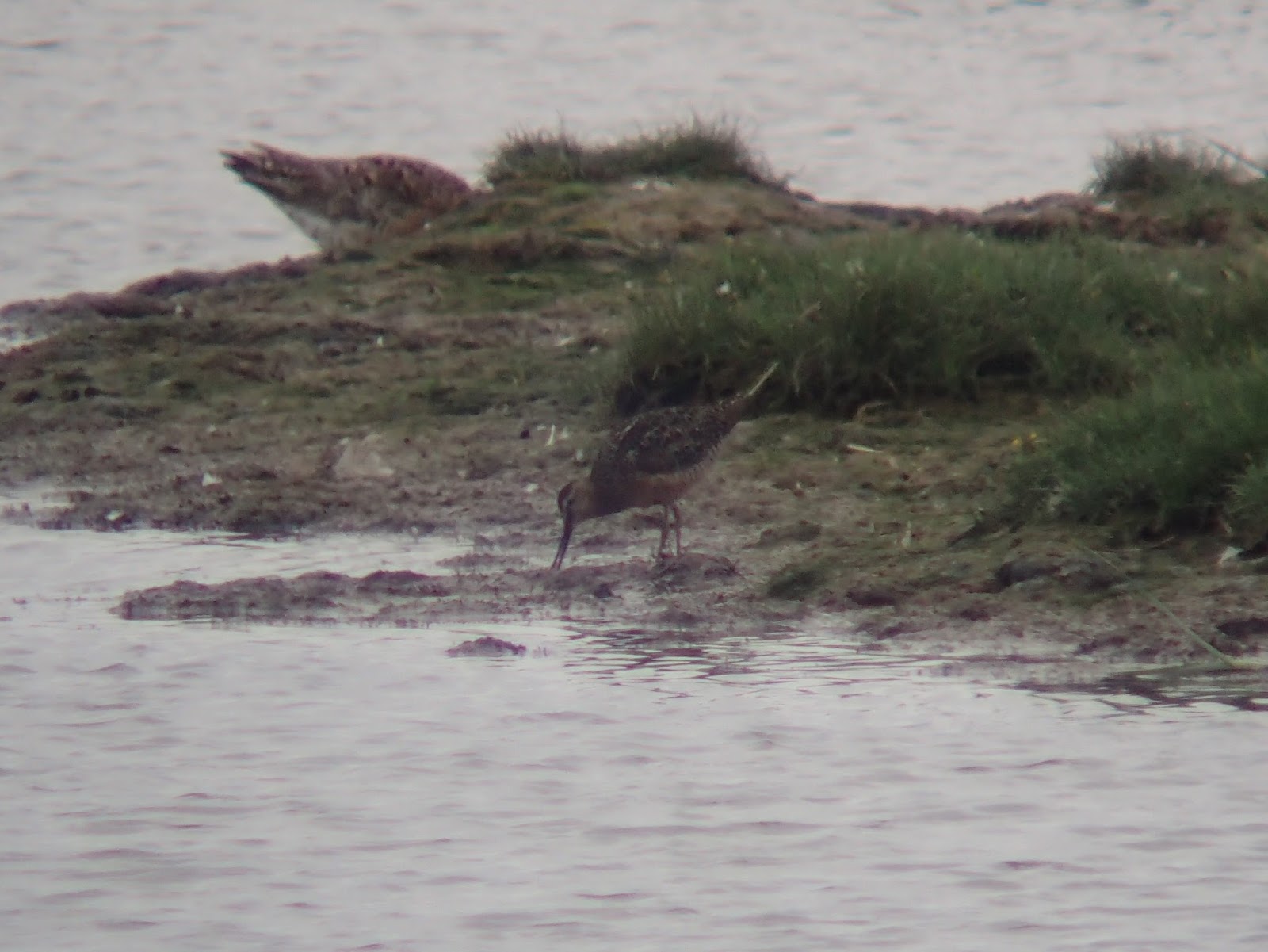
On Sunday I knew I would have a few hours free after dropping Cathy off in the city, and I thought I would head out to east Norfolk to look for another one of my target species, Fen Mason Wasp. Those plans changed in the morning, when news came through that Jake had found a Long-billed Dowitcher at Cley. Whilst reasonably regular in the UK, there hadn't been a Norfolk record since 2007, so I decided that I would go and have a look.

Heading north out of the city the roads were wet, and as I carried on towards Holt it began to rain. Not ideal, but at least the weather wasn't likely to do my chances of seeing the Dowitcher any harm. I parked up at the visitors centre in the assumption that the east bank car park would be full, althoug as it turned out I could have parked there and saved myself a bit of time.

A small group of birders including Paul Woolnough were stood level with the serpentine, watching the Long-billed Dowitcher alongside a few Black-tailed Godwits and Redshank. It showed reasonably well, although the overcast conditions made photographs poorer than normal.


After a while I carried on past Arnold's Marsh and had a quick look amongst the Birdsfoot Trefoil. Six-belted Clearwing moths seem to show well on the equivalent plants at Minsmere, but here there was no sign of any. At that point I got a phonecall from John Furse who was on East Bank and asked how I was getting on, adding that I was about a month late if I wanted to see the clearwings.

On my way down the path I had deliberately avoided looking too closely at the plants as I knew I'd be distracted by the insects. On the way back I made up for this by checking as much Hogweed and Ragwort as possible, finding three species of soldierfly and a new hoverfly to complete a wildlife-filled weekend.

 Barred Snout female
 Barred Snout male
 Flecked Snout male
 Green Colonel
Anasimyia contorta

NORTH NORFOLK: Holt Morels

10th April 2017

A week ago Cathy & I had visited Holt country park to see my first False Morels. Today we returned along with Margaret, to see some 'true' morels, Morchella esculenta*, again found by Will. The False Morels have a folded texture, whilst these morels were larger and have a honeycomb look about them. We saw 11 along a path close to the car park.


After our brief stop at Holt we carried on to Cley NWT visitors centre, where we had lunch and had a look at the art exhibitions. We then spent some time in Dauke's Hide, where the highlights were a male Bearded Tit, constantly squabbling Shelduck and a showy Lapwing. When the sun came out I checked the Alexanders for insects, picking out the hoverfly Helophilus pendulus, 2-spot Ladybird, 7-spot Ladybird and Harlequin Ladybird amongst the small unidentified flies.


After our Cley trip we called in again at Cley Spy, where I saw my first House Martin of the year flying over nearby buildings. A couple of Buzzards soared up close by too. On the outward journey we had been diverted as the Holt Road was shut for NDR work, so on the way home I decided to divert via Roughton. This proved to be a mistake, as there were delays to put in a roundabout just outside Holt, followed by longer delays for another (seemingly pointless) roundabout near Felbrigg, with the roadworks at Burgh Road in Aylsham thrown in for good measure. What with the radio adverts about work being done on the railway, woe betide anyone who wants to actually travel in the holidays.

* The morels we saw look like Morchella esculenta, however morels are one of the groups were taxonomy isn't necessarily settled - it might be that in the future DNA testing shows there are more or fewer species than we currently think.


NORTH NORFOLK: Salthouse Heath

4th June 2016

With an upturn in the weather, Cathy & I spent the afternoon in north Norfolk. We began at Natural Surroundings, where we had a nice lunch whilst watching a Stock Dove under the feeders.


We then carried on to Cley, where we noticed lots of presumably migrant hoverflies along with the Diamond-back Moths. Finally we headed to Salthouse Heath. I had hoped to see the May Lilies that grow here, but the heath covers a large area and we didn't see them. Incidentally if any readers know whereabouts they are I would be grateful so that I can try again next year.

Eupeodes corollae

Despite not seeing the May Lilies we did see a number of interesting species, mostly around a single Birch tree. Cathy found the case of a case-bearing moth, and the same tree held weevils, shieldbug nymphs and leaf mines caused by an Eriocrania moth sp. We also saw one of the lime green sawflies, Rhogogaster viridis.


NORTH NORFOLK: Cley day out

23rd January 2016

My birthday weekend, so I thought it would be worth going slightly further afield than Whitlingham. We settled on Cley, a reserve I have a good deal of affection for having been there for my first ever birding trip 25 years ago. Before going to Cley we stopped in at Bowthorpe Marsh (another of my favoured areas, having briefly been my local patch when I lived at Three Score). Our target was the returning Great White Egret, but despite it having shown well earlier in the morning there was no sign of it at Bowthorpe or further across on Earlham Marsh whilst we were there. We did get some nice views of some common  birds, including an obliging male Siskin that Cathy had heard call near to the path.

We arrived at Cley in time for lunch, although just too late to get a jacket potato. We almost couldn't sit down either, but a kind couple gave us their table as they were finishing up. A scan of the reserve whilst we waited for food turned up several year ticks (Brent Goose, Avocet, Shelduck, Wigeon). A redhead Smew had been reported on Pat's Pool, so we headed to Bishop's Hide for a look, but we couldn't see it, so we carried on to the Babcock Hide.

I hadn't been to Cley since the opening of the new Attenborough Walk and Babcock Hide on the recently aquired Salthouse Marshes. My main impression was one of lots of mud, particularly at the gate off East Bank. The pool in front of Babcock Hide (Watling Water) looks good, and in addition to the Grey Phalarope and Water Pipit, there was a range of waders feeding on the muddy areas. The hide held some familiar faces, including a UEA/NGB delegation planning their next heist twitch.

Grey Phalarope

On the way back to the car I had a look at some of the yellow lichen growing on the scrub. I had hoped it might be one of the more unsual species, but I think it was just the common Xanthoria parietina. We took the coast road back and called in at Salthouse duck pond. There was nothing particularly unsusual, nor any colour-ringed gulls, but Cathy did notice a dark green Mallard that was differently plumaged on its left and right sides.


Same bird, different sides

NORTH NORFOLK: Cley moth morning

12th September 2015

This weekend has been designated National Moth Weekend (in previous years there has just been a National Moth Night), and as well as people trapping in their own gardens, several events were put on around the county. I decided to go to the trap opening at Cley NWT visitors' centre in the hope that they might have caught some coastal specialties or migrant moths. Even without these I haven't seen quite a few fairly common autumn species, so despite the rain I was confident of seeing a few new ones.

We didn't get off to a particularly good start, because having arrived early I was waiting in the car park in the rain before we realised that the traps were already being opened around the corner. It turned out that there had been a mistake in the publicity for the event, with the NWT advertising it as a 9.30 start and Butterfly Conservation as a 10.00 start. Luckily I hadn't missed much. Five traps were opened, but there was little in the way of migrants (one Rusty-dot Pearl and one Silver-Y). There were two species that I hadn't seen before, so it was still worth going, particularly as both are scarce. The two new ones were Pale Eggar and Hedge Rustic.

 Hedge Rustic
Pale Eggar

NORTH NORFOLK: Cley marsh & beach

29th November 2014

With Christmas approaching we went to Cley visitors centre to pick up some of Steve Cale's excellent cards and have a look around. After lunch we walked down to Bishop's Hide, stopping to admire a pair of Stonechats by the path. From the hide we got close views of Wigeon, Teal & Marsh Harriers, plus distant views of a lone Avocet and a pair of Pintail. Retracing our steps we headed back to the car and round to the beach carpark, stopping briefly to look at the Brent Geese along beach road. Looking out to see we got close views of a bull Grey Seal just offshore, and a Great Northern Diver was sat on the sea. The most interesting find of the day was an egg case found by Cathy. I remembered I had an ID key from the Shark Trust, so when we got home she was able to identify it as that of a Small-spotted Catshark, not something I remember seeing before.

 Stonechat. Somehow my camera changed to 3:2 for this photo.
Small-spotted Catshark egg case.

NORTH NORFOLK: Cley White-front & White-rumped stuff

1st November 2011

At Cley we went and had a look at the wildlife art exhibition in the old visitors' centre, before heading out to the central hides. On the way we stopped to scan through a flock of Brent Geese, and I noticed a White-fronted Goose of unknown origin close by with the Greylags.


Further along a male Bearded Tit showed beautifully until I reached for my camera, at which point it flew a small distance into the reeds and pinged with laughter (maybe). Scanning Pat's Pool we saw one of the White-rumped Sandpipers, which was initially distant, but came closer after all of the small waders were put up by an unseen raptor. It later flew back after a similar disturbance. We also saw a Barn Owl hunting from the hide, and another one just east of Kelling on the way home.

NORTH NORFOLK: Cley Marshes appeal


If you are a member of the Norfolk Wildlife Trust or read the local press, you will no doubt be aware that the NWT have launched an appeal to buy the marshes to the east of the reserve. This land has been up for sale for a while, although the asking price was apparently higher per hectare even than high-grade farmland.  It is currently being used for wildfowling, i.e. the shooting of birds, which is an added incentive to protect the area. Cley is an iconic area for birders, I first visited as a seven-year old on my first proper birding day out, and have had many memorable days there since.  I know charities send out appeals all the time, but if you have fond memories of the North Norfolk coast then please consider donating money to increase the size of the reserve.

Norfolk Wildlife Trust Cley Appeal


Cley windmill

NORTH NORFOLK: Sacred Ibis

23rd June 2012 

I know the likelihood is that the bird is an escape, but given the large population in France (see Yésou, P. &  Clergeau, P. 2005 Sacred Ibis: a new invasive species in Europe. Birding World 18 (12): 517-526), has anyone submitted details of this bird to the BBRC, just for the craic? So far no species have been accepted into category C5 (vagrant species from introduced populations). Is there an understanding (either overt or covert) that a ringing recovery would be necessary for a first acceptable record, or could it be that any species widely held in captivity simply isn't submitted as it would be seen as a waste of time? Any information or thoughts are welcome via the comments below.

 
Sacred Ibis, showing colossal bill


Distinguishing feature 2 - vertical take-off (note the bill is still weighing it down!)

NORTH NORFOLK: Cley Calidrid

3rd December 2011

Its always a little bit frustrating when a rare bird turns up on a Monday, more so if it is potentially a first for the county. I was very glad that the putative Western Sandpiper (hereafter known as the Western Sandpiper) seemed settled at Cley, and finally got to see it on Saturday morning with Cathy and Margaret. Everyone in the hide seemed to agree with the ID, although Jeremy Clarkson did suggest shooting it so that we could be sure. I think he was just deliberately trying to be controversial to drum up publicity for his forthcoming book "Where To Watch Birds Whilst Driving Really Fast And Offending People". After watching the Sandpiper from Dauke's and Avocet hides (trying to get a better view as it often hugged the bank), Robert Smith kindly came and told us the Green-winged Teal was showing well, so we went and had a look at that. The last couple I've seen have been asleep, so it made a nice change to see one moving

I took this picture of the Green-winged Teal, apparently whilst on a slope. For any American readers, forget about the G-W Teal and marvel at the amount of Eurasian Teal.

CAMBS & NORFOLK: Terns & Waders

21st August 2011

After a fairly quiet August (so far) I didn't take any tempting to go to Graffham to see the White-winged Black Tern that has taken up recent residence. Gary & I arrived to see a few birders on site, and took advantage of a close Black Tern to get some pictures. It wasn't until it flew off that the comments around us made us aware that some individuals thought it was the White-winged Black Tern. The bird we were after was actually flying around with some Black Terns on the far edge of the reservoir. Eventually they made their way round to the sailing club, and the White-winged Black Tern treated us to some close fly-pasts before settling on the pontoon. After giving far better views than 90% of vagrant species* it set off on another lap, and we took our cue to head back to Norfolk.


After getting stuck in traffic near King's Lynn, we headed inland then north to Titchwell. We had a look through the waders, where Gary earned himself hero-worship status from a nearby birder by locating three Curlew Sandpipers near the back of the freshmarsh. Whilst this birder told his friends how he could hardly see the bird, let alone an eye-stripe, another well-meaning birder committed a cardinal sin. He tried to express his doubts about a recent Buff-breasted Sandpiper sighting (on-site this was changed later to Dotterel, I'm not sure on what basis) but insisted on only calling the bird a BBS. Don't do it folks. Maybe use acronyms when writing to save time, but not when speaking. You have time to say "Buff-breasted Sand(piper)". What if we think you mean Broad-billed Sandpiper? Or Big Balled Stint? More importantly, it justs sounds really really silly.

After calling in at Stiffkey campsite carpark (a couple of Spoonbills on the saltmarsh), we went to the Dun Cow, hoping to cash in on the wader bonanza around the coast. The best bird was pretty much the first one, Gary spotting a Yellow Wagtail get up from near some cattle and fly west. I picked up a Hobby soaring above us, and at one point four were circling together, a lovely summer sight. A kettle of gulls over Cley seemed to be highlighting where we should be, so we finished the evening in the central hides. We were treated to some very close Common and Green Sandpipers, whilst further out six Spoonbills slept, and amongst the waders were one each of Little Stint, Curlew Sandpiper and Wood Sandpiper, plus three probing Snipe. The whole lot was put up by a marauding Sparrowhawk, and some Swallows flew into a nest they had made inside the hide! Always a great place to end a days birding.

* This, like pretty much any unreferenced statistics on the blog is a completely made up stat.

NORTH NORFOLK: Cley & Natural Surroundings

14th May 2011


A quick stop at Cley in the morning to look over a productive pool on the marshes revealed the Lesser Yellowlegs, 2 Wood Sandpipers, a male Garganey (possibly a pair, a small female duck was obscurred by rushes) and a green neck-collared Greylag Goose. After a quick chat with Stu and Paul at the visitors centre, a birder came up to ask Paul & I if we'd seen the Red Kite flying behind us. We hadn't and it had gone, thank goodness it wasn't anything rarer. We went to the Cafe in the Woods at Natural Surroundings for lunch. Its a lovely little place, although they could do with a few more options on the menu - basically its a sandwich or soup. We watched a Nuthatch on the feeders outside the cafe before going for a quick walk around the grounds.

NORFOLK: Cley jaunt

15th January 2011

Having not been up to the North Norfolk Coast for a while, me & Cathy got a lift to Cley. Just past Hevingham village we almost saw a Peregrine sitting on an aerial - a second look showed that it was a model decoy. We had a quick stop at Salthouse, sitting in the car and watching the Snow Buntings and Turnstones feeding close by on the raised bank. In the fields nearby thousands of Pink-footed Geese were feeding and wheeling overhead.

Snow Bunting, taken at Salthouse last January

It started to drizzle, so we sat in Bishop's Hide for a while. We didn't see anything out of the ordinary, mostly Wigeon, Teal, Shelduck, Black-tailed Godwit, Ruff, Dunlin and Golden Plover. A Sparrowhawk flew in and perched close to the hide, just out of view of my viewing slot. Instinctively I moved my head to try and see it, banging my head in the process. Damn hides. Walking towards east bank Margaret twisted her ankle on the slippery mud, and after some persuading went back to the car to rest it. Cathy & I continued to east bank, but a combination of high winds and the lie of the land meant that we failed to find the American Wigeon. A quick check on Arnold's Marsh revealed loads of Dunlin and a scattering of Grey Plover, and four Little Grebes were in the storm drain.