The Whitlingham Bird Report for 2025 is now available to download from the Bird Reports page or from here

Showing posts with label Leafhopper. Show all posts

NORTH NORFOLK: Bacton Woods June invertebrates

Mid June 2023

A family walk around Bacton Woods. Despite overcast conditions there were plenty of interesting invertebrates, including a new psyllid for me, Cacopsylla brunneipennis. Other things pictured here include Apteropeda orbiculata beetle mines in Wood Sage, Coleophora albicosta on Gorse, the hopper Ditropis pteridis, aphids Mindarus abietinus on Fir and Bronze Shieldbug.


NORWICH AREA: Broadland CP fungus foray & woodland invertebrates

20th May 2023

As part of the ongoing wildlife recording at Broadland Country Park, the Norfolk Fungus Study Group visited in May to look for spring fungi. The dry conditions meant that there was not too much found, however there was a nice display of Bog Beacons, a scarce species in East Anglia, and the highlight was a tiny fungus called Polycephalomyces tomentosus found growing on a slime mould.


There were some rather interesting invertebrates including a hopper on heather called Ulopa reticulata, a woodland cranefly Ctenophora pectinicornis, the weevil Attelabus nitens, Black-headed Cardinal Beetle and the beetle Elaphrus riparius.


NORWICH: April Earlham Cemetery visits

Early April 2023

I visited Earlham Cemetery twice in April, firstly for an event organised by the Friends of Earlham Cemetery to look at mosses, and secondly for a few hours on a sunny day looking for hoverflies. Most of the mosses were species that I had seen before, but a couple pointed out by East Norfolk bryophyte recorder Mary Ghullam that I hadn't seen were Hooded Bristle-moss (Orthotrichum cupulatum) and Streblotrichum convolutum (=Barbula convoluta).


On my second visit I failed to find any Criorhina species, but did find a few new bits and bobs. I typically don't pay much attention to bluebottle and greenbottle type flies because many need close examination for ID, but I had seen pictures of one called Eudasyphora cyanella that has a small area of white at the front of the thorax, and I amanged to find one of those. I also saw the tephritid fly Tephritis formosa, a leafhopper Acericerus heydenii, the bug Stygnocoris fuligineus and a caterpillar of the Tree Lichen Beauty moth.


NORWICH: Some insects on Tamarisk

Late August 2022

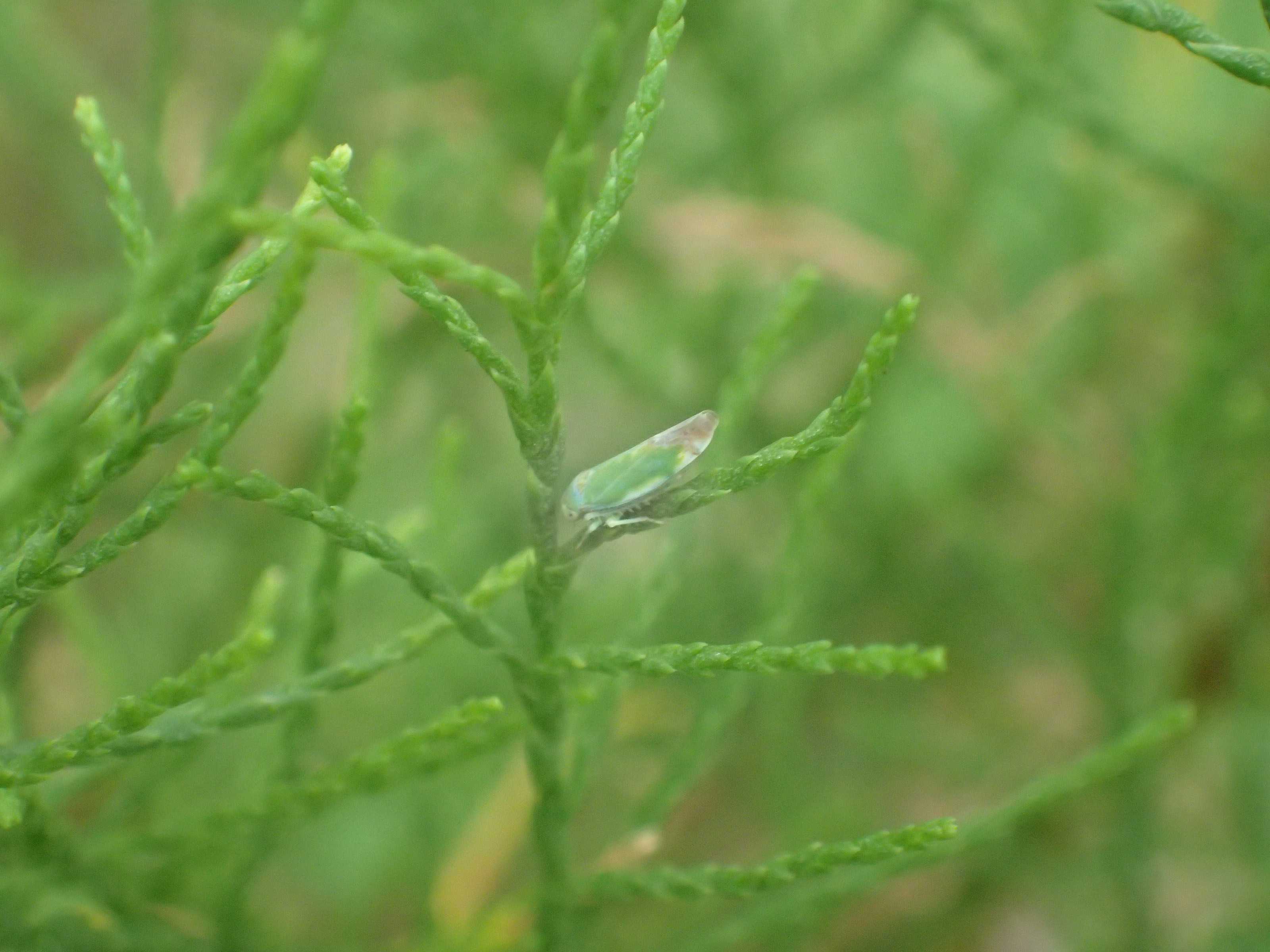
I got a message from Vanna to say that whilst cutting the Tamarisk in their front garden she had noticed that there were quite a few tiny green bugs on it. These are a Tamarsik specialist, Tuponia brevirostris/hippophaes - two very similar bugs that require inspection of the rostrum length to separate. I popped round and managed to find both adult and nymphs, and as a bonus also saw some Tamarisk Leafhoppers, Opsius stactogalus.


NORTH NORFOLK: Sustead Common bioblitz

2nd July 2022

At the start of July I visited Sustead Common, a small nature reserve near Felbrigg, at the invitation of the Felbeck Trust. This small charity do some excellent work managing several small sites and enhancing them for wildlife. My role was to help with a bioblitz they were holding, which largely meant wandering over the site recording whatever I came across, talking about it to anyone who expressed an interest and stopping occasionally for cake and tea. You can read a bit more about the bioblitz on their blog here: https://www.felbecktrust.org.uk/single-post/sustead-bioblitz-july-2nd-2022. Since that blog entry was written I have received a newsletter with the species tallies - a very respectable 371 species recorded, of which 112 were new to the site.

Despite the relatively small site and having recorded here before, I still saw a few new and/or interesting things. A moth trap had been set overnight and having a look at some of the moths that had been caught I saw my first Gold Swift (I'd been wanting to see one of these for a while, partly because I like the swift moths, but also partly because it was the first regularly occurring macro moth on the Norfolk checklist that I'd not seen if you order them by number. That mantle now passes on to Goat Moth). The other highlight from the moth trap was a Hydropsyche caddisfly, which Rob identified later as Hydropsyche contubernalis.


Elsewhere I saw the leafhopper Edwardsiana geometrica on Alder, a Tuberous Polypore, and a Nipplewort plant came held both an occupied mine of Liriomyza puella and the rust fungus Puccinia lapsanae.


NORWICH: Mid-June invertebrates & wildflowers

Mid-June 2022

Various species of interest seen around the city, mostly whilst walking too or from work. Beetles included Black-clouded Longhorn Beetle agg (Leiopus nebulosus agg), Umbellifer Longhorn Beetle (Phytoecia cylindrica) and Dorytomus ictor. Plants included Carthusian Pink at UEA and Perennial Wall Rocket, a species I had been searching for amongst the commoner Annual Wall Rocket. Other species of interest included the plant bug Neolygus populi on Aspen, a mating pair of Hornet Moths at Train Wood and the leafhopper Kybos smaragdula at Wensum Park.


NORTH NORWICH: Mousehold & Catton Park highlights

Late July 2021

A couple of early morning walks around north Norwich took me to Mousehold Heath and Catton Park, both very popular walking areas but each still good for wildlife. Highlights pictured below are the hopper Javisella pellucida,  White-letter Hairstreak (on an Elm near Zak's car park), a coccoon of an Elm ZigZag Sawfly, a pider-hunting wasp (Ammophila sabulosa), Six-spot Burnet moth and an unidentified Sawfly larva.


NORWICH AREA: A range of insects on Common Mallow

I've fallen completely behind with blog updates, so will now try to lump some similar things together in order to get uptodate by the summer.

A few years back I was sent a link to a publication called Beetle News, which had an article about the types of weevils you can get on Common Mallow. There are four, two rather similar ones and two that are easy to identify. At various points during June and July I kept having a look at mallow plants around the city, and eventually found all four species. There is also a rare one found on Marsh Mallow that I have been  shown in the past at Minsmere, whilst a sixth species occurs on Hollyhocks but hasn't yet been found in Norfolk.

Pseudapion rufirostre - a blackish weevil with orange legs. The third commonest of the four locally, but still found fairly frequently when searched for.
Malvapion malvae. Grey at the front, yellowy-brown at the back, so distinctive when found on Mallow (apparently there are a few similar species on other host plants, but not that are likely to occur nearby). The second commonest of the four species around Norwich from the plants I checked.
Aspidapion radiolus. A black weevil with grooved elytra (wingcases) and a textured pronotum. When looked at carefully there is no groove between the eyes. By far the commonest of the four encountered, but until you get your eye in it does need examination under a hand lens or a really good photo to check the groove is absent and eliminate A. aeneum.
Aspidapion aeneum. Similar to the above species, but the elytra are less grooved, it is slightly wider and metallic blue rather than black. When looked at closely it has a groove between the eyes. Whilst possibly overlooked as A. radiolus (weevils typically drop off the plant into the udnergrowth when you go for a closer look!) it appears to be the scarcest of the four weevils around Norwich based on my observations.

The same article also mentions two flea beetles that occur on Common Mallow, Podagrica sylvestris (which as orange legs) and P. fuscipes (which has black). I've not found either yet, but Stewart Wright found P. sylvestris in his garden on the day of a fungus foray and showed me.


Whilst checking Hollyhocks in a garden centre, I also found a mallow-feeding leafhopper Eupteryx atropunctata for good measure.


NORWICH: Garden lockdown list day 73

DAY 73 - 2nd June 2020

Another five new species for the lockdown garden list saw me break through the 150 mark. Of these the highlight was a new bee for me, White-zoned Furrow Bee, feeding on the Catsear in the lawn. The other species were Sage Leafhopper, Meliscaeva auricollis, Small Dusty Wave and Field Grasshopper.


148. White-zoned Furrow Bee (Lasioglossum leucozonium)
149. Sage Leafhopper 
150. Meliscaeva auricollis
151. Small Dusty Wave
152. Field Grasshopper.