The Whitlingham Bird Report for 2025 is now available to download from the Bird Reports page or from here

YARE VALLEY: Wheatfen fungi

24th October 2016

A while back Jim had asked if I would be interested in meeting up at Wheatfen one morning to have a look at the fungi there and pass on a few tips for identifying them. We were both free on Monday morning, so met in the car park to see what was about. Immediately obvious near the entrance and on the grass nearby were some Shaggy Ink Caps, nicely demonstrating the different stages of deliquescence as shown below.


There were several other species amongst the grass, including an Agaricus sp, but a very productive area was behind the study centre. Whilst initially drawn to the larger ones like Deceiver, Birch Milkcap, Ugly Milkcap (amusingly called 'The Ugly One' in Jim's older fungi book) and Blusher, closer inspection revealed Orange Mosscap and some Pipe Clubs.

 The Blusher
 Ugly Milk Cap
 Pipe Clubs

We set off into the woods, and were only a few steps in when we saw some Sulphur Tuft and Amethyst Deceivers. The latter was very common on our walk - if you have never seen this beautiful common purple species then I highly recommend having a look for them as there were loads. Further in we saw False Death Caps, some Russulas that were probably Purple Brittlegil, lots of Lilac Bonnets and a loose ring of Fly Agarics.

Amethyst Deceivers (left) and Lilac Bonnet (right)
 False Death Cap
 Fly Agaric

Further along the path Jim noticed some large brackets, which turned out to be Oak Mazegill. I was able to show him how to identify Bleeding Oak Crust, and we also saw Crystal Brain, Oak Curtain Crust and Brown Roll Rim. As we reached a boggy bit of the path we saw some Glistening Ink Caps and the birch log ends were covered in Candlesnuff Fungus.

 Oak Mazegill
 Bleeding Oak Crust

There was less fungi along the grassy paths, but we did see some Scaly Earthballs, yellow club sp. and a Pleated Inkcap. A cut stump was covered in Common Stump Brittlegills. Before returning to the car park we diverted to the Thatch, where as well as a few more yellow clubs we saw Parrot Waxcaps, which are always worth a look. We were mainly focussed on fungi, but at the start of the walk we heard at least one Brambling and a Marsh Tit calling.

Scaly Earthball - note the stipe and multiple small scaly markings

NORTH NORFOLK: Wheatears and a whale

23rd October 2016

Whilst I'm a big fan of fungi, birds remain my favourite 'group', so I had been acutely aware over Saturday and Sunday morning that whilst I was involved with fungus-related events Norfolk's first twitchable Isabelline Wheatear was present at Burnham Overy Dunes. On Sunday that area of the dunes also held a Pallas's Warbler and a Desert Wheatear, so a good cluster of rare species. After lunch I headed to Burnham Overy, and having checked the tide times parked up in the village car park.

After a brisk walk out to the dunes I arrived at a large group of birders, only to find that they were gathered to watch the Pallas's Warbler rather than the Isabelline Wheatear. As it happened this worked out just fine, as the Isabelline Wheatear came to us, flying in onto the ridge of a dune in front of us, and showing well for a brief period. It moved out of sight and then was accidentally flushed, at least providing flight views. Once it had gone I had a look at the Pallas's Warbler, which was very mobile amongst some Privet and scrub.


I decided to head west, keeping an eye out for the Isabelline Wheatear, which appeared to have gone down into the dunes not too far away. A birder further along beckoned, and upon reaching him we saw that he had located the Desert Wheatear. Earlier on I had a brief chat with Carl Chapman (Norfolk's cetacean recorder), who had told me that the Fin Whale that washed up on the beach recently was still present, so I decided to retrace my steps to the boardwalk, keeping an eye out as I went, before heading over to see the whale. Some people find looking at dead whales ghoulish, but I see little difference between this and looking at museum specimens. The carcass was roped off and people were being respectful - hopefully those seeing the dead whale will be more receptive to environmental issues around our oceans in the future, which would be a fitting epitaph.


I crossed the beach and went up into the dunes to have a look around, but saw very few birds. There was quite a bit of fungi, including lots of puffballs, some Dune Dapperlings and Dune Waxcaps. One of the dune specialties here is Winter Stalkball, and I was able to show how similar the smaller ones are to rabbit droppings! With the light beginning to fade I walked back to the car after a highly productive afternoon.

 Dune Dapperling (Lepiota erminae)
 Dune Waxcap, an old specimen split so it looks like a flower
 One is a rabbit dropping, one is a Winter Stalkball!
Older Stalkballs are easier to identify, although still need some work to find. Luckily they often grow in quite big groups.

NORWICH: Plantation Garden fungi workshop

23rd October 2016

On Sunday morning I headed to the Plantation Gardens, to help with the fourth and final wildlife workshop, being held to help volunteers and regular visitors to record the wildlife of the garden. The focus of this workshop was fungi, so we had a walk around to find as many species as possible before bringing them back to a display table to discuss them. Because much of the garden has chemicals used on it there were no grassland species, so most of the fungi we did find was in the woody areas around the edges.

Most of the species were relatively common ones, such as Dead Man's Fingers, Hairy Curtain Crust and Sulphur Tuft. The most interesting species was a Lepiota sp, possibly Chestnut Dapperling. After discussing features to look for, recommended books and how to record species, the workshop ended and I headed home for a bit of lunch.

Dapperling sp.

NORWICH: Earlham Cemetery fungus foray 2016

22nd October 2016

On Saturday the Friends of Earlham Cemetery held their October guided walk, which as in past years was focused on fungi. To this end the Norfolk Fungus Study Group had agreed to join the friends and hopefully boost the cemetery fungus list. Details of the walk had also been shared online, so a rather large group of people met at the cemetery gates (a sentence that even after several years I still say to myself in a fake Morrissey voice*). Warning, the following account is largely a glorified list of fungus names.

After a brief introduction we set off around the corner, noting Meadow Coral, Deceivers and Death Caps on the way. Working our way along parallel with the drive we saw Leopard and Scaly Earthballs, Xerocomus sp, Grey Coral and Lilac Fibrecap, before going to have a look at the Ramaria flaccida coral that is fruiting well this year. The group was already starting to spread out as we looked at Blue Roundheads, Conifer Cone Caps and Velvet Shank.

Ramaria flaccida

After sheltering from a heavy shower we continued, seeing a white clump of Milking Bonnet amongst the standard form, plus a Poison Pie sp (Hebeloma mesophaeum) and Agrocybe erebia. A milkcap under Hornbeam was a new one for me, Lactarius circellatus. These walks tend to last for around two hours, but it was already gone 12 and we hadn't reached the other half of the cemetery yet. Some people left, but the core group carried on into the western part, which has had less recording done.

Agrocybe erebia

We carried on around the edge of the cemetery, recording the very poisonous Ivory Funnel, along with Wood Pinkgill and Ugly Milkcap. A cluster of Sulphur Tuft looked initially like the scarcer relative, Brick Tuft, but on closer examination the yellow stipes gave it away. Fairy Inkcaps, Flowery Blewitt, Bloody Brittlegill and False Chanterelle were seen before the smell of chips lured several members to Bowthorpe Road chippy.

 'Bricky' Sulphur Tufts
Fairy Inkcaps

Re-energised with chips, we began moving back towards the main road, adding the attractive Saffron Milkcap and Bleeding Bonnet, which exude orange and red droplets respectively when cut. Back in the eastern half Anne found an Earthstar that caused some excitement because of the reddish colouration of the rays. Neil Mahler confirmed that it was a Rosy Earthstar, a new species for the cemetery and many of those present. Nearby a toothed yellow cup fungus, possibly Tarzetta catinus, was also of interest.

 Saffron Milkcap
 Cup fungus sp.

After briefly stopping to look at the Dog Stinkhorns, which were still going strong, we carried on to the waxcap areas. There was a good crop of Blackening Waxcaps, along with many yellow ones (either Butter or Golden), Snowy, Meadow and an unknown red one. Hairy Earthtongues and various spindles were also present nearby. The final species seen before we finally went home were two more earthstars, Striated Earthstar and Sessile Earthstar, growing near the crematorium. Around 70 species were identified in the field, with hopefully many more to come once some specimens are determined.

 Dog Stinkhorns
 Blackening Waxcaps
 Parrot Waxcap
 Red Waxcap sp.
 Hairy Earthtongue
 Sessile Earthstar

* Cemetery gates is a song by the Smiths from the album The Queen Is Dead - https://www.youtube.com/watch?v=IOMwu6OoGo4

NORWICH: UEA Great Grey Shrike

21st October 2016

Having failed in after work trips to see a Yellow-browed Warbler reported on St Benedict's Street earlier in the week, or Bearded Tits at Whitlingham last week and Thorpe yesterday, I was in two minds about trying to see a Great Grey Shrike found at UEA late this afternoon. Given the scarcity of this species around Norwich, I decided to give it a go anyway.

The area around the hospital was busy, so I parked further along and walked back through part of UEA woods. When I first got to Lusty Hills there were students quadratting, so I knew the bird wasn't going to be in that area. Initially I only saw one birder, who didn't look particularly happy and didn't say anything, suggesting that the shrike may have either gone or been out of sight. Near the compound I heard Dunnocks and Blackbirds alarm calling - surely the shrike must be in that hedge? I couldn't see it, so I kept going further round and thankfully saw a small group of friendly faces. At the head of the group was Ricky, who had his telescope trained on the Great Grey Shrike.


We watched it for a while, and assumed that it was going to roost as it wasn't very active. More birders arrived, and as we watched the shrike it seemed to perk up, before diving further into the bushes and flying out back onto Lusty Hills. At this point I headed home, but the bird continued to show and apparently went to roost nearby, so hopefully it will still be there tomorrow for those who couldn't get there tonight.

THORPE MARSH: Dusk visit

20th October 2016

During the day I received a text from Mark, who had seen a Bearded Tit and a Yellow-browed Warbler at Thorpe Marsh. I haven't had much luck with after-work birding during October, mostly due to the dreary weather and restricted daylight hours, but decided to go and have a look just in case. I found two Long-tailed Tit flocks, but no Yellow-browed Warblers. With no sound of any 'pinging' from the vegetation around the broad I carried on to the marsh to wait and see if any owls emerged. On my way round a lone Pink-footed Goose flew over, presumably separated from a newly arrived flock.

I had already heard a Water Rail, but managed to see one as it ran Jacana-like across some ditch vegetation. Two Buzzards soared over Whitlingham Woods and spiralled up over the river, and Redwings called overheard. There was no sign of any Barn Owls (or Short-eared, which I had hoped for), but there was an unexpected bonus when a Woodcock flew in and landed just west of the flood. In addition to the birds I saw a small red Weevil, probably an Apion sp, and a small inkcap that I checked out and identified as Parasola leiocephala. As I left I noticed a Chinese Water Deer browsing along the back of the flood.


YARE VALLEY: Strumpshaw fungi walk

16th October 2016

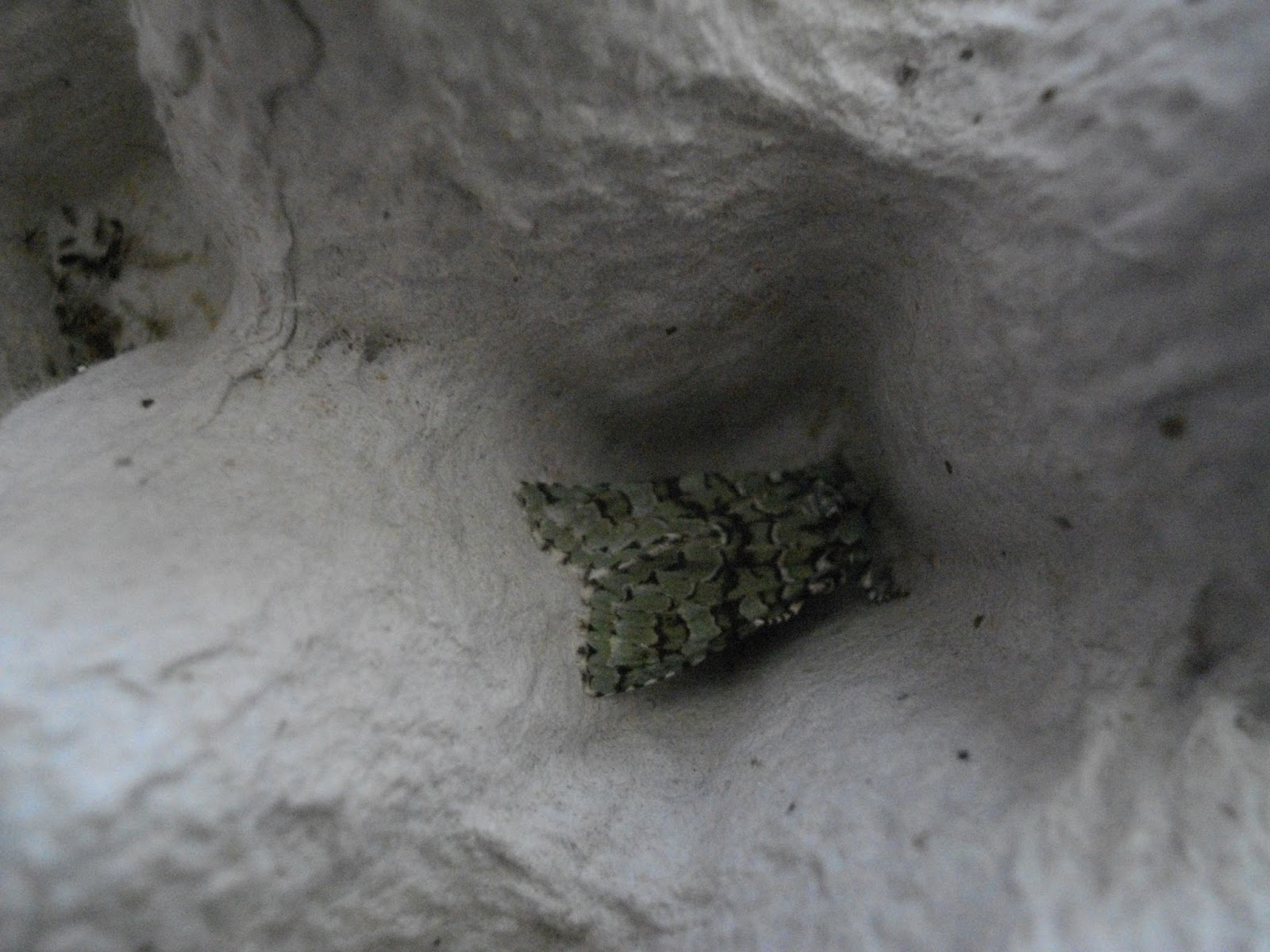
On Sunday morning Strumpshaw Fen hosted a fungus walk led by Rodger, one of the volunteers. I'd been asked if I could come along to help with the identification, and as I had some time free I agreed. The walk wasn't due to start until 10:30, but I arrived early and met Ben to see if any moths had been caught overnight. The season and near-full moon meant not many moths were caught, but Black Rustic and Autumnal Moth were new for me, whilst Merveille de Jour and male Vapourer moth were both good to see.

 Merveille de Jour
 Black Rustic

After sheltering from a heavy rain shower I headed into the woods to have a quick look round. I was joined by Flo, one of the residential volunteer wardens, who showed me a few of the fungi he had seen on the reserve recently. There were two interesting but tiny bonnets near the log circle, Orange Bonnet and Dewdrop Bonnet.

 Orange Bonnets
Dewdrop Bonnet viewed at 10x (notice the droplets along the stem)

Back at reception we met the visitors who were coming on the walk. We started at the bird feeders, where there was a lot of Glistening Ink Caps around the base of a tree stump, before pointing out Common Jelly Spot on some cut wood. Just around the corner were some Blue Roundheads growing in a grassy clearing. Further along we saw some of the most impressive of Strumpshaw's current fungus crop, Shaggy Ink Caps. There were fruiting bodies at different stages of development, from young ones now emerging to older ones that were almost fully deliquesced*. Alongside the Shaggy Ink Caps were clumps of Common Ink Cap.

 
Shaggy Ink Cap
 Common Ink Cap

After a quick diversion towards the fen hide to see some Conical Brittlestems we took the woodland path. Here we saw some Tawny Funnels, followed by Common Earthballs and Amethyst Deceivers. Further along we saw some Candlesnuff and members of several other families, including Purple Brittlegill, White Fibrecap and Oakbug Milkcap. There was a big swarm of Small Stagshorn, lots more earthballs and some Common Puffballs.

 Old (and slightly mouldy) Common Earthballs + Amethyst Deceiver


Small Stagshorn


Now well past the finishing time of the walk we headed back, pointing out Turkeytail and Rosy Bonnets on the way, finishing with the Dewdrop Bonnet that I had found before the walk. Luckily the wet weather during the week had given us lots to look at, and there is lots to see if you are at Strumpshaw in the next few weeks.

* Deliquescing is the process where the ink caps dissolve into ink, starting at the bottom edge of the cap and then moving up, eventually leaving just the top of a cap.

WHITLINGHAM: October bird counts & leaf mines

15th October 2016

After leaving Marham I dodged the football traffic and headed to Whitlingham to carry out the October WeBS count. There was more birds on the Little Broad than in recent visits, with Gadwall in their favoured areas of weed at the west end and five Moorhens, probably a family group. On the slipway I noticed one of the Black-headed Gulls had a white ring on its right leg. A closer look showed that it was J5JE, a Norwegian bird now returning for its fourth winter here - it spends the summers near Oslo.


Selected combined bird counts (2015 in brackets):
Mute Swan 34 (27)
Greylag Goose 15 (39)
Mallard 54 (83)
Tufted Duck 24 (29)
Pochard 1 (6)
Teal 4 (8)
Gadwall 25 (43)
Cormorant 49 (41)
Coot 163 (103)
Great-crested Grebe 8 (4)
Little Grebe 1 (2)
Black-headed Gull 175 (99)

So looking through those, Mute Swan, Tufted Duck and Cormorant numbers are all similar to last year. Since the summer there has been a definite lack of Greylags around, this is the second count this year with none on the Great Broad, the 15 were two on Thorpe Broad and 13 on the river (no counted within WeBS but part of my 'Whitlingham area' count as part of the same catchment). Wintering duck numbers are still relatively low (Mallard, Gadwall, Pochard, Teal), but Coot and Black-headed Gull numbers are significantly up, perhaps in part due to the recent easterly winds.

Having been looking at leaf mines earlier in the day I was still looking out for them, seeing a couple of new ones, the 'snail trail' mines of Kent Bent-wing (Phyllocnistis xenia) in poplar, and a creased mine of Phyllonorycter stettinensis on Alder.


There was a bit of fungi about too, including these Ink Caps. They are probably Haresfoot Inkcap, although there are one or two other similar species.


WEST NORFOLK: Marham Fen leaf mines

15th October 2016

On Saturday I ignored thoughts of returning to the coast to attend a daytime meeting of the Norfolk Moth Survey. Along with a group of Norfolk and Suffolk moth recorders, the NMS had arranged for leaf-mine experts Brian Pitkin and John Langmaid to join us to record some of the overlooked species best found as larvae. 

The location of the morning meeting was Marham Fen, a site that I hadn't visited before. The periphery of the site was wooded, with large amounts of Hawthorn and Buckthorn. Nearer the centre was some open meadowland, and some wetter areas that presumably gave it the name. Being one of, if not the least experienced leaf-miners the visit was a bit of a steep learning curve, but the main thing to take away was the variety of different mines and foodplants so that I can find them (and hopefully identify them!) for myself at a later date.


After a couple of hours we had amassed a list of over 40 species of leaf-mining moths, of which probably a third related to occupied mines (i.e. we could see the larvae) and the rest vacant but still distinctive mines. Most of the group went to a pub in Shouldham for lunch, before moving on to Narborough railway line in the afternoon. I had the WeBS counts to do and didn't want to overload myself with new names, so headed back to Norwich after a brief sandwich. Thanks to Ken and the rest of the group for making me welcome.

In non-lepidopteran highlights there was a good passage of Redwings over and I saw an interesting green crab spider, Diaea dorsata.