The Whitlingham Bird Report for 2025 is now available to download from the Bird Reports page or from here

WHITLINGHAM: New record Shoveler count

13th January 2024

The path around the Great Broad is still flooded in places, with the water level almost reaching the wooden bridges along the south shore. A local resident remarked that it was the highest he'd ever seen the water here and implicated the hard infrastructure (e.g. the car parks), but that would overlook the large swathes of the county that have been flooded for some time. Anyway, knowing what it was like I wore my wellies and carried on.


As it was WeBS weekend I carried out a complete wildfowl count, the undoubted highlight of which was the number of Shoveler present. They started increasing in number during the week, and the 61+ present on Friday had been a new site record, but careful scanning from multiple viewpoints led to me counting (and double-counting!) 83 on Saturday, a mixture of adult drakes, immature drakes and females. So currently a site high count, but who is to say that the numbers won't keep increasing over the next week?

Sadly there was no sign of the Pintail that had been seen on Friday, a bird I've only seen here twice. There were however 2 Goldeneye, 2 Wigeon, 249 Tufted Ducks (including the pink-billed one), 122 Gadwall, 25 Teal and 11 Pochard, so a good selection of ducks. The wintering Great White Egret showed well, as did the 'brown' Cormorant discussed in last years Whitlingham Bird Report. Close-up views of five Lesser Redpoll and a Redwing, a flyover Ring-necked Parakeet and two Sparrowhawks up in the distance were all welcome sitings too.


WHITLINGHAM BIRD REPORT 2023

10th January 2024

I have now completed the annual bird report for Whitlingham & Thorpe 2023 - you can download it here

A big thank you as always to everyone who has reported sightings, provided data or allowed me to use their photographs. A special mention to Robin Chittenden, Ed Mackrill and David Ratcliffe whose photos have enhanced the report significantly. Here's to an interesting patch 2024!


WHITLINGHAM: 1st Jan 2024

Last year due to various things, mostly childcare related, I got very behind at keeping this blog uptodate and then the task of catching up was too much. I am therefore leaving the last 6 months unwritten and starting again with the best of intentions!

1st January 2024

I started the year as usual, staring out of my living room window trying to see what birds were landing in some distant trees or flying past. I managed to see a slightly disappointing 8 species, beginning with Woodpigeon followed by Feral Pigeon, Collared Dove, Herring Gull, Black-headed Gull, Common Gull, Magpie and Starling. A visit to the in-laws produced several additional garden species, notably Goldfinch, House Sparrow, Blackbird, Dunnock and Jackdaw. It was then off to Whitlingham for an after-lunch walk.

The water levels at Whitlingham were probably the highest that I have ever seen them, with the circular path flooded in multiple places. Knowing this I was wearing my wellies and comfortably made it round. Some of the recent ducks had either departed or were too hidden to pick out with binoculars (I didn't see Teal, Pochard or Goldeneye) but I did see two Great White Egrets, Shoveler and Great Black-backed Gull, which were decent first of January birds here. The local aberrant Cormorant was present just before dusk, although as it seems to have moulted a bit it no longer sticks out as much. As I was leaving I also noticed a Carrion Crow with a few pale feathers too. Sighting of the day was perhaps a large Pike, seen well as it lurked under one of the bridges.

If you squint you can see the Pike!
Great White Egret, Grey Heron and 2 Little Egrets

Kestrel

Carrion Crow with a few white feathers

WHITLINGHAM: Delayed June WeBS count

Late June 2023

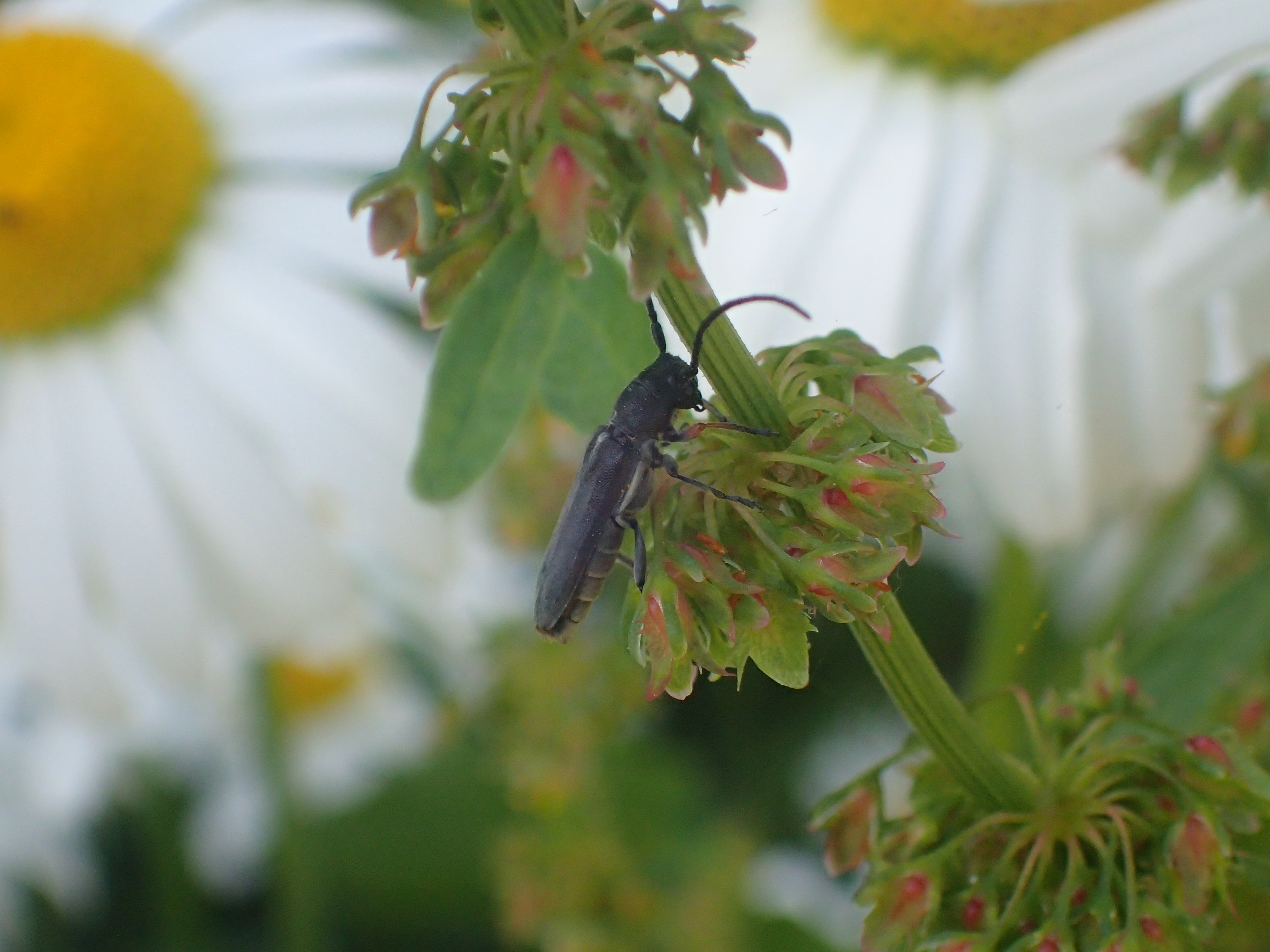
I had to delay June's WeBS count as there had been triathlons using the Great Broad. The wasn't anything particularly notable in terms of birds - 113 Greylag Geese, 57 Mute Swans (plus some cygnets in the conservation area bay) and 47 Egyptian Geese. A couple of Common Terns were also still present. In terms of invertebrates I saw my first patch Umbellifer Longhorn Beetle (Phytoecia cylindrica) and nice crab spider (Misumena vatia) and the smut on Greater Pond Sedge that has been very prevalent this year, Farysia thuemeni.


BROADS: A trip to Trinity Broads looking for fungi

Mid June 2023

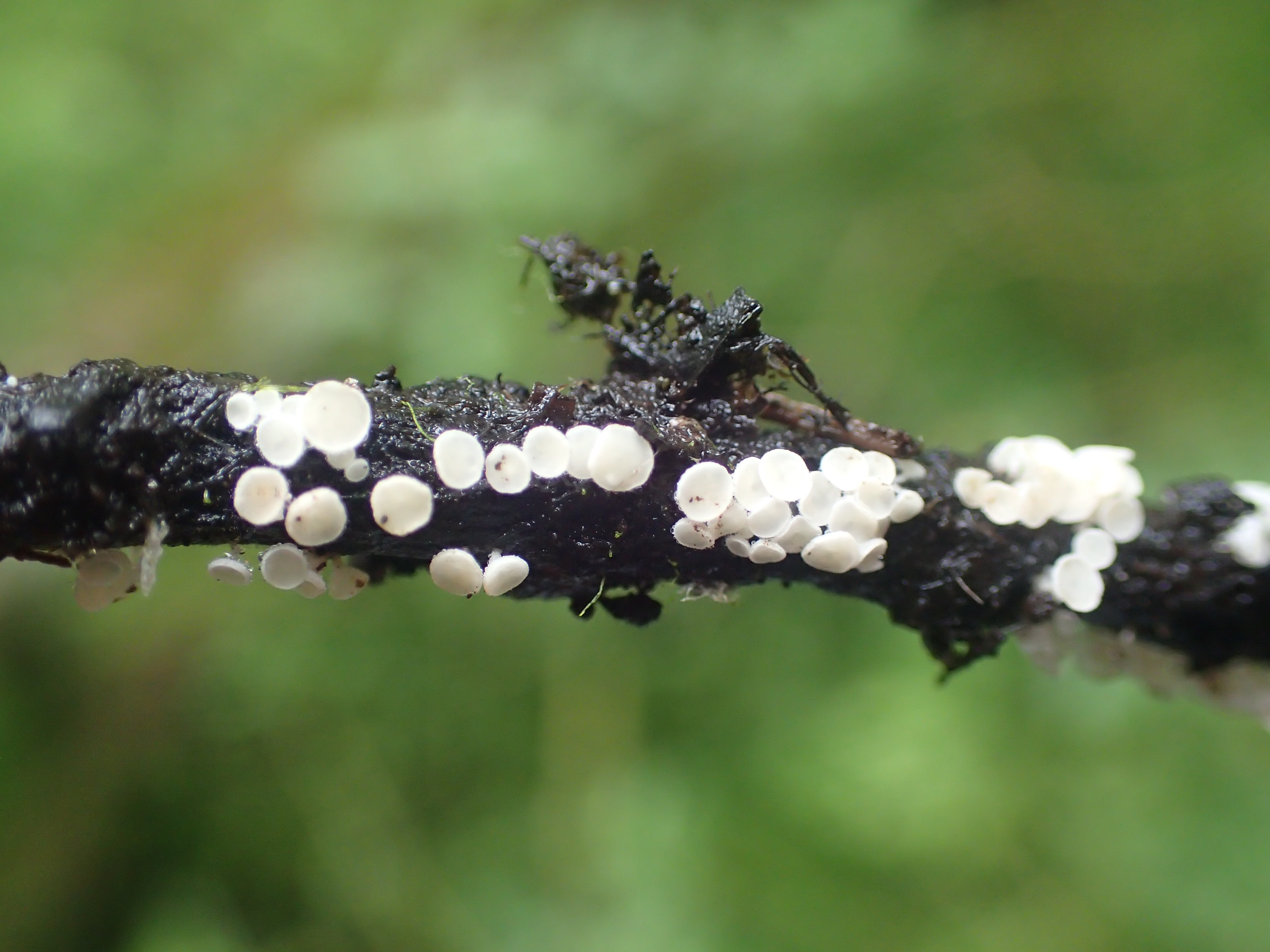
In June the Norfolk Fungus Study Group visited Trinity Broads, specifically an area of woodland near Rollesby. The dry weather meant that there wasn't much in the way of 'cap and stem' fungi, but we did find quite a few interesting things in a relatively small patch of wet woodland, as well as enjoying some nice views over the broad. Some of the new species for me included Podosphaera mors-uvae (American Gooseberry Mildew), Hymenoscyphus salicellus, Vibrissea filisporia and Pandora dipterigena (the latter a fungus on mosquitoes).


Afterwards we had a quick walk around the boat club woods, where we also had permission to record. Here I saw the bug Cyllecoris histrionus for the first time. The visit was also quite good for psyllids - the total of seven species is the most I've recorded in a single day. All were fairly common species - Baeopelma foersteri and Cacopsylla fulguralis were the most notable ones.


SUFFOLK: A visit to Carlton Marshes

Mid June 2023

It had been several years since I had visited Carlton Marshes SWT reserve near Lowestoft, indeed a whole cafe and education centre had been built in the meantime. Despite not venturing too far out on the reserve there was a lot to see, the highlight of which was probably my first Rosy Woodlouse, Androniscus dentiger. Prior to my visit I had seen a smut fungus found on sedges (Farysia thuemenii) mentioned, and these things often tend to have good and bad years, so I checked some sedges and low-and-behold found absolutely loads of it. A third new species was Cyperus Sedge, which was common along the edges of the dykes. 


NORTH NORFOLK: Bacton Woods June invertebrates

Mid June 2023

A family walk around Bacton Woods. Despite overcast conditions there were plenty of interesting invertebrates, including a new psyllid for me, Cacopsylla brunneipennis. Other things pictured here include Apteropeda orbiculata beetle mines in Wood Sage, Coleophora albicosta on Gorse, the hopper Ditropis pteridis, aphids Mindarus abietinus on Fir and Bronze Shieldbug.


NORWICH: Sawflies on Ash - Tomostethus nigritus

Early June 2023

Whilst checking an Ash tree for psyllids I noticed some very bright green caterpillars feeding on some of the leaflets. A closer look revealed they were sawfly larvae, and fortunately they were distinctive enough to identify them as Tomostethus nigritus, a new species for me.


NORTH NORFOLK: Sheringham Park invertebrates

Early June 2023

One of the places we like to visit in spring is Sheringham Park when the rhododendron collection is in flower. Fortunately there are lots of native plants there too and it is a great place to see invertebrates. On this visit I saw several new or interesting things including the safly Macrophya blanda, the bug Rhabdomiris striatellus, the spider Micaria micans and some weevils, Phyllobius oblongus.


CENTRAL NORFOLK: Gressenhall museum & farm

Early June 2023

I'd not visited the Museum of Rural Life at Gressenhall since I was a child, so a visit seemed long overdue. There was something of interest for everyone, taking in the museum, old workhouse, farm and some of the rewilded land along the river. I was particularly keen to have a look around the orchard, but was a bit underwhelmed at how big it was! I failed to find my main target species, the psyllid Cacopsylla mali that feeds on apple, but did find a Plum  Longhorn beetle and some very nice barkflies, Mesopsocus sp (probably M. immunis).


Along the river I noticed some beetles egg-laying on the lily pads, making them Galerucella nymphaea (there are similar looking ones that feed on other plants). The scarcest sighting of the visit was probably a weevil associated with Bird Cherry, Furcipus rectirostris. Back in the main grounds I just had time to check some Eleagnus and found Cacopsylla fulguralis, new to west Norfolk.


THORPE MARSHES: Late spring visit

Late May 2023

A couple of hours spent around a sunny Thorpe Marshes. A good sign that it wasn't too busy was a Grey Heron beside the path out onto the marsh, which reluctantly flew as I approached. Two recently fledged Stonechats could be seen further across the marsh, pleasing to see this species is still hanging on in this urban-ish location. The highlight of the visit was a new bug for me, Pachybrachius fracticollis, but there was plenty else of interest including lots of European Chinchbugs, several Anasimyia lineata hoverflies and great views of a settled Hairy Dragonfly. A smut fungus, Anthracoidea subinclusa, was found on Carex riparia, whilst on Hawthorn were some adult Cacopsylla peregrina psyllids.