The Whitlingham Bird Report for 2025 is now available to download from the Bird Reports page or from here

Showing posts with label Beetles. Show all posts

EAST NORFOLK: Spring Waxham walk

Mid April 2024

Over Easter, Adam & I went for a walk at Waxham. There was little in the way of migrant birds, although a random Brent Goose standing in a field, a couple of Swallows and my first singing Willow Warblers of the year were of note. Walking back along the beach we got good views of the seals and I saw my first Sea Gooseberry in many years. On the beach I noticed a groundbug that turned out to be Peritrechus geniculatus, a new one for me. Crossing back a sunny wooden set of steps turned out to be brilliant for insects, including Plane Tree Bug and the beetle Thanatophilus sinuatus. A Common Lizard was basking on one of the bits of fencing and allowed me to take my best ever photos of the species.


NORWICH AREA: Broadland CP fungus foray & woodland invertebrates

20th May 2023

As part of the ongoing wildlife recording at Broadland Country Park, the Norfolk Fungus Study Group visited in May to look for spring fungi. The dry conditions meant that there was not too much found, however there was a nice display of Bog Beacons, a scarce species in East Anglia, and the highlight was a tiny fungus called Polycephalomyces tomentosus found growing on a slime mould.


There were some rather interesting invertebrates including a hopper on heather called Ulopa reticulata, a woodland cranefly Ctenophora pectinicornis, the weevil Attelabus nitens, Black-headed Cardinal Beetle and the beetle Elaphrus riparius.


NORTH NORFOLK: A day out in Wells

Early June 2022

Having barely been to the coast in the past few years, I was back for the second time in a week, this time at Wells. I could probably spend several happy days (at least!) recording wildlife amongst all of the different habitats here, but had to make due with a walk up and down the quayside and the nearest part of the dune system. Still plenty of time for some some interesting finds, including some species new to me. The highlight though was a Broad-bordered Bee Hawk-moth found nectaring on Viper's Bugloss. I've seen one before, but they are such amazing moths.

Attulus saltator - a tiny and well camouflaged jumping spider, found amongst Marram whilst looking unsuccessfully for Marram Pseudoscorpions.
Broad-bordered Bee Hawk Moth
Clanoptilus barnevillei - a rare relative of the Malachite Beetle
Coccidula rufa, an inconspicuous ladybird
Cuneopalpus cyanops, a barkfly found on Pine
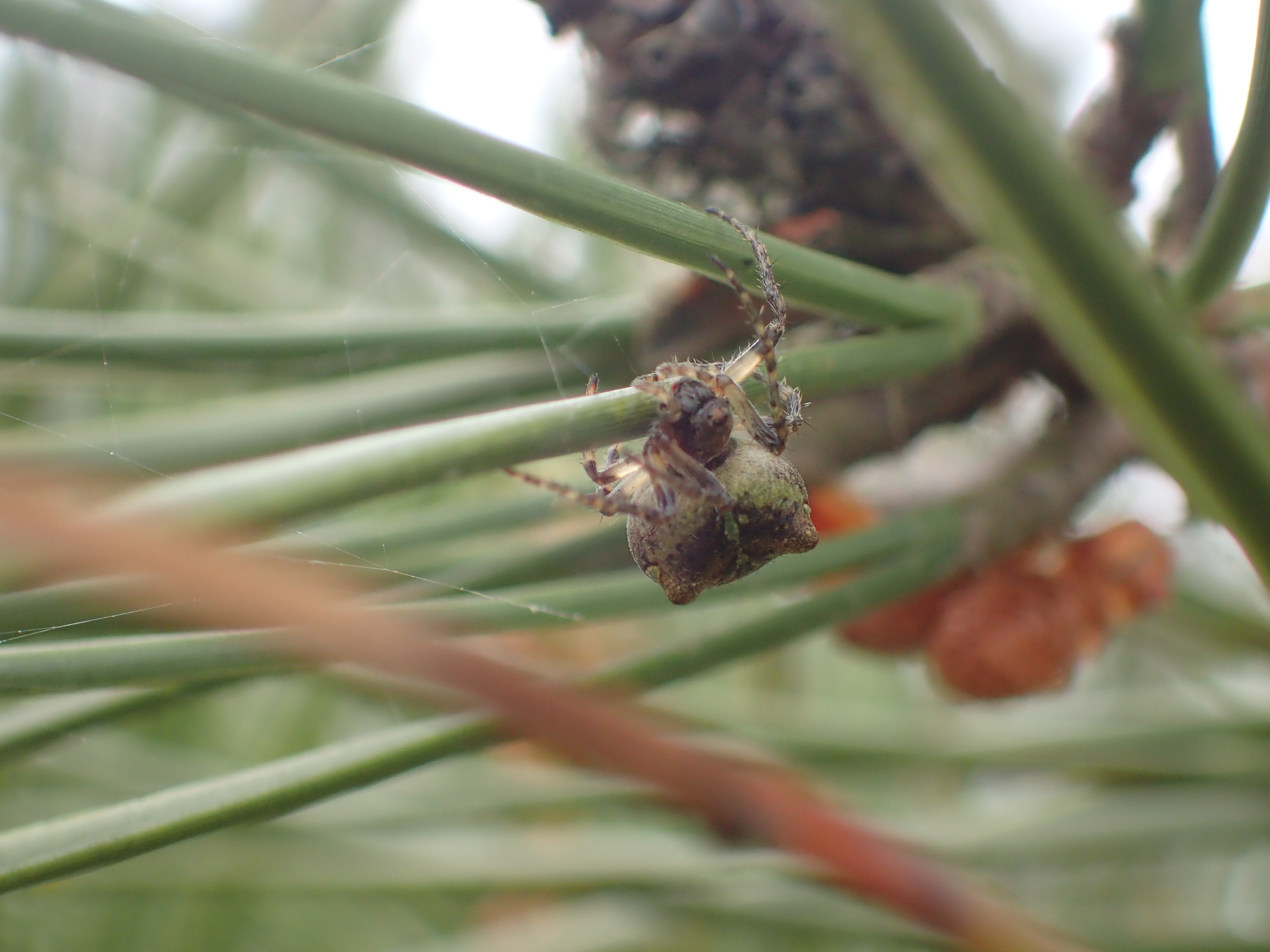
Gibbaranea gibbosa, a rather large and unusually shaped spider, found on pine
Marram Thatcher, Demetrias monostigma, a small dune-specialist ground beetle
Pine Jelly Fungus, Exidia saccharina
Podagrica fuscicornis - one of two similar flea beetles found on Mallow sp in coastal habitats. They can be separated by leg colour.
Sea Lavender rust fungus

NORTH NORFOLK: Sheringham Park pond invertebrates

Early June 2022

We visited Sheringham Park early in June to see the Rhododendrons at their peak. We also lingered by the pond in the secret garden for a while, seeing a range of species including some small golden beetles, Helophorus sp (probably H. brevipalpis), one of the large soldierflies - Ornate Brigadier and some tiny relatives of the water cricket, Microvelia reticulata


NORWICH: A late May miscellany

Late May 2022

Another miscellany of Norwich sightings. Having seen pictures of it recently, I decided to look out for a distinctive grass called Water Bent (Polypogon viridis), and found it straight away. I had similar success looking for cauliflower galls on Ash (caused by the mite Aceria fraxinivora), which I located on an Ash tree near New Mills. Rhinoncus pericarpus and Rhinocyllus conicus were casual beetle finds in Wensum Park, as was a Black-horned Gem (Microchrysa polita) nearby.


NORWICH: Catton Park beetle extravaganza

Early May 2022

Whilst at Thorpe Marshes I had spoken to Susan Weeks, who had told me that she was once again seen Rose Chafers in north Norwich around the Catton Park area, so on a sunny afternoon I headed down for a quick look. In the end I didn't even get round to the area where the Chafers had been seen because there was a great patch of Alexanders under some Oak trees that was covered with insects. Beetles were the order of the day, with including Deathwatch Beetle (Xestobium rufovillosum), the weevil Curculio glandium, a cylindrical bark beetle Bitoma crenata and a smallc arabid Badister bullatus.


YARE VALLEY: Wheatfen car park and environs

September 2021

Two visits to Wheatfen would usually result in a whole host of interesting records, but as both of mine were for events at the study centre I made do with a quick search around the near part of the reserve on the first visit and a look around the car park on the second. Highlights were Zoned Tooth (Hydnum concrescens), previously found by some Fungus Study Group members, Uroleucon jaceae (aphids on knapweed) and a beetle found on my car roof, which I think is Calodromius spilotus.


COTSWOLDS: Large Blue and some grassland specialties

Mid July 2021

Readers will probably recall that the majority of my wildlife observations come from East Anglia (well Norfolk and a couple of small bits of Suffolk) but I do try to go on one out-of-county excursion most years, often in search of new butterfly species. This year I went on one of Carl Chapman's tours to look for the Large Blue, a butterfly that was lost as a British species but subject to an extensive reintroduction project that involved restoring habitat to allow the part of the life cycle that requires particular types of ant.

We arrived at our destination in the Cotswolds to find some impressive limestone grassland, marked with large Woolly Thistles. One of the commonest butterfly species seen was the Marbled White, which living in Norfolk is still something of a novelty.We explored part of the site, seeing some nice flora and various butterfly species, but no Large Blues. We had just stopped for lunch when a call went up from a nearby footpath, as a male Large Blue had been spotted. Going over we managed to get our first views, including briefly perched up, before an obliging mating pair were also found!


One of the site volunteer wardens had come across to make sure that we had seen them, and I took the opportunity to ask him about one of the sites rare plants, Cut-leaved Germander. He very kindly took me to the area where it grows so that I could see this rare member of the Lamiaceae. Whilst up on the ridge we also saw Deadly Nightshade, and back down on the lower slope I foud some Clustered Bellflower.


A nice range of insects included a beetle on St Johns Wort, Cryptocephalus moraei, Downland Villa (a bee-fly relative) and lots of green Cryptocephalus beetles, probably C. aureolus.