The Whitlingham Bird Report for 2025 is now available to download from the Bird Reports page or from here

Showing posts with label Sustead Common. Show all posts

NORTH NORFOLK: Sustead Common bioblitz

2nd July 2022

At the start of July I visited Sustead Common, a small nature reserve near Felbrigg, at the invitation of the Felbeck Trust. This small charity do some excellent work managing several small sites and enhancing them for wildlife. My role was to help with a bioblitz they were holding, which largely meant wandering over the site recording whatever I came across, talking about it to anyone who expressed an interest and stopping occasionally for cake and tea. You can read a bit more about the bioblitz on their blog here: https://www.felbecktrust.org.uk/single-post/sustead-bioblitz-july-2nd-2022. Since that blog entry was written I have received a newsletter with the species tallies - a very respectable 371 species recorded, of which 112 were new to the site.

Despite the relatively small site and having recorded here before, I still saw a few new and/or interesting things. A moth trap had been set overnight and having a look at some of the moths that had been caught I saw my first Gold Swift (I'd been wanting to see one of these for a while, partly because I like the swift moths, but also partly because it was the first regularly occurring macro moth on the Norfolk checklist that I'd not seen if you order them by number. That mantle now passes on to Goat Moth). The other highlight from the moth trap was a Hydropsyche caddisfly, which Rob identified later as Hydropsyche contubernalis.


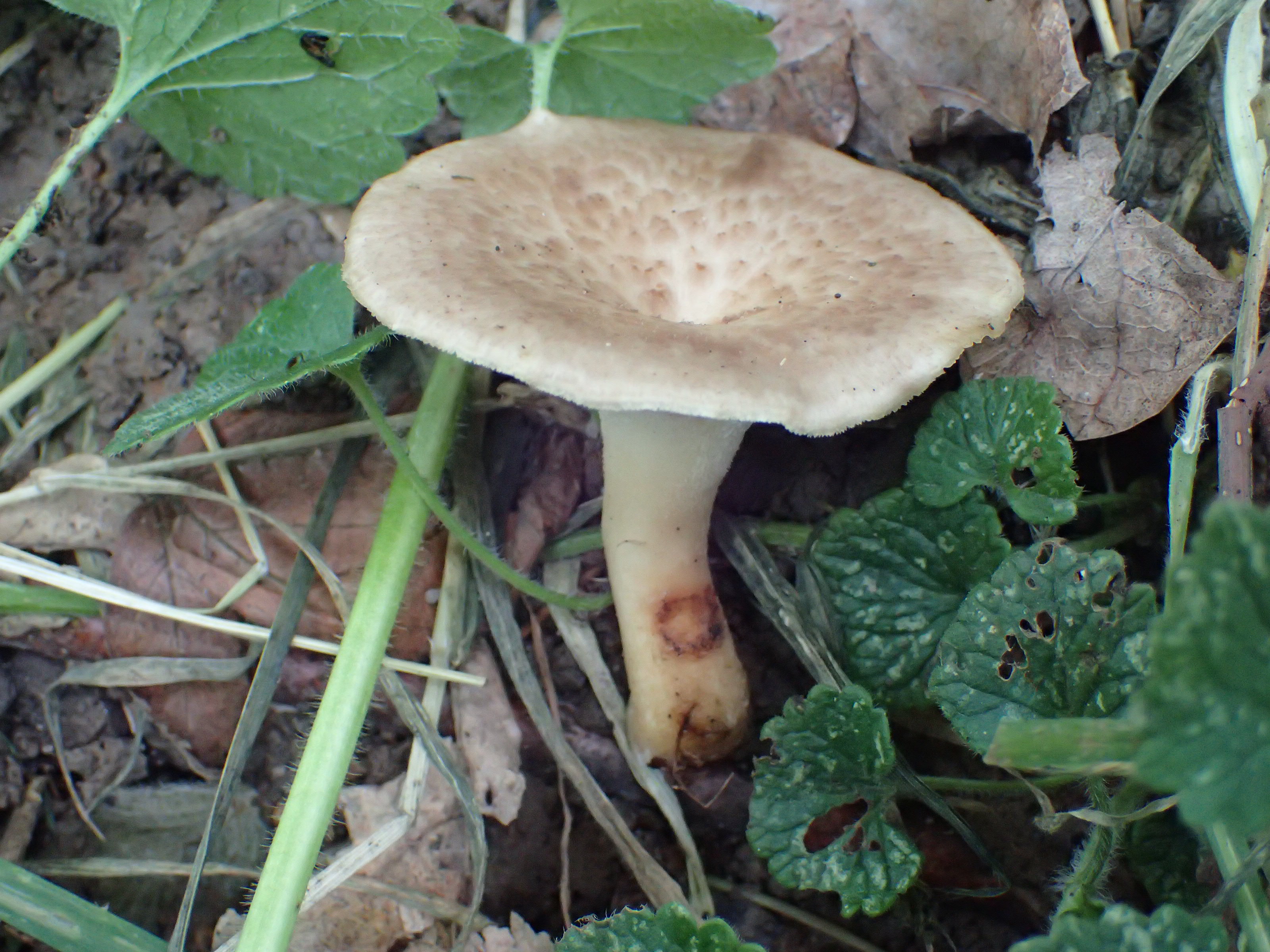
Elsewhere I saw the leafhopper Edwardsiana geometrica on Alder, a Tuberous Polypore, and a Nipplewort plant came held both an occupied mine of Liriomyza puella and the rust fungus Puccinia lapsanae.



NORTH NORFOLK: Sustead Common wildlife survey

Late July 2019

Local conservation charity the Felbeck Trust had recently held an official opening for Spurrell Wood, a small north Norfolk woodland that they had purchased. It adjoins Sustead Common, and area that they also manage for wildlife. I have visited the area in late summer and autumn before, but had promised to make a visit in late spring to do a bit more wildlife recording. I spent some time walking around and checking the various different habitats and plants, putting together a list of around 70 invertebrates that I have passed on to the trust. Some of the more interesting ones included the weevil Curculio venosus, the hoverfly Leucozona laternaria and leaf mines in Spear Thistle caused by the fly Pegomya steini.


NORTH NORFOLK: Sustead Common fungi

20th October 2017

For the first of a weekend of fungus forays I headed to Sustead Common, where Tony Leech was leading a walk for the Felbeck Trust. He cautioned that the recent spell of dry weather meant that fungus numbers were currently lower than they had been earlier in the month, and he was proved right, with 37 species recorded. However, several of these were a bit unusual, so slightly oddly it was some of the commoner species that omitted.

Whilst the group assembled I went over to a Hawthorn hedge and found Hawthorn Twiglet (a small species that grows on buried Hawthorn berries), Scaly Earthball and Brown Cup. I then spotted some more fungi in an area of flat ground in the middle of the wildflower area, so we all went over for a look. There were two species here, and neither were field identifiable. Tony took samples home and identified them as Entoloma undatum and Rhodocybe popinalis, both species I've not seen before.

 Brown Cup
 Entoloma undatum
 Rhodocybe populina

We continued across the common, seeing Red-edged Brittlestem and Frosty Bonnet. On the edge of a culvert I noticed a small Helvella, which I assumed was just a small specimen of White Saddle. As is so often the case however there are many similar species, and it turned out this was the 3rd Norfolk record of Helvella latispora.


After a few more stops to see Cushion Bracket, Smokey Bracket and Burnt Knight, we headed out along the road and crossed over into Spurrell's Wood. This area is now also managed by the Felbeck Trust, although it doesn't currently have any public access so I was visiting it for the first time. The area is mostly relatively young woodland, and as there was a lot of Hazel it didn't take us long to find Fiery Milkcap, a symbiotic species.


The lack of old and standing wood restricted the species list a bit here, but we continued to add a few more species, with Fragile Brittlegill and Pearly Webcap were both of note. A Tawny Owl called nearby, whilst we also saw Siskins, Redwing and a small V of Pink-footed Geese, all sure signs of autumn. Thanks to Tony and the Felbeck Trust for organising the foray - I look forward to seeing how the site develops in the next few years.

NORTH NORFOLK: Sustead Common official opening

9th September 2017

Over the summer I have been aware of a recently formed North Norfolk conservation charity called the Felbeck Trust, who have been restoring and maintaing several sites around Aylmerton and Sustead. One of the people involved is Trevor Williams, chairman of the North-east Norfolk Bird Club and Aylmerton Nature Diary blogger. I had commented on his blog in the past, and he mentioned that the Trust were holding an official opening ceremony at Sustead Common on Saturday if I wanted to come along.

I was aware that there wasn't much parking space nearby, so I arrived a bit early, parked up in the village and walked down the lane to the common. The site was a bit smaller than I was expecting, but this was soon explained - the site had been split into three blocks, and the area currently open is the two smaller areas. A larger part that is mostly composed of deciduous woodland is also now being managed by the trust, who hope to be able to purchase it in the future to reunite the whole common.

Everyone was very friendly, and after a few introductions I set about doing a bit of recording before the ribbon cutting ceremony. I got off to a good start with a Green Tortoise Beetle on one of the deckchairs, and followed this up with Dock Bugs, a Sloe Shieldbug and a Green Shieldbug amongst the Knapweed. In fact it turned out to be a good day for shieldbugs and allied insects, as I found five Hawthorn Shieldbugs in the hedge, a late instar Box Bug and several Woundwort Shieldbugs.

 Sloe (=Hairy) Shieldbug
 Hawthorn Shieldbug (late instar)
 Box Bug (late instar)

I paused for a bit to listen to the official opening ceremony, and it was pleasing to hear that many groups had contributed to opening up the site. Volunteers had put in over 500 hours, and I spoke to several locals so it seemed that the villagers were also fully onboard with the work going on, which is key when carrying out a project like this.

Across the beck on the 'surveyors allotment' part of the site I picked up a copy of the NENBC bird report for 2015 & 2016 and had a look at what the Norfolk Rivers Trust had caught. As the scrape was currently dry I could walk out onto it and found some flies on the Flag Iris that had been infected by the fungus Entomophthora muscae. I recorded several galls and leaf mines, plus four hoverflies including Chrysogaster solstitialis.


Crossing back to the main part of the common I found a plant bug, Lygus rugulipennis, which I was fortunately able to confirm because my photos were sharp enough to check the hair density on the corium, the only way it can reliably be separated from the four other similar and variable Lygus species.


I did stop at this point for cake and tea, although whilst I was waiting for the tea to cool I wandered over to the nearby hedge, where I added a type of Hawthorn mite gall, a Vapourer moth caterpillar and a Comma caterpillar to the day list.


I had a very enjoyable day checking out the site, which I'm sure will only get better as the management work continues, and look forward to visiting again next year at some point.