The Whitlingham Bird Report for 2025 is now available to download from the Bird Reports page or from here

Showing posts with label Ichneumon. Show all posts

NORTH NORFOLK: Cley and some Paston ichneumons

Late October 2021

Having met up with Adam in North Walsham we wended our way towards the coast, getting good views of Red Kited, Buzzards and Kestrels as we travelled through the villages. Our first stop was at a woodland near Saxthorpe where we had a look for some fungi, before heading to Cley. Having barely visited the coast this year there were a few common year ticks seen on Arnold's Marsh or the sea, including Dunlin, Grey Plover, Guillemot and Red-throated Diver, but the highlight was sitting on the shingle ridge as a flock of Snow Bunting flew low over our heads.

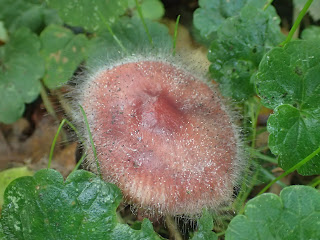
Rosy Bonnet infected with Bonnet Mould
Huge array of Birch Polypores

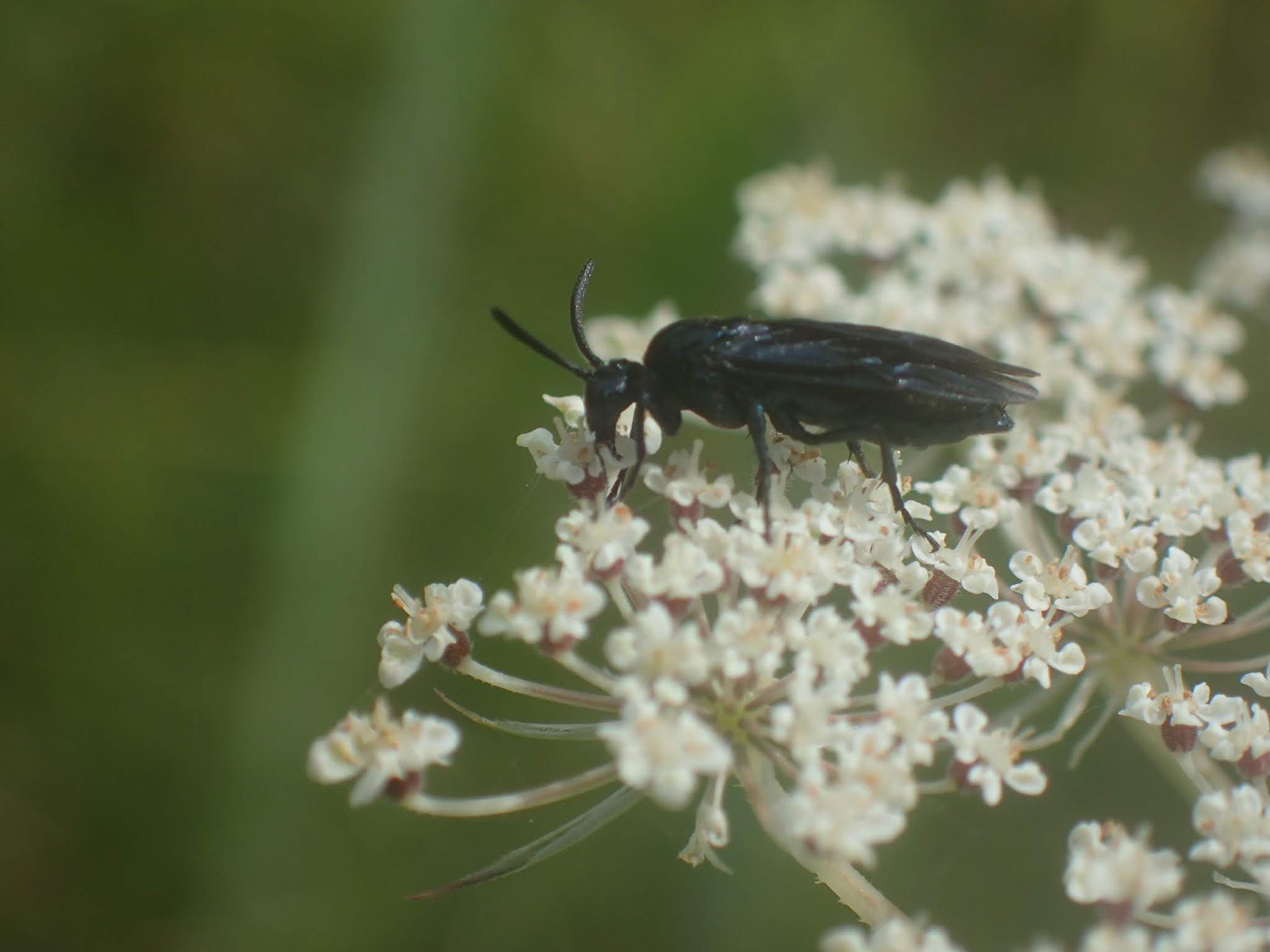
On our way back we stopped off at Adam's patch at Paston cliffs. The rather unexpected highlight here was a selection of different ichneumons, some found on the turf and others on Hogweed flowers. These included Amblyteles armatorius, Ichneumon sarcitorius and Stenichneumon culpator. A flock of around 120 Golden Plover were in in the middle of a nearby field and we heard Pink-footed Geese in the distance as we hurried back to the car to avoid a heavy downpour.


NORTH NORFOLK: Pensthorpe invertebrate highlights

Late August 2021

Pensthorpe is known for many things, including the wildlife-friendly farming, reintroduction programmes and of course the large wildfowl collection. It will however perhaps not be much of a shock to regular readers that the wildlife highlights of my visit with the family were actually both found on a small birch tree outside the toilet block before you enter the main reserve. On this particular birch I found three Solitary Birch Aphids (Monaphis antennata), a rare aphid that is unusual because it occurs on the upper side of the leaf rather than underneath, relying on its colour and solitary nature to hide it from predators. On the same tree I noticed a small caterpillar partly suspended on silky threads. This was Birch Ermel (Swammerdamia caesiella), a new species for me. In the wooded area a really nice ichneumon, Opheltes glaucopterus obliged for photos. The ducks were nice too of course.


YARE VALLEY: Wheatfen galls and invertebrates

Late July 2021

Wheatfen would be up there in my top 10 favourite places to spend a relaxing few hours wandering around seeing what I can find, and I spent a morning there in late July, finding various obscure species including several new galls, an ichneumon and a Polymerus nigrita, a bug associated with Goosegrass.

Swollen seeds of Meadow-rue - a gall caused by Ametrodiplosis thalictricola
Golden-haired Robberfly
A pouch gall on rose caused by Dasineura rosae
Gambrus carnifax
Green Colonel soldierfly
Polymerus nigrita
The egg sac of a small spider, Theridiosoma gemmosum

NORWICH AREA: St Faith's Common

 Late July 2020

We decided to go on a walk at St Faith's Common, just north of Norwich. I was hoping we might come across Yellow Bird's-nest, a long term plant target of mine, but walking along one of the main paths the area of promising looking woodland had loads of the trees painted with "private" or "keep out" on. I don't recall that bit being off limits before, I can only assume that this section of the woodland is privately owned and they can't afford a fence, but it looked horrible and quite frankly isn't the sort of thing you want to see daubed about in the woods. Part of this area has been bought by the council to make it a country park, so perhaps that has been the spur to assert ownership over this bit. Despite the frustration we obeyed the signs and after a while decided to head back and instead walk along the open ride along the edge of Houghen Plantation. The only sighting of interest was a new tortrix for me, Epagoge grotiana.


This latter open area was much better for insects. Cathy had a large insect land on her back, and wondered if it was a damselfly - fortunately it landed nearby and I could confirm it was actually a Sabre Wasp, Britain's largest ichneumon wasp. A couple of Crossbills flew over (this is a good area for them and has also attracted Parrot Crossbills in the past) and other interesting insects included the bugs Alydus calcaratus and Rhombic Leatherbug.


WEST NORFOLK: Grimston & Roydon

Mid July 2020

Having not seen my dad during lockdown, I arranged to meet up outside so we could go for a walk. Having spent the past few months in east Norfolk I decided to head west to Roydon Common and Grimston Warren. I'd not visited the latter site before, so Lukas from the wardening team had very kindly agreed to meet us to show us some of the more interesting bits. We had an excellent morning, including great views of both male and female Black Darter dragonflies, plus various other odonata.


After lunch we checked out an area for Raft Spiders, a relative of the more commonly mentioned Fen Raft Spider, and after a bit of scanning of pools I managed to find one. The site has lots of Round-leaved Sundew so I kept checking for Sundew Plume moth caterpillars, an unusual species that eats this insectivorous plant. At one point I thought I'd found one, but it turned out to be a hollowed-out husk, which had been parasitised by the ichneumon wasp Campoletis trichoptili. Whilst not the species I was looking for, this ichneumon is understandaly rarer than the moth, with only a handful of UK records and new for Norfolk.


A big thank you to Lukas for his help. Both sites are large and we didn't cover too big an area, so another visit next year might be in order to see things like Bog Asphodel and some of the scarcer bee species.

NORWICH: Garden lockdown list days 74 to 77

DAY 74 - 3rd June 2020

153. Phytomyza ranunculi - a leaf mine in Creeping Buttercup

DAY 75 - 4th June 2020


154. Ischnus inquisitorius (an ichneumon). I was fortunate that the photo allowed national expert Gavin Broad to identify this one on Twitter.
155. Oak Bush Cricket

DAY 76 - 5th June 2020

A couple of leafmines added, but also several species seen at different stages of their life to earlier in the year . Firstly the sawfly Cladius bruillei - I keyed out an adult earlier but now the larvae are stripping the leaves from the Raspberries. Then the reverse, with an adult Cypress-tip Moth, previously seen as feeding sign holes in cypress shoots.


156. Agromyza idaeana (leaf mine in Strawberry)
157. Agromyza abiens (leaf mine in Viper's Bugloss)

DAY 77 - 6th June 2020

Nothing new added but I was pleased with this photo of Meliscaeva auricollis on a Rocket flower.


WHITLINGHAM: August insects and new sightings

4th August 2019

Another early date for the monthly WeBS survey, and with Justin counting Thorpe I only popped in for a quick look before heading to Whitlingham. This was long enough to add a new species of damselfly to my patch list in the form of Small Red-eyed Damselfly. This species has been seen on a few dates in August over the past few years, but numbers have still to take off. This one was in the mooring basin alongside quite a few 'large' Red-eyed Damselflies. A young Tortoise Shieldbug was a surprise find, having previously only seen them in the Brecks or at Foxley Wood, but I found two at Thorpe and a further example at Whitlingham. A male Megachile (leafcutter) bee was also new to the patch list, although frustratingly I couldn't see it well enough to confirm an ID - M. centuncularis is the commonest local species whilst M. ligniseca is known to visit Burdock, so those are the main two candidates.


Round to Whitlingham and the number and species of wildfowl were all rather standard for the time of year. Mallard numbers just pushed three figures (101), no Gadwall or Tufted Ducks were seen and a gathering of large gulls on the Great Broad was mostly Lesser Black-backed Gulls (204) with a few Herring Gulls (10). Non-avian sightings included Four-banded Longhorn Beetle (an occasional find here) the distinctive ichneumon Gasteruption jaculator (new for me) and an all-black Arge sawfly (either A. berberidis or nigripes - a specimen needed for ID).


BRECKLAND: Colletes cunicularius and other interesting insects

5th April 2018

After leaving Weeting, we called in at Lynford Water. This area of former gravel pits has a nice sandy bit of heath that is one of two Norfolk sites for Early Colletes (Colletes cunicularius), a species that Jeremy and Vanna had tried and failed to see twice before. The weather had warmed up nicely, so we were optimistic that it would be third time lucky.

Walking down the path from the car park we saw a Melangyna hoverfly. Fortunately it was one that can be identified from photos, Melangyna lasiophthalma, which was a new one for me. A pair of furry flies were mating on the ground a bit further along, but rather than Bee-flies these turned out to be a tachnid fly, Tachina ursina, which was also new.


Our target bees mainly nectar on Sallow pollen, so we moved along to check out the trees along the waters edge. Small Tortoiseshell and Comma butterflies were seen, along with two more new insects, another tachinid, Gonia picea, and an ichneumon, Diphyus quadripunctorius.


After a few 'probables' feeding high up on the Sallows, we began to see male Colletes skimming low over the turf. They were very hard to get a good look at, but further along we found some holes, and when a female emerged she was immediately pounced upon by multiple male bees. Once mating they were easy to observe, and we got great views.


After stopping for lunch we slowly made our way back to the car, checking the sallows again. There were lots of insects, the best of which were an Early Nomad Bee (Nomada leucomelaena), a Myopa sp and a Large Gorse Mining Bee (Andrena bimaculata).


A very successful trip in terms of finding our target and lots of other species of interest. Thanks to Jeremy, Vanna and Ian for their company and insect spotting skills.

SOUTH NORFOLK: Bracon Ash churchyard survey

12th August 2017

On Saturday afternoon I met Graham Moates at Bracon Ash church to carry out an impromptu wildlife survey at the churchyard. It is one of the churches that has been signed up to a churchyard conservation scheme, and there have been some nice areas left wild. I'd not visited before, but Graham had visited to survey small mammals and thought that it warranted wider recording,


Whilst I waited to Graham to arrive I noticed some Enchanter's Nightshade growing in the boundary ditch, so I went and had a closer look. I found several caterpillars feeding on it, which I thought might be some sort of Pug moth. This put me on the wrong track and I was struggling to identify them, but fortunately Steve on Twitter pointed out that they were the larvae of a sawfly, Tenthredo colon, a new species for me.


After a quick look inside the church, which is notable for housing the Heydon family masuoleum, we moved over to an area of creeping thistles. Here insects included Common Yellow-faced bee, Speckled Bush-cricket and Hairy Shieldbugs. One of the most pleasing sightings was of an ichneumon wasp that can be identified from photos! This applies to only a handful of the thousands of species. The females of Apechthis compunctor can be told from similar species because the ovipositor is short and down-curved at the tip, which was visible in some of my photos.


 Apechthis compunctor

Further round I heard a Roesel's Bush-cricket, but couldn't find it. Luckily I did locate it before we left to prove I wasn't hearing things! We also heard some Dark Bush-crickets and I confirmed a scorpionfly was Panorpa germanica. Moving round to the back of the churchyard a Volucella inanis hoverfly was seen, whilst Cinnamon Bug (Corizus hyoscyami) was a first for Graham.


Another focus while we were there was leaf mines and galls, and a subtle but pleasing one to find was Maple-seed Pigmy (Ectoedemia louisella), which mines the samara (seeds) of Field Maple.


Two other insects of note were tiger craneflies. Nephrotoma flavipalpis has a nice orangey head and large black areas on the yellow abdomen, whilst I think the second one here is Nephrotoma flavescens because of the 'ace of spades' mark on the head.


This was a very interesting visit, and in a couple of hours we generated over 50 invertebrate records. There is no reason why many rural churchs with wild areas wouldn't be just as or even more productive, particularly slightly earlier in the summer with more flowers out.