The Whitlingham Bird Report for 2025 is now available to download from the Bird Reports page or from here

Showing posts with label Soldier Beetle. Show all posts

YARE VALLEY: Strumpshaw dragonflies & beetles

18th June 2017

Sunday was Father's Day, and as dad hadn't been to Strumpshaw for over a year we decided to go there. We arrived at about 10:30, by which time it was scorching hot and packed with people, including a coach party. We had a quick look at some moths left near the reception hide, crowd-pleasingly big ones rather than rare reedbed types unfortunately. A Swallowtail flew past near the cottage as if at the head of a conga line. We decided to head for the Lackford Run end of the reserve until the crowd dispersed a little.

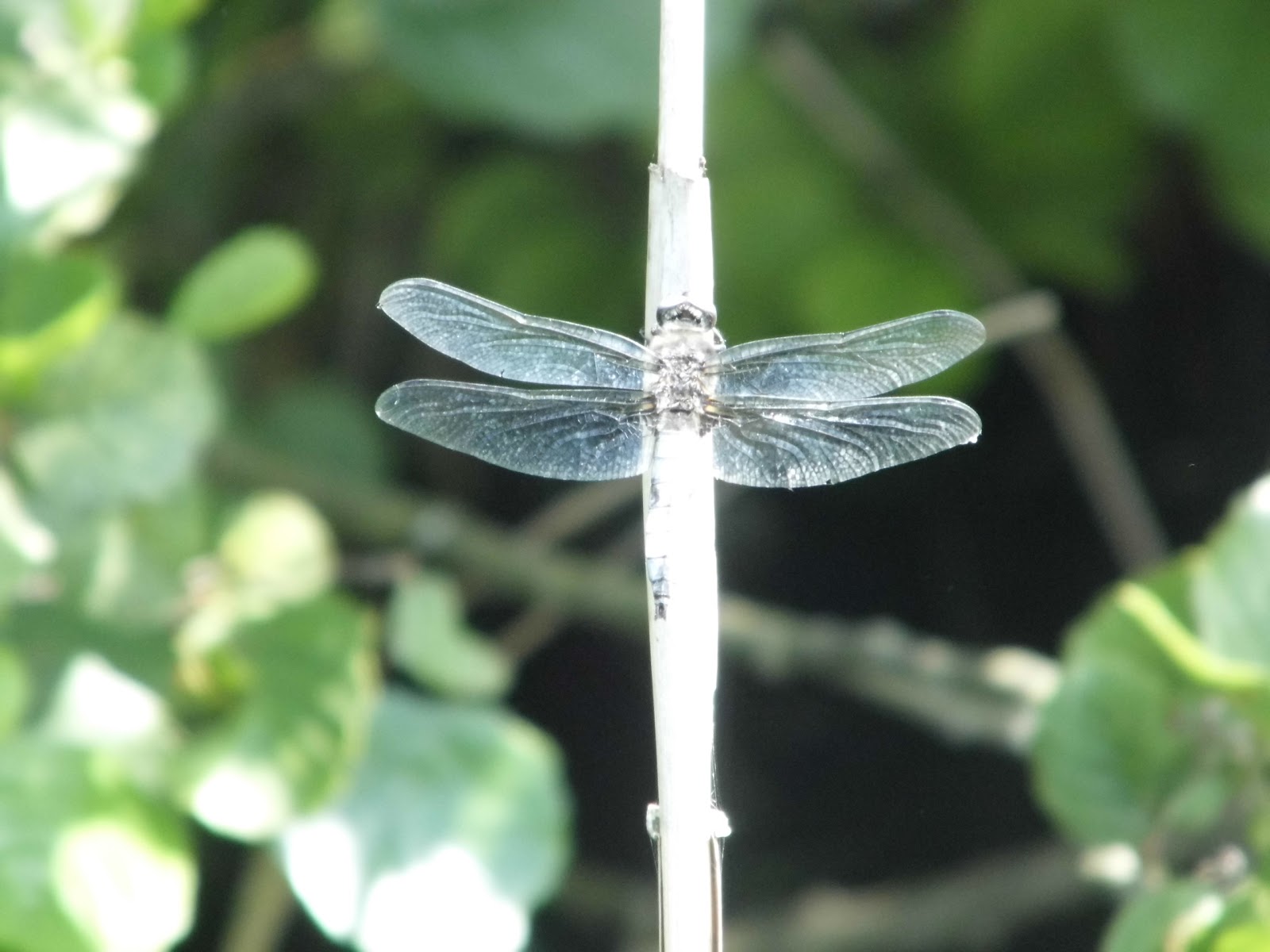
As we approached the railway line I heard a Grasshopper Warbler reeling close by. It didn't take us long before we found a male Scarce Chaser perched up, but the bright sunshine and my lack of photographic skills meant that the body was completely washed out in my pictures. Eventually I did manage to get one where you could see the abdomen colour, but only because it landed at an angle. The blue damselflies were very skittish - the few I did see close enough were Azure Damsels.


I kept an eye out near the Alders for White-barred Clearwings, without success. A couple of small Swallowtail caterpillars were nice to see, and a Common Lizard was found resting on the boardwalk with its legs raised in the air, presumably to avoid the hot wood! Marsh Pea was also seen from the boardwalk. Another three Swallowtails were seen flying over the reeds, but never close enough to photograph.


We retraced our steps, looking for insects as we went. I saw a yellowy soldier beetle, one of a species pair, and having failed on several previous occasions managed to get a photo of the palps. They had a dark tip, identifying it was Cantharis pallida. There were lots of reed beetles, which I have got down to Plateumaris, but am still deciding which of two similar species they are. 


Back on the reserve proper we headed for the meadow. There didn't seem to be too much about, a slight concern as I'm helping lead a walk here in a few weeks time. The dykes were quite promising however, with lots of Norfolk Hawkers and Four-spotted Chasers, plus Hairy Dragonfly and Common Emerald. We bumped into Carol, Steve and Eddie and had a chat before continuing across the meadow. The final sighting of interest was a soldierfly, Banded General, which I've wanted to see for a while.


NORTH NORFOLK: Plants and a Soldier Beetle

2nd June 2016

On Thursday I went to the North Norfolk coast with dad. The weather was overcast and drizzly, so we saw very few insects, but did manage a few interesting bits and bobs. We started off at Holme Dunes, where there were a few Early Marsh Orchids along the entrance track. We also saw two small species of clover growing in the car park, Suffocated Clover and Bird's-foot Clover. These species had been mentioned recently in a blog by the North-west Norfolk Naturalists. [Edit] Note that it was Suffocated Clover that I saw, not Subterranean Clover as I had initially written - apologies for any confusion caused.


From here we headed to Thornham, stopping for lunch at Shuck's restaurant, based in a Yurt. The food was very good, albeit rather fancy for my taste (for example several options were served with aioli, which I'd never even heard of). They also gave you the choice of rustic or stealth chips. As much as I wanted to see what on earth stealth chips were, I was concerned they would attack me whilst I wasn't looking, so I settled for rustic ones.

The weather hadn't improved, so we decided to drive along the coast road and call in at Holt Country Park. When I used to come here regularly as a kid I had seen Bird's Nest Orchids here, but we failed to find any on this occasion - perhaps I was looking in the wrong place, or perhaps we just overlooked them. I did see one new species, a small soldier beetle that landed on Dad's hand, Rhagonycha limbata.


WHITLINGHAM: Trowse invertebrates

29th May 2016

In case you hadn't noticed, we are now firmly in the period where inland bird activity has declined and plants and insects come to the fore on the blog. With this in mind I decided that rather than go straight to Whitlingham I would focus my attentions on Trowse Meadow and Trowse Woods before having a quick look over the broad.

Trowse Meadow was covered in buttercups, and looks the sort of place that should really have orchids too, but apparently doesn't. Some cows are grazing on it, but they seem to have a very placid temperament. I focused on some of the vegetation along the river edge, finding a couple of Downlooker Snipe Flies and an interesting dark fly sheltering underneath a poplar leaf. Incidentally there are a couple of trees here that look like Black Poplar, which is quite rare now. Does anyone know if the Poplar trees at Trowse are 'proper' Black Poplar or hybrids? Anyway, I didn't recognise the fly, but Andy Musgrove identified it as another soldier fly, possibly Scarce Orange Legionnaire, which if confirmed would be another new to 10km like Friday's Black Colonel.


Downlooker Snipe Fly
(Scarce?) Orange Legionnaire - note the orange body that gives it its name is hidden under the black wings

I saw two more interesting bugs as I departed the meadows and entered Trowse Woods. Firstly on nettles at the edge of the meadow was the ant-like nymph of Miris striatus (sometimes called the Fine-streaked Bugkin) and secondly was a yellowish soldier beetle, Cantharis decipiens.


On my way up through the woods I stopped to note various plants, harvestmen, weevils, beetles, galls and leaf miners, some of which I photographed to look at closer when the time allows. The clearing at the top of the woods didn't have many flowers out (a patch of Red Campion notwithstanding) so I carried on and exited the woods, heading east towards Whitlingham. Here I spotted a new micro moth, the Sulphur Tubic.


Walking back along the lime tree avenue to Whitlingham there were several more things of particular interest. This fly, apparently bound to the dock with some white silky stuff, has actually been parasitised by a fungus (Entomophthora muscae). The fungus kills the fly, but not before making it walk to a prominent position so that the spores can be dispersed and infect other flies. The Longhorn Beetle (Grammoptera ruficornis) was also a new species for my patch list. After a quick look over the Great Broad I completed my circuit, ending a very productive visit.