16th September 2017
Todays fungus study group foray was at How Hill, and as I headed there the steady rain and copious amounts of standing water made me wonder if I had made the right decision to attend. The thought that my other option for the day had been a freshwater snails workshop at Carlton Marshes (further away and less shelter) cheered me up a bit. As expected the weather and the fact that it was the second foray of the month meant a slightly reduced group, although numbers were built up by four members of the How Hill staff.
We headed off into the woods and began to accrue species straight away. Crepidotus sp are common on forays, but one taken by Tony turned out to be Crepidotus versutus which was a new one for me. Purple-edge Bonnet (Mycena purpurescens) was another good one, amongst the 20 or so species we saw before the heavy rain drove us back to the house. Most places we visit have very little shelter, so we were lucky to have a lounge with hot drinks and cake!
View from the not-quite-aptly named sun room
Once the rain had eased a bit we headed back out. Picking up where we left off we were shown some Spectacular Rustgills that fruit each year, along with Stump Puffballs, Crested Coral and Rutstroemia echinophila for the second foray in a row. A good range of Mycenas were being found, about 14 or 15 different species providing Yvonne with lots of work back at home. I found some cup fungi growing on the petiole of an Oak leaf to go with the related cups on bark and Chestnut casings.


We stopped in the secret garden for lunch at the summerhouse, before exploring the lawns nearby. Lizzy, who had been quite prolifically finding new species for the day list seemed disappointed when a clump of white spheres turned out to be Grass Snake eggs rather than a fungus - several of us rushed back to have a look. Sadly rotten, but the first time I've seen them. Fungi kept being found, with a rust on Potentilla, Larch Bolete, Birch Knight and Deer Shield. The sun actually came out for a spell, and insects were suddenly visible, including Willow Emeralds and a Rhododendron Leafhopper.
Checking the area alongside a path we saw Papillate Pinkgill (confirmed by Alex) and some Moor Clubs. There was a distinct lack of moorland, which puzzled us, but Tony confirmed later that they were indeed this species. We finally left the secret garden and crossed the woods, where I found three Lion Shields, completing the set of the three yellow shield species for me.
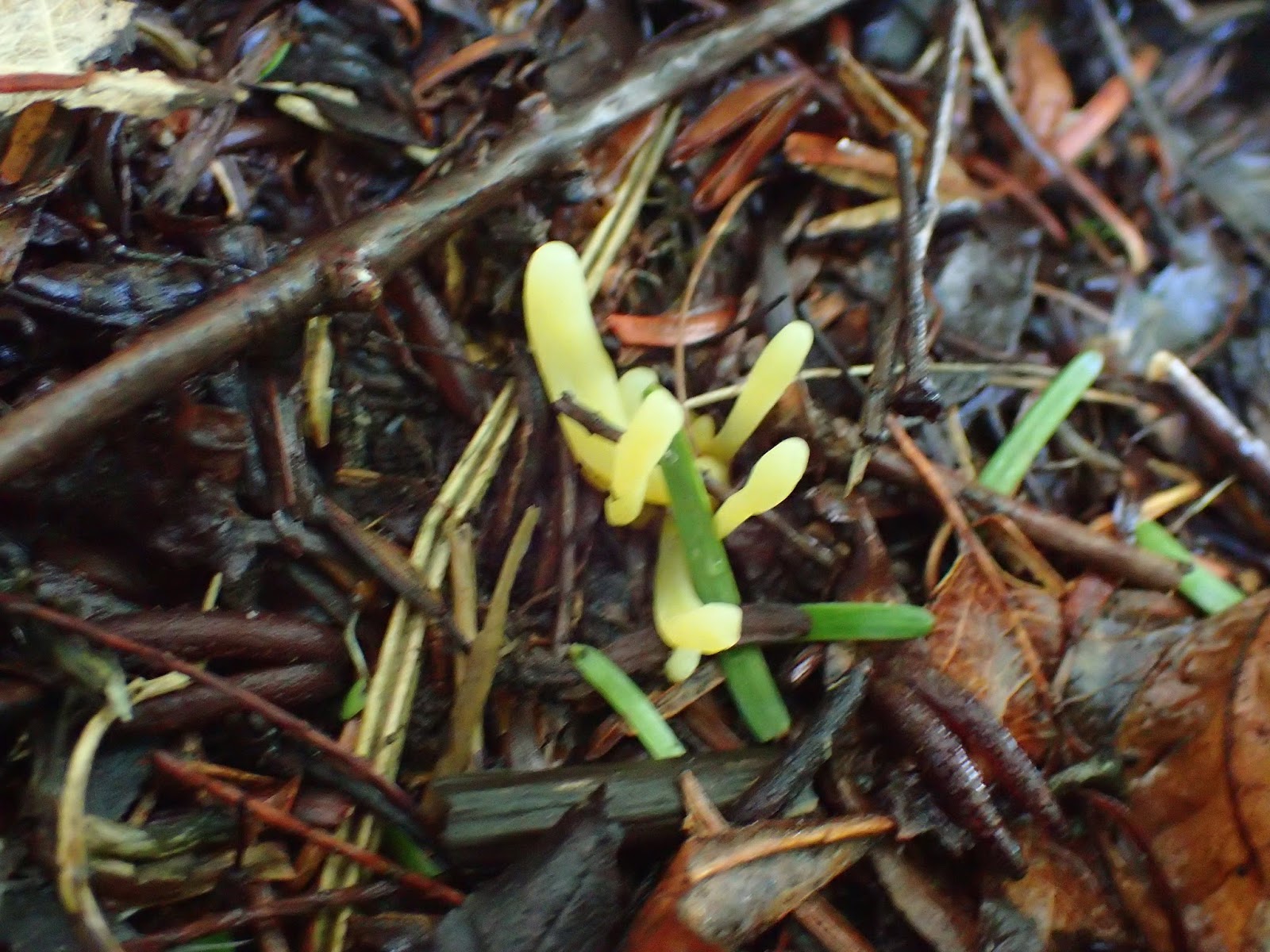
Out on a large lawn we were hopeful for some Waxcaps and other associated species, but unfortunately we were either too early or it wasn't as good as it looked. Pink Domecap was a decent find, but some part-mown Yellow Clubs were the only CHEG species. Just off the grass some Jellybabies were found under the wooded edge.
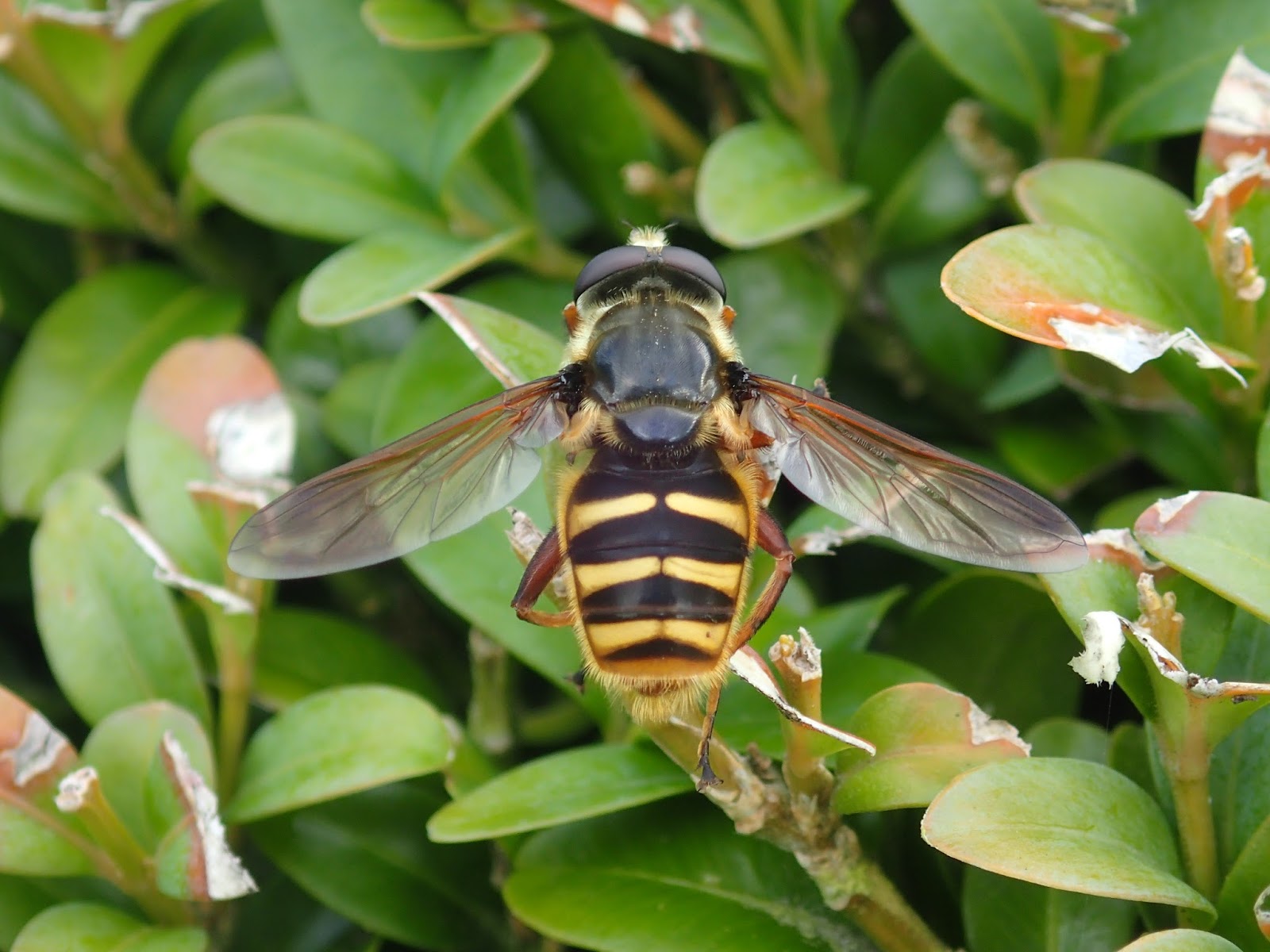
Before leaving we had a look around the car park and the lawn in front of the house. A few more species were added, including Meadow Coral, although the pick was probably some small ascomycetes that Yvonne found growing on a Dryopteris fern. They turned out to be Psilachnum chrysostigmum, the second Norfolk record. An obliging Sericomyia silentis hoverfly was also nice to see. Altogether we managed over 110 species, the most I remember on a foray for quite some time, so I'm glad I wasn't put off by a bit of rain!