The Whitlingham Bird Report for 2025 is now available to download from the Bird Reports page or from here

Showing posts with label Case-bearer. Show all posts

NORTH NORFOLK: A walk on the saltmarsh

17th September 2022 

I had originally intended to attend a fungus study group foray on this date, but instead decided to head to Warham saltmarshes where the Norfolk Flora Group were holding a meeting combined with a workshop on Sea Lavenders. Unfortunately the area we were surveying held only Common Sea Lavender and a hybrid with Lax-flowered, so I still haven't seen Matted or Rock Sea Lavenders - maybe next year!

 The plant highlight for me was Corn Parsley, which I'd not seen before, whilst we also had the benefit of Alex Prendergast's Elm knowledge to point out a couple of different Elm species. 


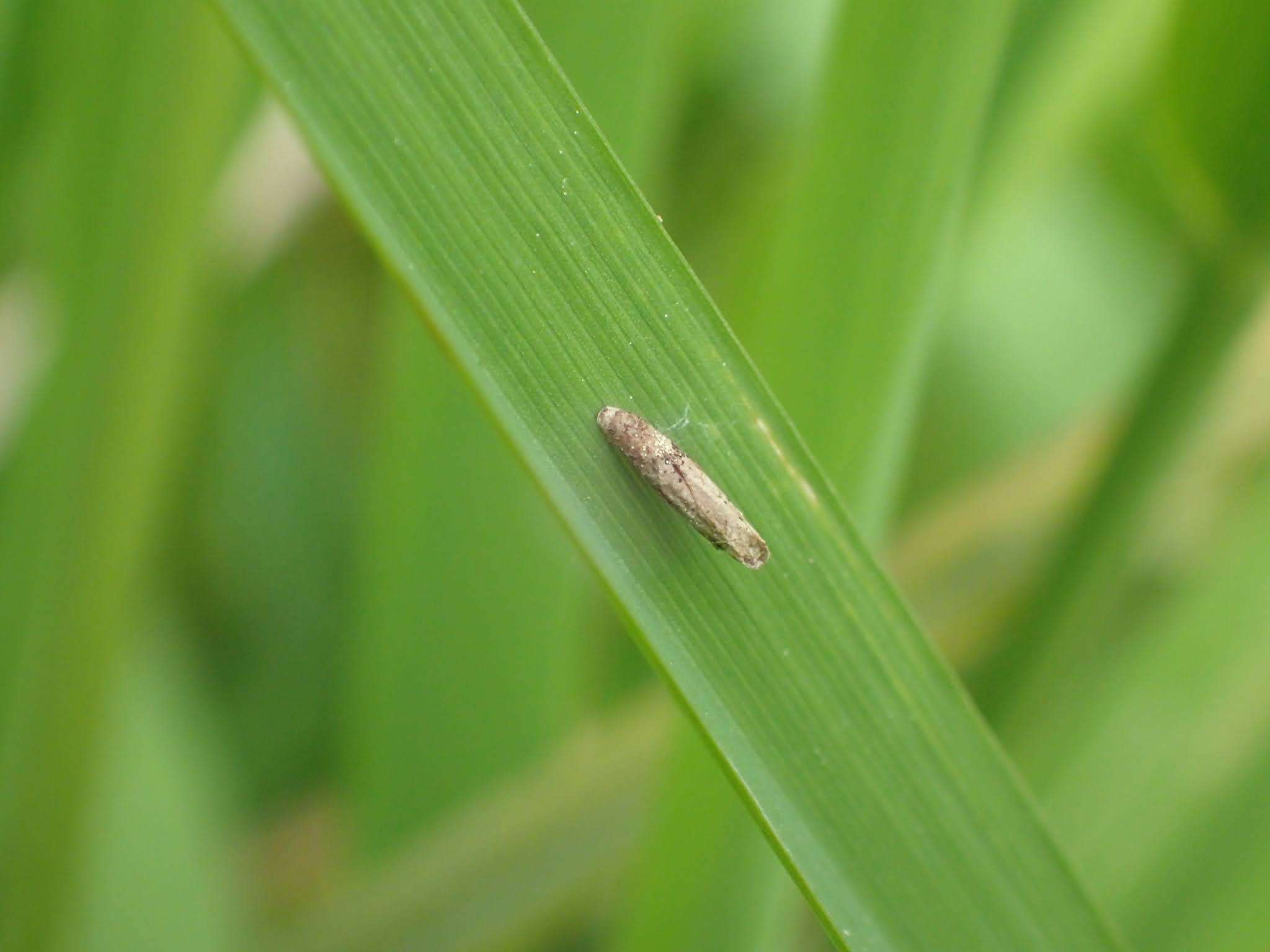
I checked some Sea Wormwood plants unsuccessfully in the hope of finding Scarce Pug larvae, but did find a consolation in with some Wormwood Case-bearer larvae (Coleophora albicans). Other invertebrate highlights included Coleophora atriplicis on Annual Sea-blite, the lacebug Parapiesma quadratum and Sea Lavender Aphid Staticobium staticis. I failed to find any Sea Lavender Weevils, but perhaps focussed to much on the flowerheads, as something I've since read online suggests that they are best found by turning over the basal leaves.


CENTRAL NORFOLK: Spiders, hoverflies and moths at Buxton Heath

Late August 2022

An hour spent at Buxton Heath is seldom wasted. I spent a bit of time watching ants running up Oak trunks in the hope of seeing a rare aphid, Stompaphis quercus, but had no luck (I did find a couple of bugs though). As the hot weather had parched the heath I then headed to the mire, where the course of the stream was very obvious!


I managed to find some interesting bits and pieces. I was probably most happy with a Didea fasciata hoverfly, a fairly common species but one I'd not seen before, along with a Helophanus spider. There are two similar species, but I have a soft spot for the Salticidae (jumping spiders) and had wanted to see one of these tiny yellow palped species for a while. I found it completely by chance whilst checking heather for Heather Ladybird, a long-term target that I once again failed to find.


Other finds included a Wasp Spider (now common in Norfolk but I'd not seen one at Buxton before),  Buff Birch Case-bearer (Coleophora milvipennis), Wood Grass-veneer (Crambus silvella) and a gall on Fen Bedstraw caused by Dasineura galiicola.


BROADS: Hickling invertebrates

Late May 2022

A family visit to Hickling Broad, and despite several squally showers we managed to see two Swallowtails, the latter of which flew through the garden near the visitors centre. My elder daughter enjoyed looking for caterpillars as we went round, with over 20 Garden Tiger and 12 Drinker moth caterpillars found. It was also a good day for Black Colonel soldierflies, whilst new species included Creeping Thistle rust (Puccinia punctiformis) which was abundant on thistles along the long track to Whiteslea Lodge, a case-bearer on willow Coleophora lusciniaepenella, a mating pair of Platychierus fulviventris hoverflies and the psyllid Chamaepsylla hartigi on birch.


Garden Tiger moth caterpillar ("Woolly Bear")
Drinker Moth caterpillar
Black Colonel
Cerapheles terminatus
Chamaepsylla hartigi
Coleophora lusciniaepennella
Fen Mason Wasp
Platycheirus fulviventris
Creeping Thistle infected by Puccina punctiformis
Wasp Beetle

WHITLINGHAM: May visit and lepidopterans

Mid May 2022

A clear avian highlight of the May WeBS count was a flock of four Common Sandpipers flying around the far shore of the Great Broad, sadly way out of camera range.

In terms of invertebrates there was a good range, including a case of Forest Case-bearer (Coleophora ibipennella) on Oak, Blood-vein caterpillars on Dock and the aphid Thelaxes dryophila. I also noticed some chrysalises that had emerged from cut willow stumps, but have no idea what species they might relate to.


THORPE MARSHES: A range of beetles and a rare case-bearer

Early June 2021

A couple of hours at Thorpe Marsh turned out to be very profitable for invertebrates. Dolerus aericeps, a sawfly associated with horsetails, was found on the permissive path, and was followed by a succession of 'new' beetles. Firstly the weevil Notaris scirpi, then whilst looking for Spotted Marsh ladybirds I noticed a peculiar-looking Monoceros Beetle, which was trumped shortly after by an Ant Beetle.


Whilst not as spectacular, in recording terms these were all trumped by a Coleophora larva, which Rob Edmunds identified as Sandy Case-bearer (Coleophora lithargyrinella), the first Norfolk record since 1874. Interestingly both this species and Monoceros Beetle are often found in drier, sandy habitats, but were present here at the edge of the grazing marsh.


BROADLAND: Few fungi but a rare case-bearing moth

17th April 2021

After more than a year's absence, Fungus Study Group events recommenced with a trip to a private Broadland location, with numbers restricted to groups of six. It was a beautiful sunny day in an unspoilt area, and although the dry conditions restricted us to a small number of mostly tiny plant fungi it was really nice to be out with the group again. We watched some hares chasing in a nearby field, a couple of Cranes flew over and some Bearded Tits flew down a dyke. 

 Of the fungi, the new species were all aforementioned small obscure ones, including Rush Disco (Lachnum apalum), Ascodichaena rugosum (a black fungus on Oak branches) and Ophiognomonia ai-viridis (tiny black spikes along the petiole of dead Alder leaves).


 We stopped for lunch near a mass of flowering Gorse, which contained well over 20 Gorse Shieldbugs, loads of Gorse Weevils and my first Large Red Damselfly of the year. A Water Measurer was of note on a pool, whilst species of the day was an occupied case of the rare micro moth  Water Dock Case-bearer (Coleophora hydrolapathella)


CENTRAL NORFOLK: Buxton Heath invertebrate selection

Mid-April 2021

Buxton Heath is probably our closest NWT reserve bar Thorpe Marshes, and has the added attraction for family walks of having horses, a favourite of my daughter. This area holds a wide range of insects, such that during spring and summer it would almost be a suprise not to see something new. During our couple of hours we saw six Buzzards kettling above the woods, a couple of Crossbills flying over, a Stonechat and a Meadow Pipit. I saw four new species, two of which are probably things that I have seen but not recorded in the past - Heather Beetle and Juniper Haircap moss. The other two were the larval stage of the Ling Case-bearer moth (Coleophora pyrrhulipennella) and a spider, Zora spinimana.


WHITLINGHAM: Fungi at Whitlingham & Trowse Woods

1st November 2020

Because I'm usually busy during autumn, somewhat ironically I don't always get to spend much time to look for fungi on my own local patch, so I made a point of heading to Whitlingham Woods and then on to Trowse Woods for a walk around. At Whitlingham I found the larva of Coleophora albitarsella on Ground Ivy, a new one for the site, plus Shaggy Scalycap and Jelly Rot on a stump in the car park.


 I had been given directions to several interesting species in Trowse Woods that had been found by members of the Fungus Study Group in the previous week, but I hadn't gone far in before I saw Anne Crotty, who was able to point out most of them, saving me a lot of hunting around! New species for me included Mycena erubescens, Pluteus hispidulus, Garlic Parachute and Mealy Oyster, whilst we did find a few species that hadn't been found previously, including Yellowing Cup, Peziza succosa.