The Whitlingham Bird Report for 2025 is now available to download from the Bird Reports page or from here

Showing posts with label Sawfly. Show all posts

NORWICH: Late May interesting sightings

Late May 2024

A few species of note from my walks around Norwich. On my way home one day I checked a large hybrid Black Poplar and found occupied leaf mines of the sawfly Fenusella hortulana, which appears to be new to Norfolk. In Train Wood I saw the bug Closterotomus trivialis. I thought I had seen this before, but I can't find a record of it so it is presumably a new one for me. Whilst taking my youngest daughter to a local park I found a smut fungus called Ustilago bullata on Bromus hordaceus. It seemed to be new to Norfolk, but I have since been told there are a couple of old records under a different name that hadn't made it into the county database.


NORWICH: Sawflies on Ash - Tomostethus nigritus

Early June 2023

Whilst checking an Ash tree for psyllids I noticed some very bright green caterpillars feeding on some of the leaflets. A closer look revealed they were sawfly larvae, and fortunately they were distinctive enough to identify them as Tomostethus nigritus, a new species for me.


NORTH NORFOLK: Sheringham Park invertebrates

Early June 2023

One of the places we like to visit in spring is Sheringham Park when the rhododendron collection is in flower. Fortunately there are lots of native plants there too and it is a great place to see invertebrates. On this visit I saw several new or interesting things including the safly Macrophya blanda, the bug Rhabdomiris striatellus, the spider Micaria micans and some weevils, Phyllobius oblongus.


MID YARE VALLEY: North Burlingham woods

Late August 2022

When trying to think of a nice buggy-friendly walk I remembered the woodland at North Burlingham that I had intended to visit for a while. We had a pleasant stroll around, seeing some impressive bracket fungi including Beefsteak Fungus and Giant Polypore. I spotted a Roe Deer in a field adjacent to the wood, and also spotted some Gooseberry plants, a species I don't see very often. There was also some nice mature Oaks, including one being fed on by Caliroa cinxia larvae.


WHITLINGHAM: Thorpe Walnut gall and marshes visit

Mid August 2022

A brief visit to Thorpe Marshes began with an interesting gall on Walnut. As well as the usual blister galls caused by Aceria erinea I noticed some small pimple galls caused by Aceria tristriata. There are no records of this latter species on the county database or in the two books about Norfolk galls, although I found out that it has been seen before in Norfolk - I've written a bit about this for the next NNNS "Natterjack".


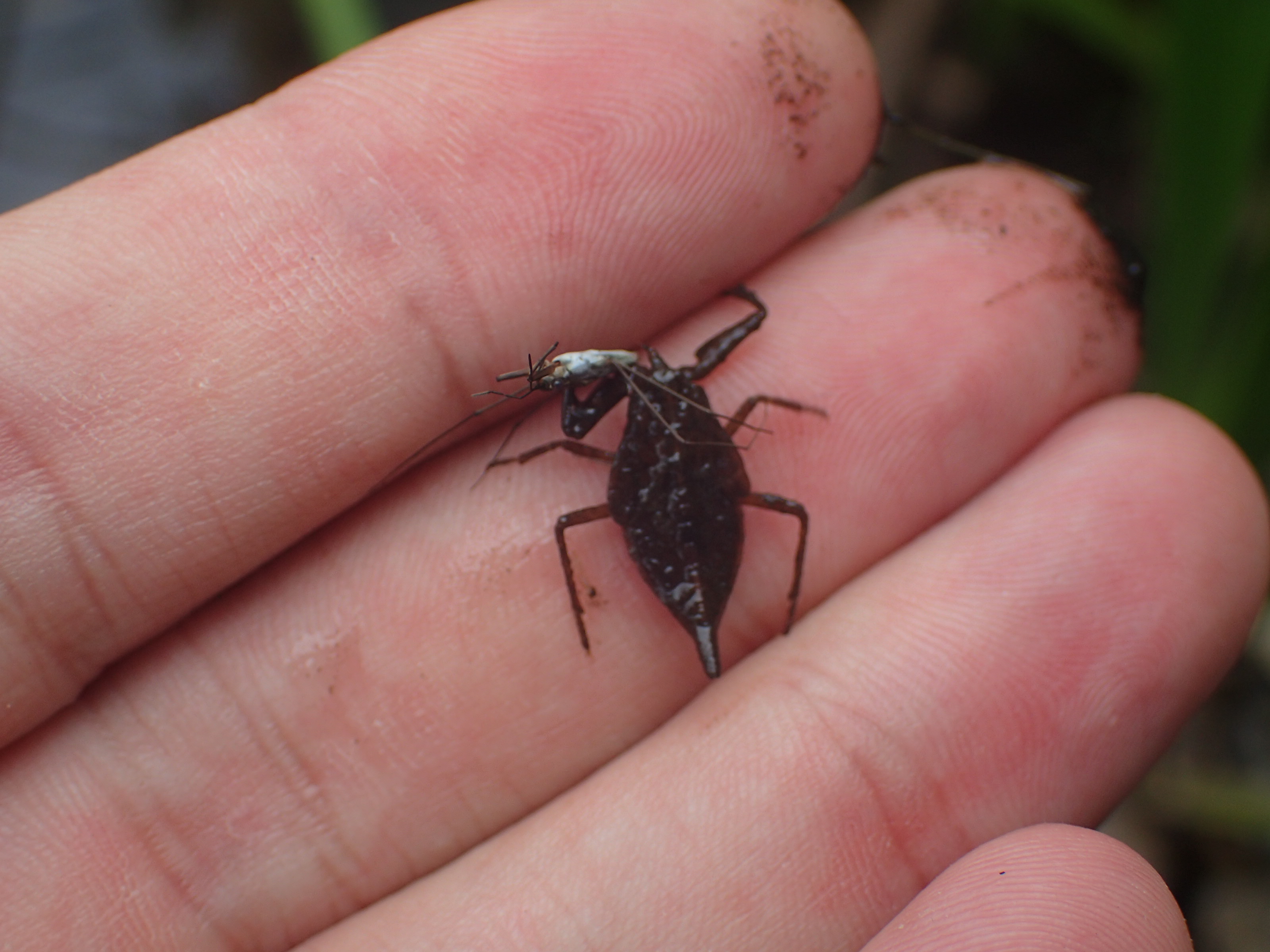
Looking into one of the pathside ditches I noticed a Water Scorpion. On closer inspection it had just caught a Pond Skater, which I manged to get good enough pictures of to confirm as Gerris lacustris. There were two particular highlights of the visit, firstly a new sawfly for me, Tenthredo omissa (previously recorded here by Vanna Bartlett). The second was Tasteless Water Pepper, Persicaria mitis. I had seen water pepper here before, but something about it looked a bit different to usual, and as it didn't taste peppery I checked a bit with Jo Parmenter, who was able to confirm it was the much scarcer alternative species. Two Dasysyrphus tricinctus hoverflies were also of note - I have seen this species before, but only at this site.


WHITLINGHAM: June WeBS count etc

19th June 2022

There were notable counts, if not species, on the June WeBS count, with 414 Greylag Geese my highest ever count here. Of the other large species there were 110 Mute Swans (including 2 pairs, both with 2 cygnets, the latter not included in the total), 64 Canada Geese and 46 Egyptian Geese.

It was a good day for invertebrates, although not everything identified to species. Selected highlights included Aphis pomi on Hawthorn, a black tumbling flower beetle, possibly Mordellistena pumila, larva of Nematus septoniatrialis on willow, an unidentified large hairy click beetle sp and Pterocallis alni, an aphid on Alder.


WHITLINGHAM: April WeBS and a new sawfly

Mid-April 2022

A rather disappointing April WeBS count, with no hirundines present and lots of the winter wildfowl now absent. I did read a few new Mute Swan colour rings and saw three on nests. Around the broad Willow Warblers, Sedge Warblers and Whitethroats had joined the Chiffchaffs and Blackcaps. Quite a few inverterates were noted, the highlight of which was the sawfly Euura clitellata.


NORWICH/WHITLINGHAM: Interesting oomycete and some willow feeders

Late August 2021

Never one to pass up on the chance of a walk, after dropping Cathy & Rose off at the Cathedral for an event I carried on up to St James' Hill and had a stop around the bit of Mousehold Heath in front of the prison. On the way up I noticed some powdery distorted plants, and with a bit of research came to the conclusion it was Lesser Swine-cress, twisted and coated with an Oomycete called Perofascia lepidii. Possibly new to Norfolk.


Later in the day I called in at Whitlingham, where amongst other things I saw some Giant Willow Aphids and some sawfly larvae, tentatively Euura pavida, also feeding on willow.


NORTH NORWICH: Mousehold & Catton Park highlights

Late July 2021

A couple of early morning walks around north Norwich took me to Mousehold Heath and Catton Park, both very popular walking areas but each still good for wildlife. Highlights pictured below are the hopper Javisella pellucida,  White-letter Hairstreak (on an Elm near Zak's car park), a coccoon of an Elm ZigZag Sawfly, a pider-hunting wasp (Ammophila sabulosa), Six-spot Burnet moth and an unidentified Sawfly larva.


THORPE MARSH: Toadflax Brocade caterpillars & insect highlights

Mid July 2021

Thorpe Marsh is the more neglected bits of my patch, so I made an effort to visit this month. Before going onto the marsh I walked around some of the local residential streets to check out areas of Purple Toadflax. My target was caterpillars of the recent colonist Toadflax Brocade moth (https://www.norfolkmoths.co.uk/index.php?bf=22230). These larvae were first recorded in Norfolk in 2019, and so far have not turned up in my own garden, but I was pleasantly surprised to find them on the second patch of plants I checked.


 I then spent a couple of hours walking around Thorpe Marshes. Little Egret was the pick of the birds, but I did find an overdue target species, Red Marsh Ladybird (Coccidula rufa). This species has been recorded here before, but I also hope at some point to find the other wetland Coccidula species here. At the Bungalow Lane end I found a new bug for me, Salicarus roseri, and a bit further along there were some Caliroa cinxia larva stripping the underside of an Oak leaf.


THORPE MARSHES: A range of beetles and a rare case-bearer

Early June 2021

A couple of hours at Thorpe Marsh turned out to be very profitable for invertebrates. Dolerus aericeps, a sawfly associated with horsetails, was found on the permissive path, and was followed by a succession of 'new' beetles. Firstly the weevil Notaris scirpi, then whilst looking for Spotted Marsh ladybirds I noticed a peculiar-looking Monoceros Beetle, which was trumped shortly after by an Ant Beetle.


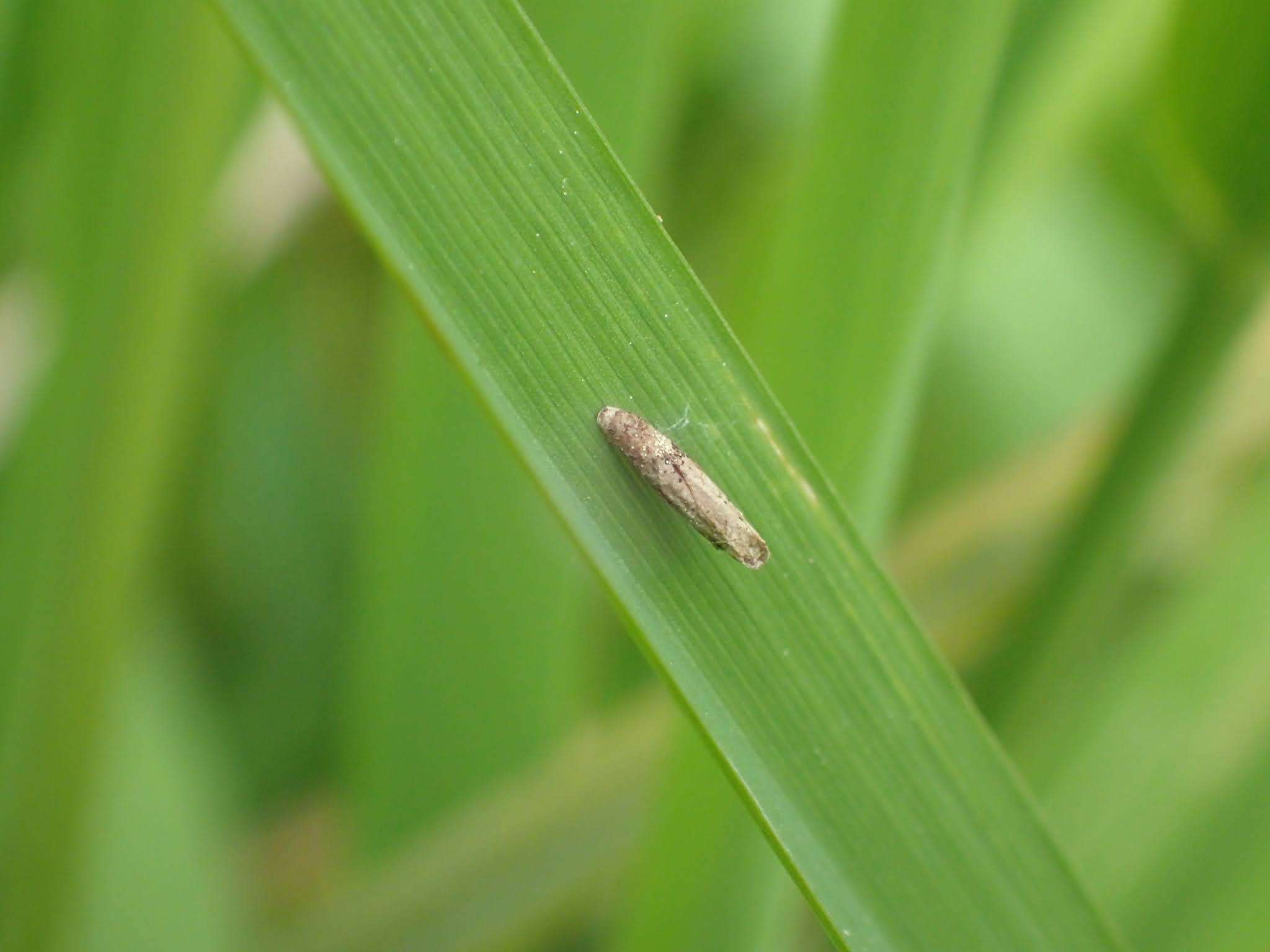
Whilst not as spectacular, in recording terms these were all trumped by a Coleophora larva, which Rob Edmunds identified as Sandy Case-bearer (Coleophora lithargyrinella), the first Norfolk record since 1874. Interestingly both this species and Monoceros Beetle are often found in drier, sandy habitats, but were present here at the edge of the grazing marsh.