The Whitlingham Bird Report for 2025 is now available to download from the Bird Reports page or from here

Showing posts with label Strumpshaw. Show all posts

MID YARE VALLEY: Strumpshaw fungi

Mid-October 2021

A fungus foray at October was quite productive, although having done several here in October its always interesting to see the variation, with some common species seen previously not fruiting at all this time. A few species pictured below, Brown Cup (Rutstroemia firma), Funeral Bell (Galerina marginata) and Spring Hazelcup (Encoelia furfuracea). Highlight for me was actually a Sallow moth found resting beside the path on the way back, which was a new one as I catch very few moths at home in the autumn.


On the way back to Norwich I stopped near Postwick were I went to have a look at a scarce plant, Stinking Fleabane, which had been found by Louis along a cycle path a few weeks earlier. It had all gone to seed, but as it lines a major road it will undoubtedly spread further, so it was good to get an idea of what it looks like first hand.


NORFOLK: Even more October fungi

 Late October 2020

With a few days off work we decided to go for a few family walks in woodland areas fairly close to Norwich, namely Foxley, Strumpshaw and Harrison's Wood (Sprowston). We saw a nice range of fungi across these differing sites, including Trooping Funnels, Parrot Waxcaps, Fly Agarics, Crab Brittlegill, Dark Honey Fungus and many more. Bullfinches were particularly common at Foxley - I heard at least eight there.


Trooping Funnels

Parrot Waxcap and a club - probably Apricot Club

Waxcap sp - probably Parrot Waxcap

Coprinellus impatiens - probably
Crab Brittlegill
Shaggy Parasol
Dark Honey Fungus
Dead Man's Fingers and Candlesnuff Fungus

YARE VALLEY: Strumpshaw Clarke's Mining Bees

15th March 2020

With an inkling that freely moving around the county might not be possible soon, we called in at Strumpshaw Fen for an afternoon walk. Close views of a Marsh Tit were had near the reception hide, with a Marsh Harrier and a calling Chiffchaff also of note. On the insect front there was little seen, but we did stop to watch the Andrena clarkella bee colony by the side of the path.


YARE VALLEY: Off-season Strumpshaw fungus foray

15th February 2020

The first Norfolk Fungus Study Group foray of the year had been in doubt due to the strong winds that had caused numerous site closures the previous week, but with a thorough risk assessment and some volunteer warden guides we carried out a short foray of some of the more open fen areas. By the end we had racked up a very respectable 80-odd species, which would have been much less impressive had Stewart not arrived first and recorded about 50 of them on the main reserve before the rest of us arrived.

We only saw three gilled fungi, but one of them was a species I've wanted to see for a while - Reed Bonnet. This fungus has a distribution centred on the Broads and tends to grow on cut reed stems, so is recorded fairly often by conservation volunteers but less often on forays. The remaining nine new species that I saw were all small fungi on old stems or wood, but they did include some rather interestingly shaped species, some of which I've included below.


 Reed Bonnet - Mycena belliarum
 Acrospermum compressum
 The tiny yellow one near the centre is Yellow Mascara Disco (Belonidium sulphureum)
 Glyphium elatum
Styctis stellata

Other than the fungi there wasn't too much of note around - I flushed several Snipe from an area of cut reed and heard a Great Spotted Woodpecker calling.

YARE VALLEY: End of 2019, start of 2020

1st January 2020

The end of 2019 saw a couple of short visits that I didn't get round to blogging about. Firstly a visit to a flooded Thorpe Marshes, where I was surprised by the amount of tree removal that had gone on, meaning the pools south of the marsh path are now completely visible and the edge of the broad has an open area. Of course its swings and roundabouts, there is now less scrub for small birds in that area but some potentially interesting new edge habitats. Two Stonechats were the only birds of note.


 Note that this is the path rather than a dyke

We also called in to Strumpshaw as a family one afternoon. Having shown Rose a Chinese Water Deer out on the marsh she announced she wanted to see "more deer". On our way back we then spotted two Muntjacs in the woods. Rather than satisfy her desire to see deer, this was greeted by "MORE deer" - I hope that each trip out isn't now going to be judged solely on the presence or absence of deer sightings.

The new year began in similar style to the previous one, as we had stayed at home watched Jools Holland and said rude words about people releasing fireworks all the time (seriously, if you have bought fireworks to celebrate New Years Eve, why release them at 23:30 or 00:30?) I managed to see 14 species from the house/garden, one up on 2019, followed by a Jay that flew over as we got in the car. We then headed down to Whitlingham for a family walk, seeing 24 species. The resident Barnacle Goose plus Shoveler and Little Egret were probably the most notable birds - Justin's drake Red-crested Pochards from the morning had departed and there was no sign of Schrodinger's Mandarin, which seems to exist in a quantum dimension inhabited only by other birders.

YARE VALLEY: More Strumpshaw fungi

3rd November 2019

On Sunday I helped lead the second of the two fungi walks at Strumpshaw Fen. There had been some strong winds recently that meant a blanket of leaves covered much of the ground in places, but we still managed to find a good range of species, including a handful not seen on the earlier walk. The first of these 'new' species was Death Cap (Amanita phalloides), one of the most poisonous species in Britain, with a large group found under some Beech trees.


We then moved on to the log circle, which had fewer species than in October, and next into the clearing where we saw a very nice 'swarm' of small white discomycetes.


Having spent quite a bit of time relatively close to reception we set off for the woods and I noticed an interesting looking clump of Mycena by the path. Suspecting that they might be one of the ones that produce latex when broken, I snapped a stem. It gave off a dark red, blood-like latex, which combined with the deciduous wood made it Burgundrydrop Bonnet (Mycena haematopus). Further along we saw Crimped Gill (Plicatura crispa), a species with fake 'gills' made out of folds in the underside of the cap, and finally a couple of Blushers (Amanita rubescens) amongst a group of Spotted Toughshank (Rhodocollybia maculata).


YARE VALLEY: Strumpshaw October fungi

13th October 2019

On Saturday I helped lead the first of two fungus forays for the RSPB at Strumpshaw Fen, buoyed by the recent wet weather that has caused a lot of fungi to emerge of late. I had a few minutes spare before the start so went for a brief wander, finding an old Alder Tongue gall in the car park, some Pavement Mushrooms beside the path and an occupied Stigmella catharticella mine in a Buckthorn leaf. I had hoped to find leaf mines of the sawfly Heterarthrus ochropoda in some of the Aspen, but had to settle for mines of a different sawfly, Fenusella glaucopis instead. Although an Osprey and Great White Egret were still present in the area somewhere, neither were on view which was a shame.


Numbers for these walks are capped at 20, and we had around 15 for this one. After a short introduction I showed participants the species I had found already, along with the large numbers of Slender Club fungus that grow in the leaf litter beside reception hide. We then made our way slowly towards the base camp, stopping to look at some now rather old Golden Scalycaps, some Blue Roundheads and quite a few Agaricus, which puzzled me at the time but I now think were Inky Mushroom (Agaricus moelleri).


The base camp area is always good for fungi, some of which come up every year, but there were a couple of new ones on this foray. Firstly Fluted Birds-nest, a lovely species although most of the 'eggs; had already been destroyed by the rain, and secondly Freckled Dapperling, which was growing under one of the logs and looked like a large inkcap until removed and examined. Further along we also saw a Skullcap Dapperling, having also seen Stinking Dapperling so a good day for the Lepiota spp.


Progress was slow due to the shear number of fungi being found, but we did progress into the woods, seeing the Upright Coral fungus that was found last year and smelling a Stinkhorn somewhere out of site. Heading further towards the edge of the reserve we saw lots of Amethyst Deceivers, and then as the path turned a corner some Fly Agarics. We'd not recorded this crowd-pleasing fungus on the forays before, so it was great for everyone to see them.


There wasn't time to go quite as far as normal because of the amount we had already seen, but we did visit an old Hazel tree where once again Spring Hazelcups were fruiting very early! On the way back we saw some Shaggy Ink Caps just starting to open up beside the path. In total we recorded about 50 species, with quite a few more of the trickier species not identified beyond family or genus, so quite good going. If any readers were present and want a list of species seen then get in touch and I will send you a copy.


YARE VALLEY: Strumpshaw insects

Mid-April 2019

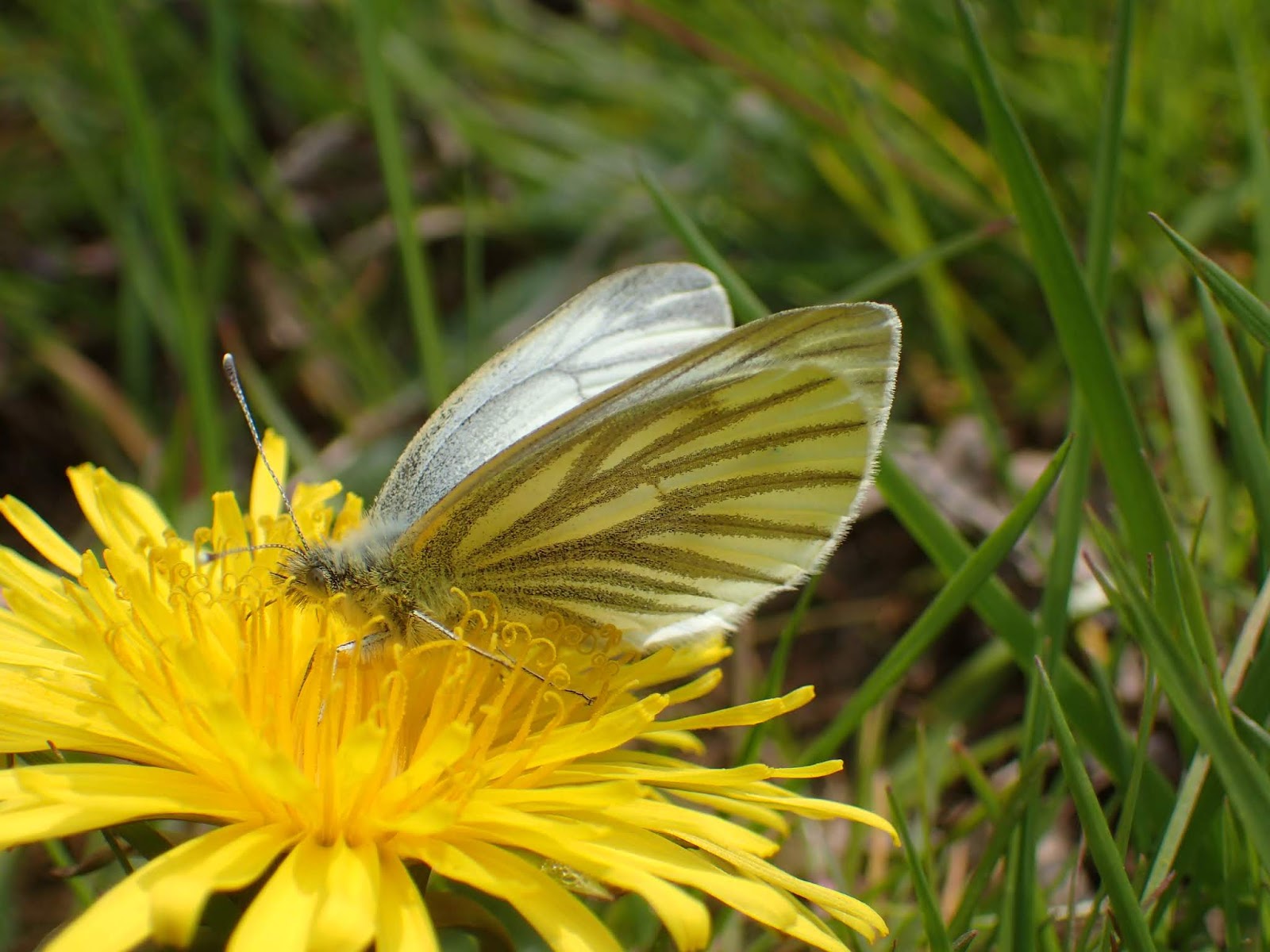
With a few hours spare one afternoon, we went for a family visit to Strumpshaw Fen. It was a lovely warm day and we saw quite a few butterflies, including my first Orange-tip, Speckled Wood and Green-veined White of the year. There was quite a bit of birdsong too, with my first Willow Warbler seen and Sedge Warbler heard. I kept an eye out for hoverflies but only saw a handful of common species, however there were a good range of bees including Andrena clarkella, Andrena nitida and Nomada leucophthalma. The beetle Silpha atrata was also seen and I did manage one new species, the fly Saltella sphondylii (kindly identified from images by Tony Irwin).

 Saltella sphondylii


Ferdinandea cuprea

YARE VALLEY: Strumpshaw fungi 2

4th November 2018

Sunday was the second of my two fungi walks at Strumpshaw, and I arrived a bit early to search for a leaf-mining moth in fallen Aspen leaves. The species is Ectoedemia argyropeza, and the mines are inconspicuous except for a relatively small window when the leaves have turned dark and fallen, leaving a 'green island' caused by chemicals secreted by the larva that prevent the tree reabsorbing the chlorophyll in the leaf. I managed to find one mine, which was enough to add the species to the reserve list.


After a short delay for some of the walk participants to arrive we set off into the woods. Whilst waiting I had noticed some Slender Clubs growing below the trees at reception, and a bit further along the path we saw a Blue Roundhead. Into a clearing a bit further along and there was a nice display of Wolf's Milk Slime Mould, followed by some Upright Coral.


Further round we continued to see a good range of species, including some not seen on the October walk. These included Artist's Bracket (identified by the galls of the fly Agathomyia wankowiczii that only occur on this species), Spring Hazelcup (as the name suggests unusual at this time of year) and Common Eyelash fungus.