The Whitlingham Bird Report for 2025 is now available to download from the Bird Reports page or from here

Showing posts with label Weevil. Show all posts

SOUTH NORFOLK: Dickleburgh Moor insects & fungi

18th May 2024

An enjoyable visit to the nature reserve at Dickleburgh Moor with the Norfolk Fungus Study Group, seeing a good mixture of insects and fungi. Invertebrate highlights included the hoverfly Chrysotoxum cautum, the weevil Dorytomus hirtipennis and a psyllid new to Norfolk, Aphalara maculipennis, whilst in terms of fungi the rust Puccinia conii on Hemlock and Woolly Woodwart were both new for me.


Aphalara maculipennis on Amphibious Bistort. Seemingly a rare species in the UK, this was the first Norfolk record.

NORTH NORFOLK: Sheringham Park invertebrates

Early June 2023

One of the places we like to visit in spring is Sheringham Park when the rhododendron collection is in flower. Fortunately there are lots of native plants there too and it is a great place to see invertebrates. On this visit I saw several new or interesting things including the safly Macrophya blanda, the bug Rhabdomiris striatellus, the spider Micaria micans and some weevils, Phyllobius oblongus.


CENTRAL NORFOLK: Gressenhall museum & farm

Early June 2023

I'd not visited the Museum of Rural Life at Gressenhall since I was a child, so a visit seemed long overdue. There was something of interest for everyone, taking in the museum, old workhouse, farm and some of the rewilded land along the river. I was particularly keen to have a look around the orchard, but was a bit underwhelmed at how big it was! I failed to find my main target species, the psyllid Cacopsylla mali that feeds on apple, but did find a Plum  Longhorn beetle and some very nice barkflies, Mesopsocus sp (probably M. immunis).


Along the river I noticed some beetles egg-laying on the lily pads, making them Galerucella nymphaea (there are similar looking ones that feed on other plants). The scarcest sighting of the visit was probably a weevil associated with Bird Cherry, Furcipus rectirostris. Back in the main grounds I just had time to check some Eleagnus and found Cacopsylla fulguralis, new to west Norfolk.


NORTH NORFOLK: A stroll on Bryant's Heath

Late October 2022

Having gone back to North Walsham to visit relatives I decided to take a few hours and walk one of my old haunts, the Weaver's Way down towards Felmingham. I left the footpath at the bridge and continued on to Bryant's Heath, where I did a quick lap and then back the way I had came. There were a few highlights - as I entered the heath I saw a micro moth flying weakly over vegetation. I followed it and managed to get good enough views to confirm it was a November Tubic (Diurnea lipsiella), a new species for me. After checking quite a bit of Aspen I found a couple of mines of Virgin Pigmy moth, Ectoedemia argyropeza, a new 10km square for it. Less pleasant was a ked fly, presumably Deer Ked (Lipoptena cervi) that landed on my trousers. These are rather odd looking blood-sucking flies (see Deer Keds on arthropodafotos.de for more information on them).


The fungal highlight was finding a large patch of Fly Agarics under some birches. Unfortunately they were spread out enough that my pictures don't do justice to what was a very impressive sight.


The last thing of note was several Apionid weevils on Broom. Having researched the pair of similar Broom-feeding species earlier in the week, I was happy these ones were Protopirapion atratulum.

NORTH WEST NORFOLK: Clover-root Weevil

Early September 2022

A visit to Hunstanton to visit the Sea Life Centre, the only wildlife highlight of which was a number of small weevils on the walls and perspex screens. Fortunately they were distinctive ones, Clover-root Weevil (Sitona hispidulus).


CENTRAL NORFOLK: Sericomyia superbiens

Mid August 2022

A few years ago the scarce hoverfly Sericomyia superbiens was discovered at a small nature reserve in central Norfolk. This summer I finally got round to going to see if it was still present, bringing Jeremy, Vanna and Ian along to help look. Initial signs weren't too promising as the site looked quite dry and the target species apparently preferred wet areas with lots of Devil's-bit Scabious, however further along there were some damper bits. Ian found some of the scabious with white anthers infected by Devil's Bit Scabious Anther Smut (Microbotryum succisae), which was a new species for me. After a bit of searching I managed to find two Sericomyia superbiens, one of which hung around long enough for some photos.


After lunch we explored a bit more of the site and a nearby footpath. Vanna noticed a bolete growing along an old bank, which turned out to be the first Norfolk record of Boletus rhodoxanthus. Another new species for me, also found by Vanna, was the small conopid fly Thecophora atra.


Other interesting sightings included Pale Tussock Moth caterpillar, Mint Leaf Beetle, Yellow Pimpernel and Hazel Leaf Roller Weevil.


NORWICH: Sweetbriar Marsh invertebrates

Early August 2022

One day after work I called in at Sweetbriar Marshes, where Vanna Bartlett had recently seen Andrena denticulata on the Fleabane. I managed to find a few, along with Red Bartsia Bee and a few other bees. On the reedmace I found Chilacis typhae bugs, some half buried in the seedheads, and an adult Orchestes hortorum weevil as on an Oak leaf. The most interesting find was a small micro moth on Skullcap. Unfortunately there are two rather variable species, both rare, so whilst I think this one is likely to be Small Metal-mark, Prochoreutis myllerana, it would require a specimen to confirm it. There are only 11 Norfolk records since 1900 The only previous record from TG20 is from Charles Barrett, the early moth chronicler back in 1874.


NORWICH: Mousehold heath - a June invertebrate selection

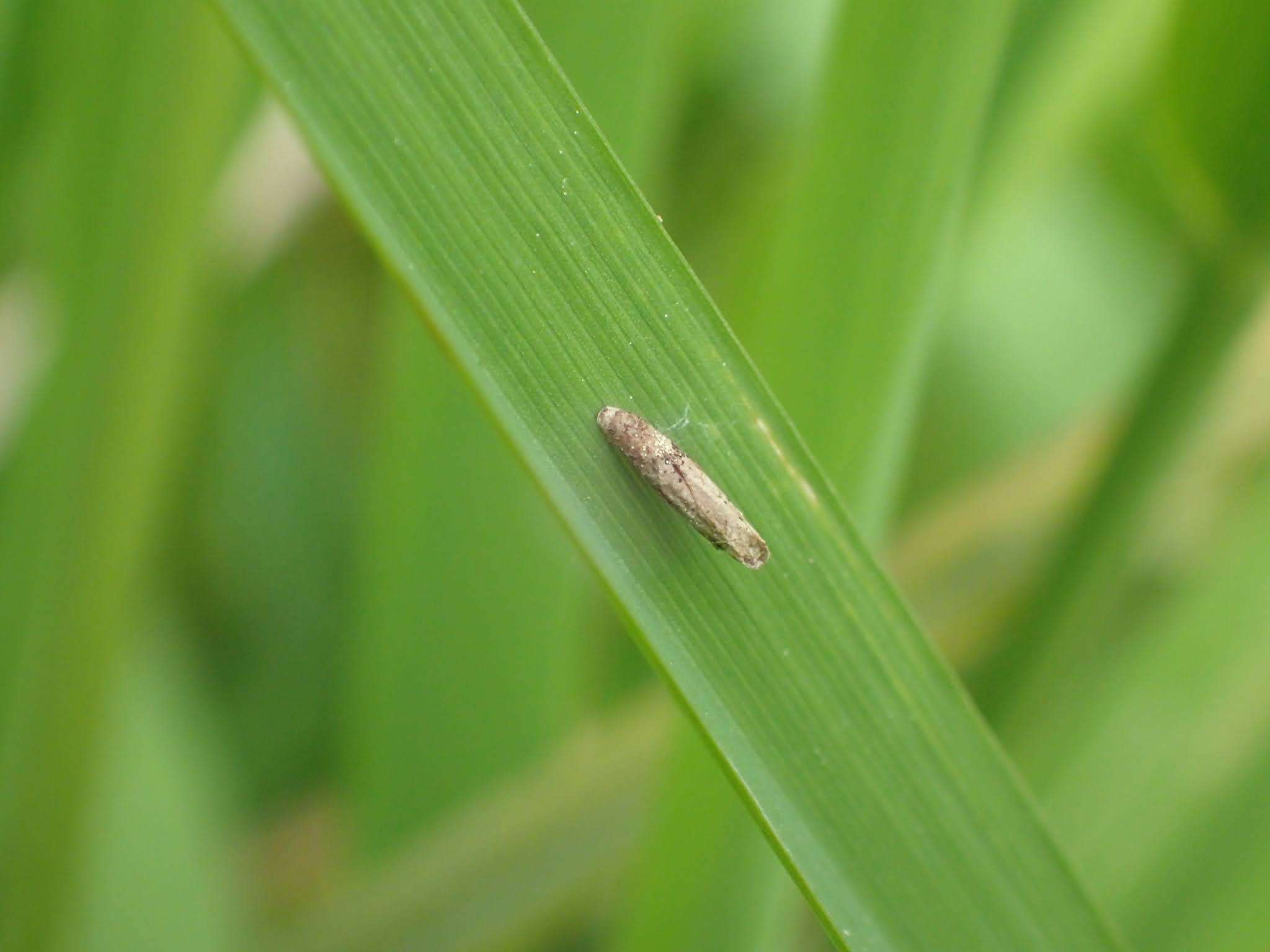
There is a rare case-bearing moth, Coleophora saturatella, that feeds on Broom, so now and again I like to check the plants at Mousehold in the hope of finding it there. As expected by now I didn't find it, but there were plenty of other interesting things, some associated with Broom, but others more generalist.

Andrion regensteinense
Ditropis pteridis
Green Tiger Beetle
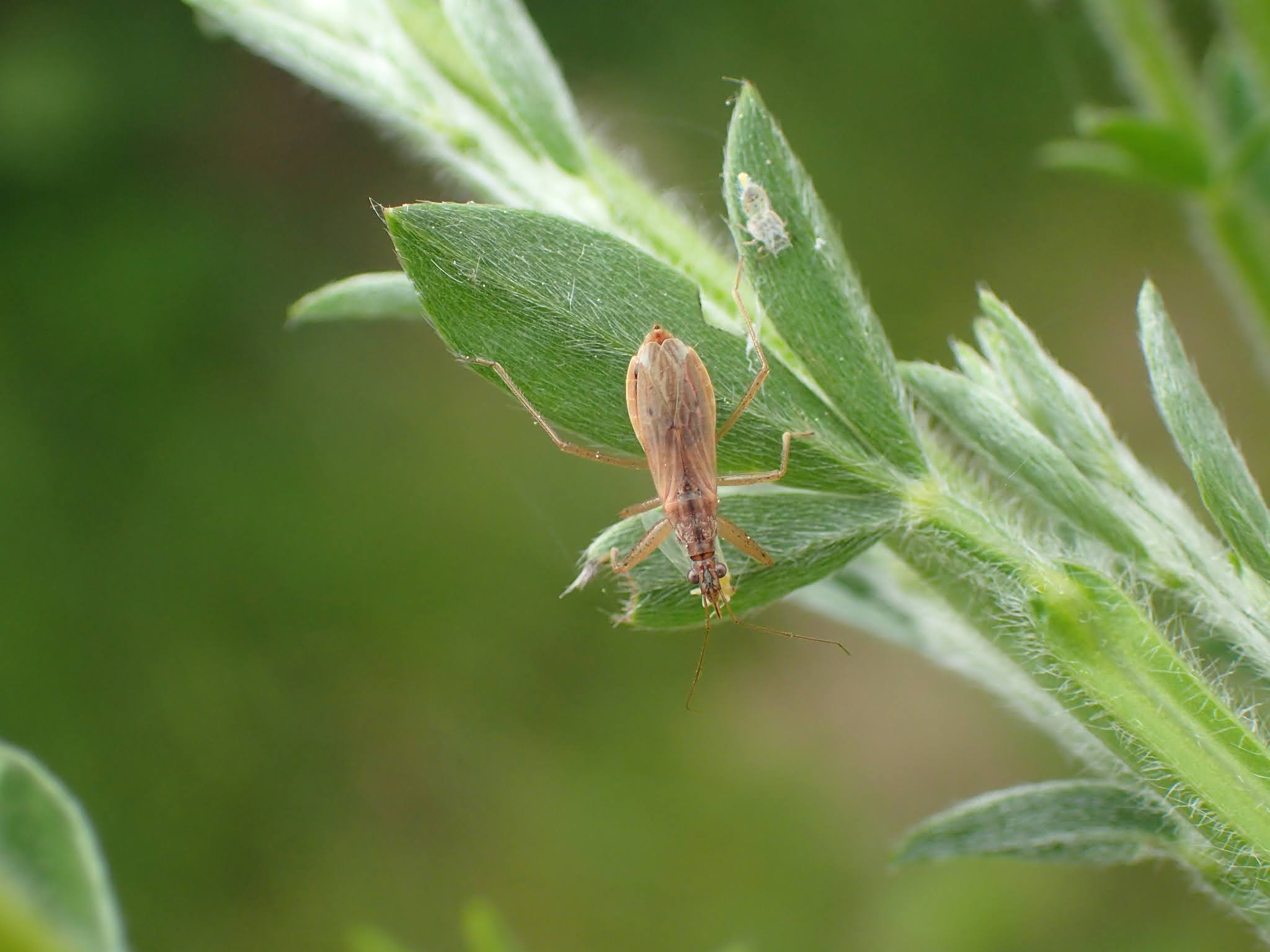
Common Damselbug (Nabis rugosus)
Norfolk Hawker - a common species in the broads but it seemed strange seeing one up on the heath
Prosternon tesselatum, a species of click beetle.

NORWICH AREA: A range of insects on Common Mallow

I've fallen completely behind with blog updates, so will now try to lump some similar things together in order to get uptodate by the summer.

A few years back I was sent a link to a publication called Beetle News, which had an article about the types of weevils you can get on Common Mallow. There are four, two rather similar ones and two that are easy to identify. At various points during June and July I kept having a look at mallow plants around the city, and eventually found all four species. There is also a rare one found on Marsh Mallow that I have been  shown in the past at Minsmere, whilst a sixth species occurs on Hollyhocks but hasn't yet been found in Norfolk.

Pseudapion rufirostre - a blackish weevil with orange legs. The third commonest of the four locally, but still found fairly frequently when searched for.
Malvapion malvae. Grey at the front, yellowy-brown at the back, so distinctive when found on Mallow (apparently there are a few similar species on other host plants, but not that are likely to occur nearby). The second commonest of the four species around Norwich from the plants I checked.
Aspidapion radiolus. A black weevil with grooved elytra (wingcases) and a textured pronotum. When looked at carefully there is no groove between the eyes. By far the commonest of the four encountered, but until you get your eye in it does need examination under a hand lens or a really good photo to check the groove is absent and eliminate A. aeneum.
Aspidapion aeneum. Similar to the above species, but the elytra are less grooved, it is slightly wider and metallic blue rather than black. When looked at closely it has a groove between the eyes. Whilst possibly overlooked as A. radiolus (weevils typically drop off the plant into the udnergrowth when you go for a closer look!) it appears to be the scarcest of the four weevils around Norwich based on my observations.

The same article also mentions two flea beetles that occur on Common Mallow, Podagrica sylvestris (which as orange legs) and P. fuscipes (which has black). I've not found either yet, but Stewart Wright found P. sylvestris in his garden on the day of a fungus foray and showed me.


Whilst checking Hollyhocks in a garden centre, I also found a mallow-feeding leafhopper Eupteryx atropunctata for good measure.


THORPE MARSHES: A range of beetles and a rare case-bearer

Early June 2021

A couple of hours at Thorpe Marsh turned out to be very profitable for invertebrates. Dolerus aericeps, a sawfly associated with horsetails, was found on the permissive path, and was followed by a succession of 'new' beetles. Firstly the weevil Notaris scirpi, then whilst looking for Spotted Marsh ladybirds I noticed a peculiar-looking Monoceros Beetle, which was trumped shortly after by an Ant Beetle.


Whilst not as spectacular, in recording terms these were all trumped by a Coleophora larva, which Rob Edmunds identified as Sandy Case-bearer (Coleophora lithargyrinella), the first Norfolk record since 1874. Interestingly both this species and Monoceros Beetle are often found in drier, sandy habitats, but were present here at the edge of the grazing marsh.