The Whitlingham Bird Report for 2025 is now available to download from the Bird Reports page or from here

Showing posts with label Longhorn beetle. Show all posts

WHITLINGHAM: Delayed June WeBS count

Late June 2023

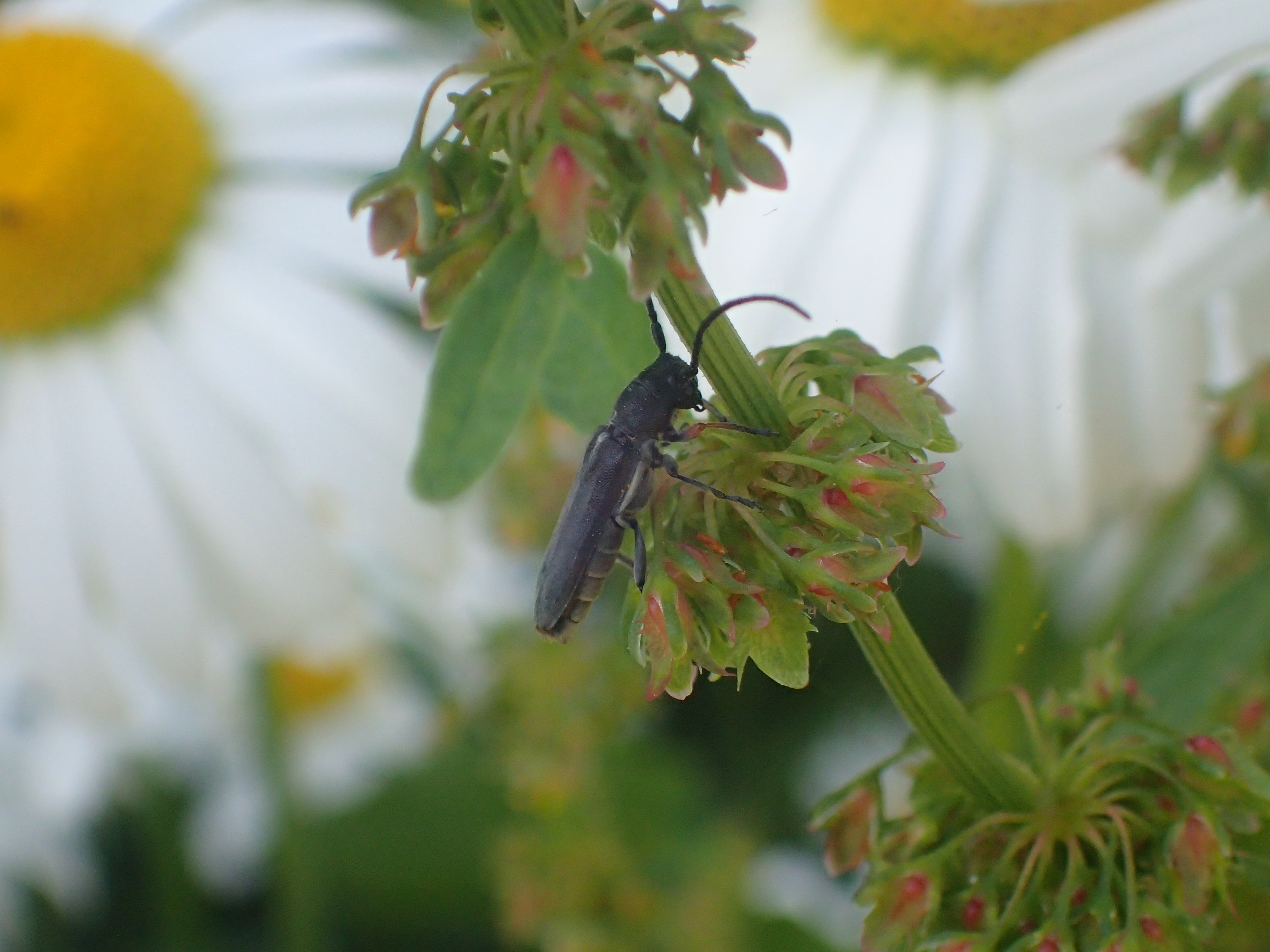
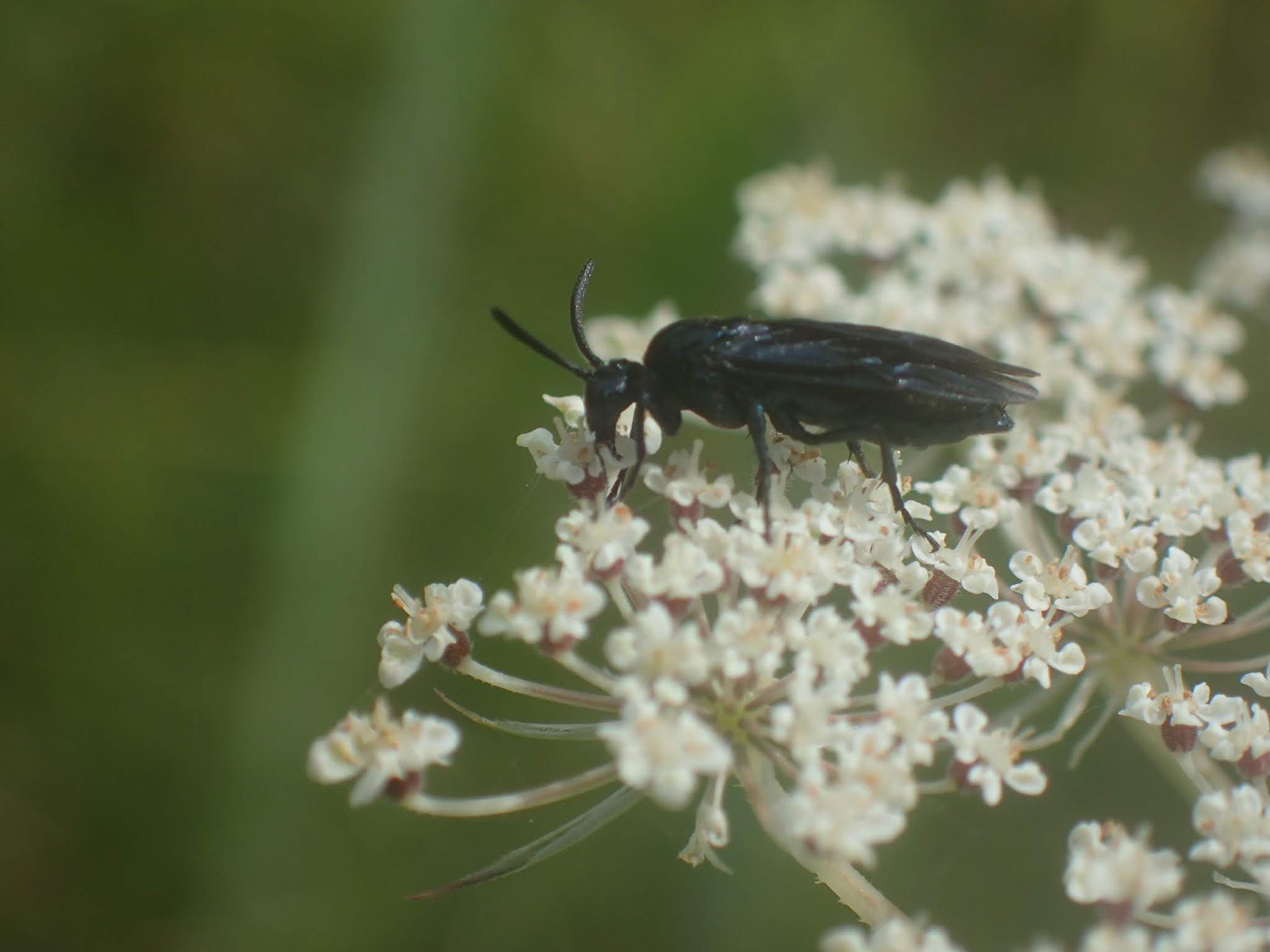
I had to delay June's WeBS count as there had been triathlons using the Great Broad. The wasn't anything particularly notable in terms of birds - 113 Greylag Geese, 57 Mute Swans (plus some cygnets in the conservation area bay) and 47 Egyptian Geese. A couple of Common Terns were also still present. In terms of invertebrates I saw my first patch Umbellifer Longhorn Beetle (Phytoecia cylindrica) and nice crab spider (Misumena vatia) and the smut on Greater Pond Sedge that has been very prevalent this year, Farysia thuemeni.


CENTRAL NORFOLK: Gressenhall museum & farm

Early June 2023

I'd not visited the Museum of Rural Life at Gressenhall since I was a child, so a visit seemed long overdue. There was something of interest for everyone, taking in the museum, old workhouse, farm and some of the rewilded land along the river. I was particularly keen to have a look around the orchard, but was a bit underwhelmed at how big it was! I failed to find my main target species, the psyllid Cacopsylla mali that feeds on apple, but did find a Plum  Longhorn beetle and some very nice barkflies, Mesopsocus sp (probably M. immunis).


Along the river I noticed some beetles egg-laying on the lily pads, making them Galerucella nymphaea (there are similar looking ones that feed on other plants). The scarcest sighting of the visit was probably a weevil associated with Bird Cherry, Furcipus rectirostris. Back in the main grounds I just had time to check some Eleagnus and found Cacopsylla fulguralis, new to west Norfolk.


NORWICH: Mid-June invertebrates & wildflowers

Mid-June 2022

Various species of interest seen around the city, mostly whilst walking too or from work. Beetles included Black-clouded Longhorn Beetle agg (Leiopus nebulosus agg), Umbellifer Longhorn Beetle (Phytoecia cylindrica) and Dorytomus ictor. Plants included Carthusian Pink at UEA and Perennial Wall Rocket, a species I had been searching for amongst the commoner Annual Wall Rocket. Other species of interest included the plant bug Neolygus populi on Aspen, a mating pair of Hornet Moths at Train Wood and the leafhopper Kybos smaragdula at Wensum Park.


BROADS: Hickling invertebrates

Late May 2022

A family visit to Hickling Broad, and despite several squally showers we managed to see two Swallowtails, the latter of which flew through the garden near the visitors centre. My elder daughter enjoyed looking for caterpillars as we went round, with over 20 Garden Tiger and 12 Drinker moth caterpillars found. It was also a good day for Black Colonel soldierflies, whilst new species included Creeping Thistle rust (Puccinia punctiformis) which was abundant on thistles along the long track to Whiteslea Lodge, a case-bearer on willow Coleophora lusciniaepenella, a mating pair of Platychierus fulviventris hoverflies and the psyllid Chamaepsylla hartigi on birch.


Garden Tiger moth caterpillar ("Woolly Bear")
Drinker Moth caterpillar
Black Colonel
Cerapheles terminatus
Chamaepsylla hartigi
Coleophora lusciniaepennella
Fen Mason Wasp
Platycheirus fulviventris
Creeping Thistle infected by Puccina punctiformis
Wasp Beetle

NORTH NORWICH: Yellow Bird's-nest

Mid July 2021

I have a list of 'target' species that occur in Norfolk or Suffolk that I'd like to see at some point (admittedly mostly in my head rather than written down), and one of those species was Yellow Bird's-nest, a "myco-heterotrophic" plant, which means that instead of using chlorophyll to get its nutrition it parasitises fungi in the soil (Tricholoma species if I recall). I had previously looked for and not found this species at a couple of locations in north Norfolk, but having heard that some was flowering at our NNNS study site north of Norwich I called in, and with some good directions from Jo I eventually found a couple of flowering spikes. 

As this is a recording priority site I did have a look at the insects whilst I was there, and was particularly pleased to find a couple of new beetles, click beetle Ampedus balteatus and Black-striped Longhorn Beetle. There were also lots of Blushers beginning to fruit, and a Green Hairstreak caterpillar was the first time I'd found the larval stage of this species.


WHITLINGHAM: June WeBS cout and Tobacco-coloured Longhorn Beetle

June WeBS count 

Mute Swan - 78. Two families noted, one with one cygnet and another with two cygnets 

Canada Goose - 59. No young noted. It appears there was one brood hatched, but these were assumed predated at some point. 

Greylag Goose - 164. Only three of this years young noted. Carrion Crow predation of young goslings was seen this year - could it account for the loss of more broods? 

 Egyptian Goose - 50. Includes broods of two and three of this years young. 

Elsewhere Garden Warbler still in song and four Common Terns still present. A nice scattering of invertebrates, the highlight of which was a Tobacco-coloured Longhorn Beetle, previously recorded at Whitlingham but a new species for me.

NORTH NORFOLK: Natural Surroundings Rhagium mordax

Early June 2021

After over a year of avoiding busy places we now have a backlog of places to visit, and near the top of the list was Natural Surroundings at Bayfield. We took Margaret and had lunch before a good look around the grounds. A plant I didn't recognise was growing in the woodland near the car park, which was identified by Andy Musgrove as Fringecups. The undoubted wildlife highlight of the visit though was a longhorn beetle, Rhagium mordax, found by Cathy. For some reason this species has a slightly alien look about it and has long been on my target species list.


NORTH NORFOLK: Sheringham Park - an insect filled family trip out

Early June 2020

Whilst I had been out locally a few times, we were considering where and when to go out as a family (it can be difficult to make sure a 2 year old socially distances). We settled on Sheringham Park, the recently reopened NT property, partly because we had planned to visit this spring anyway, but also because the National Trust were restricting the numbers of people, so we knew it wouldn't be too busy. 

It was a slightly drizzly day, but we had a good walk through the woods, starting at the bower where a female Blackcap was bathing in the pond and nearby Nuthatch and Firecrest called. It was actually a very productive trip for insects, with a handful of new species for me. Longhorn Beetles are one of my favoured groups, so the pick of them would probably be the Black-clouded Longhorn Beetle (agg) found by Cathy. It has fairly recently been discovered that there are two very similar species, hence the need to record it as an aggregate. Pictures of this, and the other new species are below. We also saw some impressive bracket fungi, Dryad's Saddle and Sulphur Polypore, and even caught a glimpse of the sea from one of the viewpoints.

 Dioctria linearis - a robberfly with pale legs
 Graphopsocus cruciatus - a distinctively patterned barklouse
 Oak Marble (Lobesia reliquana)
 Black-clouded Longhorn Beetle agg.
 Pediacus dermestioides - a flattened beetle usually found underneath bark
 Cottony Camellia Scale (Pulvinaria floccifera)
Tenthredopsis nassata (a sawfly)

WHITLINGHAM: August insects and new sightings

4th August 2019

Another early date for the monthly WeBS survey, and with Justin counting Thorpe I only popped in for a quick look before heading to Whitlingham. This was long enough to add a new species of damselfly to my patch list in the form of Small Red-eyed Damselfly. This species has been seen on a few dates in August over the past few years, but numbers have still to take off. This one was in the mooring basin alongside quite a few 'large' Red-eyed Damselflies. A young Tortoise Shieldbug was a surprise find, having previously only seen them in the Brecks or at Foxley Wood, but I found two at Thorpe and a further example at Whitlingham. A male Megachile (leafcutter) bee was also new to the patch list, although frustratingly I couldn't see it well enough to confirm an ID - M. centuncularis is the commonest local species whilst M. ligniseca is known to visit Burdock, so those are the main two candidates.


Round to Whitlingham and the number and species of wildfowl were all rather standard for the time of year. Mallard numbers just pushed three figures (101), no Gadwall or Tufted Ducks were seen and a gathering of large gulls on the Great Broad was mostly Lesser Black-backed Gulls (204) with a few Herring Gulls (10). Non-avian sightings included Four-banded Longhorn Beetle (an occasional find here) the distinctive ichneumon Gasteruption jaculator (new for me) and an all-black Arge sawfly (either A. berberidis or nigripes - a specimen needed for ID).


MID NORFOLK: Foxley Wood - return of the Purple Emperor

Late July 2019

In recent years the Purple Emperor butterfly has been spreading away from core populations in the East Midlands, with new records (or new modern records) at sites in Northamptonshire, Cambridgeshire, Suffolk, and more recently Norfolk. Whilst there had been occasional sightings in the past, records of both male and female Purple Emperors at Sheringham Park, combined with sightings nearby at Beeston Common in the past three years had suggested that they were present in low numbers and probably breeding nearby.

With this background, I was rather surprised when Butterfly Conservation released a press release to announce the official return of the Purple Emperor. Partly it seemed odd wording (either its back or it isn't, the official part seems redundant, rather like most uses of the word literally), but also this was before any sightings had been reported from Norfolk in 2019, so why now? All became clearer about a week later. Photos of Purple Emperors started to be shown on social media - clearly they were now present somewhere else, but there was a seemingly unecessary secrecy about it. This didn't last long - the location was Foxley Wood, the location of the last Norfolk population that died out in the early 1970s. The reason for initially keeping it quiet wasn't revealed. Foxley is a great place and thanks to sympathetic woodland management seems in a good place for the population to rebuild. The NWT wrote about the return here: https://www.norfolkwildlifetrust.org.uk/news-and-articles/news/all-news/2019-07-17-the-emperor-returns

Patrick Barkham also wrote about the Foxley Purple Emperors for the Guardian. One of the interesting bits here is the local who remembers last seeing them in 1971 - pertinent only because one prominent Purple Emperor finder was keen on the theory that they had been present but unreported in woods across East Anglia for the past 50 years, a theory rejected by almost all local naturalists (partly because there was no real evidence for it and partly because it was a bit insulting to suggest that nobody else was seeing them despite these woods being well watched and visited sites) https://www.theguardian.com/environment/2019/jul/30/butterflywatch-the-return-of-the-dazzling-purple-emperor

Anyway, with a few hours free one morning we went on a family visit to Foxley, hoping to see a Purple Emperor. It was during a hot period so not ideal whether for either us or the butterflies, but not long after arriving we did see a Purple Emperor as it flew majestically out of a large Oak, across the ride we were on and off towards an area of sallows. We also saw several Purple Hairstreaks and at least five Silver-washed Fritillaries.

The Hogweed was covered in insects - sadly I can't identifiy many of the flies, but there was also some common hoverfly species too plus Chrysotoxum bisinctum. Elsewhere in the wood I found a leafmine of the sawfly Heterarthrus wuestneii on Field Maple, which might be a new record for the site, and got excited by a large greyish Longhorn Beetle. I assumed it was something I'd never seen before, so was surprised when my database showed a previous record. That was from Tasburgh the previous month and the explanation was simple, this was a Variable Longhorn beetle, and the one I'd found looked nothing like the yellowy-brown seen the previous month.