The Whitlingham Bird Report for 2025 is now available to download from the Bird Reports page or from here

Showing posts with label Nomad Bees. Show all posts

WHITLINGHAM: Nomada flavoguttata

6th April 2022

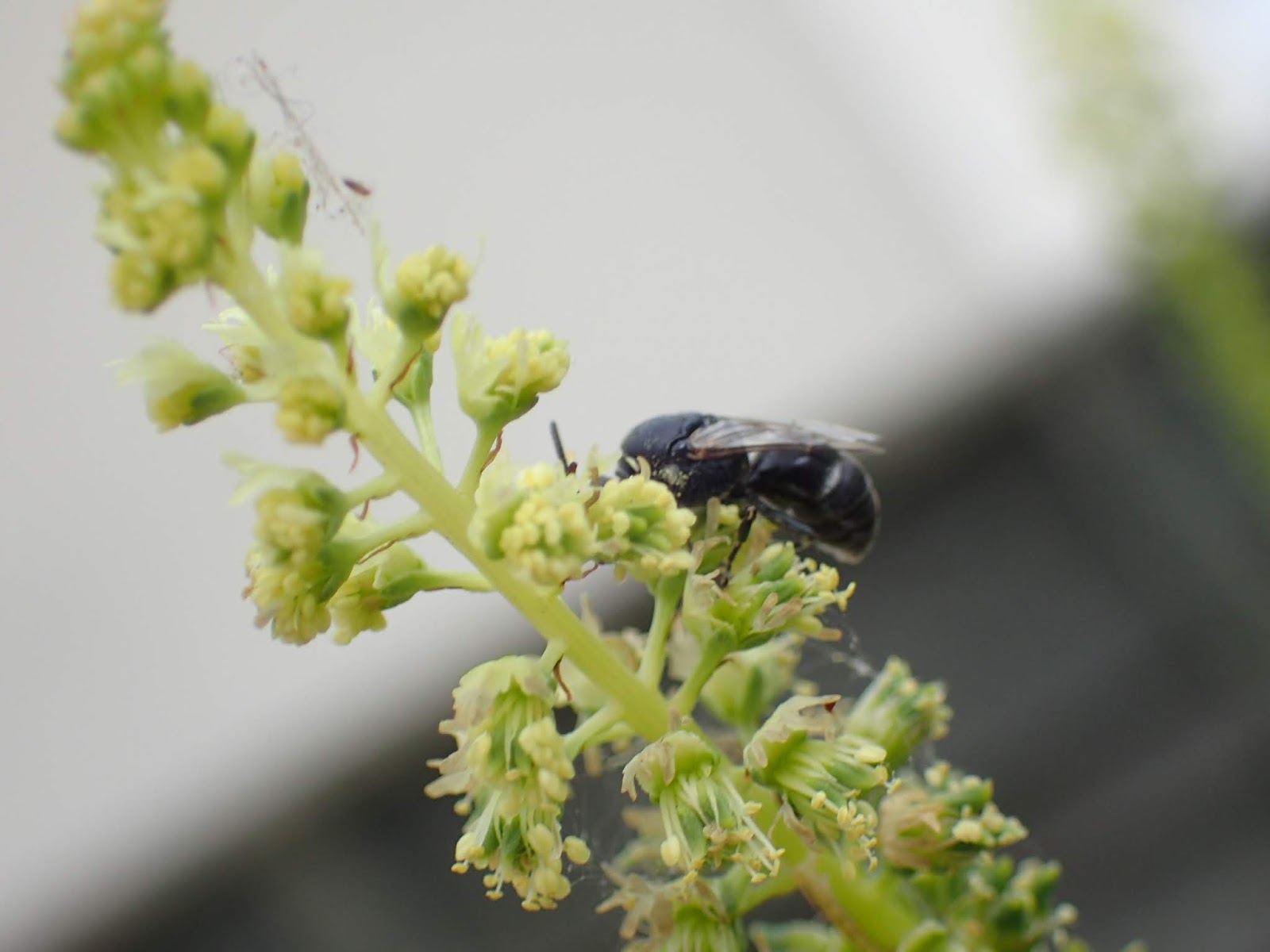
A brief visit to Whitlingham in the hope of seeing some spring migrants. Other than Chiffchaffs the only other warbler heard singing were Blackcaps, and there were no hirundines etc. After reading a few Mute Swan rings I noted rust fungi on Lesser Celandine and Cuckoo Pint before having a look around the picnic meadow, seeing a very obliging Little Nomad Bee, Nomada flavoguttata.


WHITLINGHAM: Barnacle Goose & new patch insects

Mid-August 2019

A fairly brief mid-summer visit to Whitlingham was livened up almost straight away when I found a Barnacle Goose on the slipway. It was unringed but not particularly wary - I would assume it's from one of the feral populations that now breed in East Anglia, for example the free-flying colony at Pensthorpe.


A walk along the south shore of the Great Broad resulted in a number of new patch species, some of which were particularly interesting. These included a Buff-tip caterpillar, leaf mine of the sawfly Metallus lanceolatus in Wood Avens, Nomada rufipes, a leaf mine in birch caused by the weevil Orchestes rusci (note that this is quite similar to the moth mine from Hoe in the previous post) and the leaf mine of Stigmella catharticella in Buckthorn.


NORWICH: Some new bees

Mid July 2019

We have some excellent bee habitats in Norfolk, but in terms of number of species one of the best has to be the wildlife garden of Jeremy & Vanna Bartlett in west Norwich. As well as the general planting Jeremy sometimes plants particular plants in the hope of attracting specific bees. One example of this was some Weld, one of the main plants associated with Mignonette Yellow-face (Hylaeus signatus). I'd been checking some Weld on my way to work and not seen any bees on it, but Jeremy and Vanna had up to six attending their plant, so Cathy & I went round to have a look. Despite the overcast conditions a couple were present on our visit, including one male clutching the top of the plant like a miniature King Kong.


We popped round later in the month too, when Vanna had found Nomada zonata, previously a rare new colonist but now spreading across southern England. One of the sharp-tailed bees, Coelioxys inermis, was also new for me.


EARLHAM CEMETERY: Plant walk & random invertebrates

30th June 2019

June's Friends of Earlham Cemetery walk was led by Mike Crewe with a focus on plants. There were a few new grasses for me (unsurprising given my lack of expertise with them) but it was also good to pick up some general ID tips from Mike. One of the first yellow composites we saw was Beaked Hawksbeard, which I'd never recorded before but suspect is probably in my lawn! Nomada fabriciana, a leaf mine of the moth Leucoptera laburnella on Laburnum and Puccinia cnici on a thistle were all new records from the walk.


CENTRAL NORFOLK: Buxton gentians and bees

Late August 2018

Last year I visited Buxton Heath twice looking for Marsh Gentians, and despite being told what area to look in I failed both times. Having seen that Chris Lansdell had seen some in flower recently, I asked him for directions and took a long lunch break to pop down and have a look.

Partway along the path a local dogwalker stopped to talk to me, and it was soon evident that she was a rather knowledgeable botanist. After discussing some of the nearby plants (Eyebright, Marsh Lousewort, Common Centaury, Devil's Bit Scabious) I mentioned the Gentians, and she took me to an area nearby. She said that it wasn't sunny enough for the flowers to be open, and sure enough they were tightly closed - almost certainly why I missed them last year.


Parting company I carried on, as this wasn't the area that Chris had told me about. I found the right area, and to my delight found several Marsh Gentians that did have open flowers, hurrah! Checking in a small enclosure nearby I also found Marsh Clubmoss, another rare plant I'd never seen before.


With this double plant success I started paying a bit more attention to the insects, and soon noticed that there were two different stripy solitary bees taking pollen from the heather. These were Heather Mining Bee (Andrena fuscipes) and Heather Colletes (Colletes succinctus). Further round I found Nomada rufipes, a cleptoparasite of the Andrena, and also several Bee-wolves. It could have been even better, as I had largely ignored the bumblebees but Phil Saunders saw Heath Bumblebee here a few days later, a species I've not seen before.


Walking back to the car along the edge of the site I noted the leaves of Lily of the Valley and Aulagromyza tremulae mines on Aspen. I then found a beetle that depsite my Gentian success became my species of the day. The tiny, bird-dropping camouflaged longhorn beetle Pogonocherus hispidus (Lesser Thorn-tipped Longhorn Beetle) has been something I've wanted to see for a while, and despite the small size it is a really cool beetle.


There was time for one more species to be recorded. There is a common plant, related to Redshank (the flowering plant, not the bird or the moss of the same name) and Pale Persicaria called Water-pepper. Unfortunately, there is also one called Tasteless Water-pepper, which I haven't seen. This means that everytime I see a Water-pepper sp, I feel obliged to taste a small piece. It's always the peppery one.


NORWICH: Mousehold - mainly looking at birch

28th May 2018

After dropping Cathy & Rose off in the city I decided to spend an hour or so up at Mousehold Heath. Checking the birches I began to see Parent Bugs, so named because they stand and guard their eggs. At least 12 of them were found in a small area, undoubtedly a small proportion of the true number.


Whilst looking at the birches I started to find leaf mines, including some made by moths, sawflies and a weevil. Of these Eriocrania salopiella was new to both me and the 10km square, and Stigmella lapponica was also a good find. The sawfly mines were caused by Fenusa pumila, whilst a mine ending in a neat cut out circle was caused by Orchestes rusci. Pictured here in the same order -


I had hoped to see some bees that Jeremy & Vanna had seen around the pond, but there didn't seem to be much flying around, however I did find a Panzer's Nomad Bee, Nomada panzeri, which completed the set of three similar species for me. Another Alabonia geoffrella moth, Broom Beetle and Green Tiger Beetle completed an interesting trip to the heath.


WHITLINGHAM: May bird count & interesting insects

20th May 2018

The May wildfowl count at Whitlingham won't live particularly long in the memory, being rather light on birds. I visited a bit later than my last visit as mist was forecast and I didn't want a repeat of the hour I spent last month staring into the fog. By the time I got there the visibility was fine, with only a thin layer of mist scudding across the water surface. There were five small broods of Greylag Geese at the west end of the Great Broad, but no sign of the Egyptian Goose brood (hopefully out of sight on the island rather than expired). Three Oystercatchers flew over, and four Tufted Ducks were still present. 


Having not visited for several weeks I noted the warblers as I went round, hearing two Garden Warblers (I had a brief chat with Brian who had heard three earlier in the morning) plus Whitethroat, Reed Warbler and an out of place Sedge Warbler singing from some scrub near the archery range. I didn't hear a single Willow Warbler, which was disappointing.

Amongst the other wildlife I noticed the feeding signs and then larval case of Common Case-bearer (Coleophora serratella) on Alder leaves. The attractive beetle Plateumaris sericea was also seen in several different colours, and I managed to identify another Nomad bee as Nomada flava, a patch tick for me. I temporarily detained a Parhelophilus hoverfly, but it wasn't the species that has a tubercle on the leg so I still couldn't identify it. The C.P. was starting to get very busy due to a canoe race, so once I'd finished the count I headed back home.


NORWICH: Fork-jawed Nomad Bee

w/c 14th May 2018

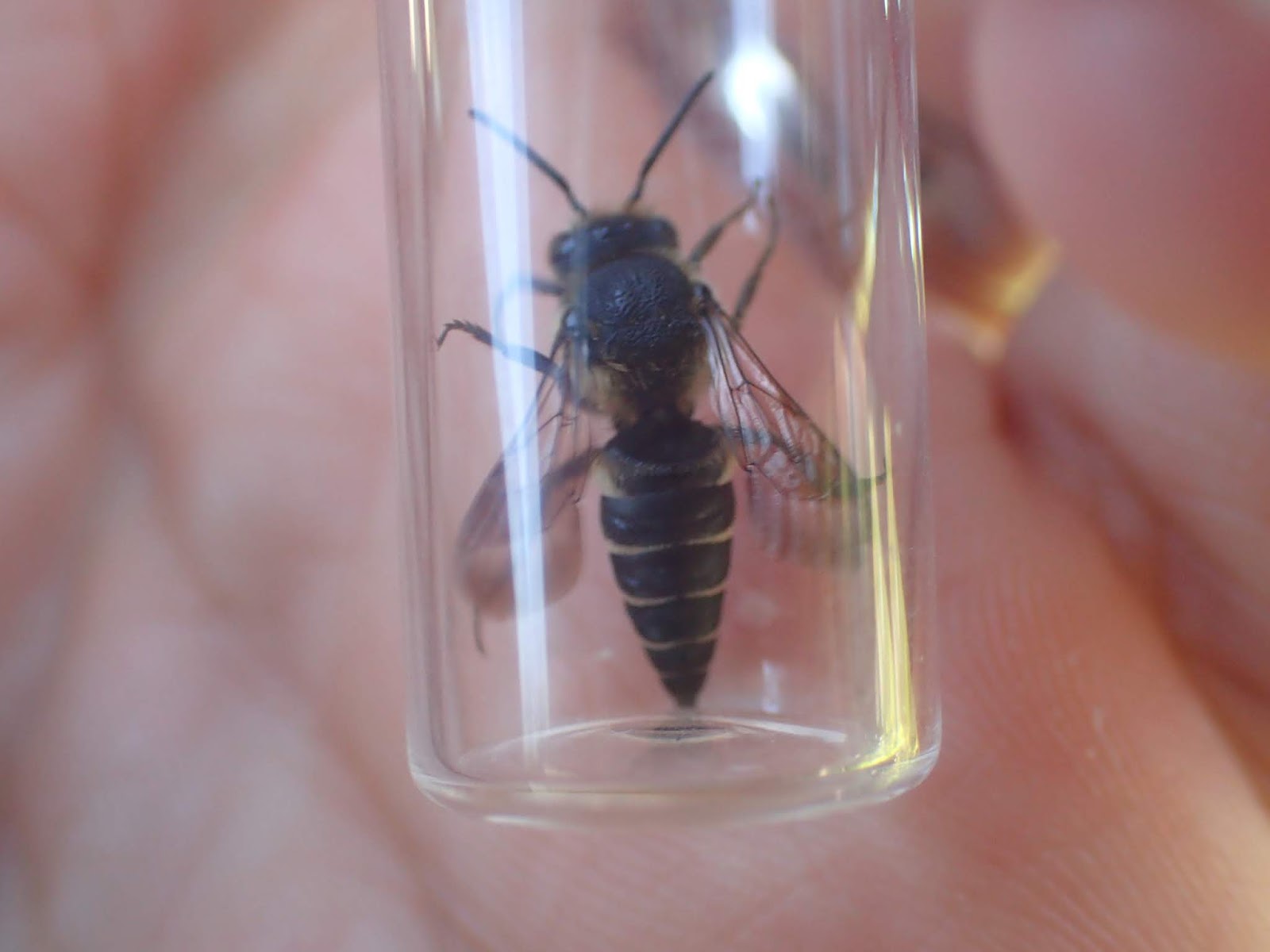
Another spell of warm weather meant for some more interesting after work wildlife around Norwich. Perhaps the most surprising encounter was a brief sighting of a Stoat running alongside the river near New Mills, my first within the ring road. On the same day a Common Tern flew upstream. In Waterloo Park I saw my first longhorn beetle of the year, Grammoptera ruficornis, plus Box Bug and several hoverflies. The highlight however was a Fork-jawed Nomad Bee, Nomada ruficornis. Having only started looking closely at this group of very similar species I was expecting it to be the common Nomada flava, but on examination it had the two-pointed mandibles that characterise this species. A new bee for me, just minutes from home.


NORWICH: Mousehold Wood Warbler

6th May 2018

Around Sunday lunchtime a Wood Warbler was found at Mousehold Heath. At one point this species actually bred at Mousehold (early 1990s?) along with things like Red-backed Shrike, but those days are long past and I'd only seen a couple in Norfolk. As I had other plans for the afternoon I initially agreed that I would go and look for it on bank holiday Monday, but after our evening meal Cathy suggested that as it was a nice evening I should go and have a look in case it wasn't there on the next day, which proved particularly wise as after an early morning sighting it then went missing.

I arrived at the Gurney Road car park to find a group of LARPers* or similar were about to begin a quest. I was about to head off north-west as per the bird news service directions when a local birder entered the car park and said that he had just been watching the Wood Warbler in trees south of the road. Several other birders, including Ricky, emerged from the woods and a small group of us headed across the clearing near the golf course. Unfortunately there was no sign of the Wood Warbler, those who had already got glimpses earlier in the day or were time-pressured left, leaving just Pete and I to search for it.

Having waited a bit longer near the trees where the Wood Warbler was last seen, we decided to cross back to the car park in case it had doubled back to its original location. As we started to take that path we met another birder returning, having spent an hour unsuccessfully looking for it, so instead we checked some mature trees along the edge of the woodland in case it had gone that way. There was no sign of it, although there was a nice display of Lycogala slime mould (L. terrestre or epidendrum).


We decided to have one last look south of the road, and headed back to the area where it was last seen. Whilst listening out I became aware of the many insects flying in the evening sunshine, including lots of Nomada bees, which seem to be having a good year (either that or I'm just more aware of them these days). Unfortunately they were very skittish, so I couldn't get close enough to identify them. I scanned a nearby Oak and noticed some lekking Green Longhorn moths (Adela reaumurella). This interesting behaviour usually takes place highup, as these were, and involves many moths circling around a stationary one. The hoverfly Epistrophe eligans and Birch Leaf Roller Weevil (Deporaus betulae) were also noted.


I was getting to the stage where I was going to have to give up and go home, when I heard a short burst of Wood Warbler song. Heading tentatively in the direction of the sound I heard a second burst, coming from a large Sycamore on the edge of the golf course. I looked around for Pete, who was further into the woods, and waved to attract his attention. Shortly after he reached me the Wood Warbler flew up into a large Oak and began to sing out in the open at the top. I tried to take a record shot, but in the end gave up and just enjoyed watching it. I texted out the location details in case anyone was still looking for it, by which time it had moved into a different Oak and stopped singing. A very enjoyable evening out and an excellent Norwich bird, so thanks to the finder.

Wood Warbler...honest


* LARP = Live Action Role Play. People dress up as fantasy characters and then act out a sort of game in real life. Of course it could have just been some very eccentric people.