The Whitlingham Bird Report for 2025 is now available to download from the Bird Reports page or from here

Showing posts with label Leaf mines. Show all posts

CENTRAL NORFOLK: Hockering Wood invertebrates

Late May 2024

I had set aside a day at the end of the month to go looking for hoverflies, but unfortunately it was raining so this would have been a waste of time. Instead I decided to go to Hockering Woods, a privately owned SSSI ancient woodland that is opened up by the owners over the summer. It is not the easiest place to visit - entrance is via a single gate and the road is used by lorries based nearby so walking from elsewhere is not really an option. There is parking for a couple of cars nearby, and the last time I visited the site was locked despite being within the published opening days. Anyway this time it was open and I managed to park at the second time of trying.

There was plenty to find alongside the paths by scanning the wet vegetation. In particular I was delighted to find my first Four-spotted Carrion Beetle (Dendroxena quadrimaculata) and I found a fly new to Norfolk, Liriomyza pascuum causing leaf mines on Wood Spurge. There were quite a few moths, including a large number of Small Barred Longhorn Moth (Adela croesella), and I also found a Buff-tip.


NORWICH: Riverside walk

Late July 2022

I opted to walk home from the city via riverside and the riverside footpath, seeing Hawkweed Oxtongue and Royal Midget (Phyllonorycter pastorella) for the first time. The latter is a recent moth colonist, which produces distinctive leaf mines on long-leaved willows. This was the first Norwich-area record.


NORTH NORFOLK: Sustead Common bioblitz

2nd July 2022

At the start of July I visited Sustead Common, a small nature reserve near Felbrigg, at the invitation of the Felbeck Trust. This small charity do some excellent work managing several small sites and enhancing them for wildlife. My role was to help with a bioblitz they were holding, which largely meant wandering over the site recording whatever I came across, talking about it to anyone who expressed an interest and stopping occasionally for cake and tea. You can read a bit more about the bioblitz on their blog here: https://www.felbecktrust.org.uk/single-post/sustead-bioblitz-july-2nd-2022. Since that blog entry was written I have received a newsletter with the species tallies - a very respectable 371 species recorded, of which 112 were new to the site.

Despite the relatively small site and having recorded here before, I still saw a few new and/or interesting things. A moth trap had been set overnight and having a look at some of the moths that had been caught I saw my first Gold Swift (I'd been wanting to see one of these for a while, partly because I like the swift moths, but also partly because it was the first regularly occurring macro moth on the Norfolk checklist that I'd not seen if you order them by number. That mantle now passes on to Goat Moth). The other highlight from the moth trap was a Hydropsyche caddisfly, which Rob identified later as Hydropsyche contubernalis.


Elsewhere I saw the leafhopper Edwardsiana geometrica on Alder, a Tuberous Polypore, and a Nipplewort plant came held both an occupied mine of Liriomyza puella and the rust fungus Puccinia lapsanae.


NORWICH: Mallota and a rare midget

Late June 2022

Towards the back end of the month Vanna Bartlett found a rare hoverly, Mallota cimbiciformis, around a rot hole in a tree in Earlham Cemetery, probably only the third Norfolk record. As it was a male there was a strong possibility it would be 'guarding' the rot hole, and this turned out to be the case as Vanna went back and saw it there the next day as well. I visited a couple of times, seeing nothing on the first occasion in windy conditions, but getting brief views the second time as it flew in, inspected the rot hole before disappearing up towards the canopy.

Whilst standing waiting near the chosen poplar tree I noticed a couple of leaf mines of the nationally scarce Winter Poplar Midget, Phyllonorycter comparella. This was only the second VC27 record (see https://www.norfolkmoths.co.uk/micros.php?bf=3650). Across the other side of the cemetery I found a tree with a large number of mines, so I took one home to rear through, and a few weeks later was pleased to see an adult moth had emerged.


CENTRAL NORFOLK: Buxton Heath spider wasps

30th May 2021

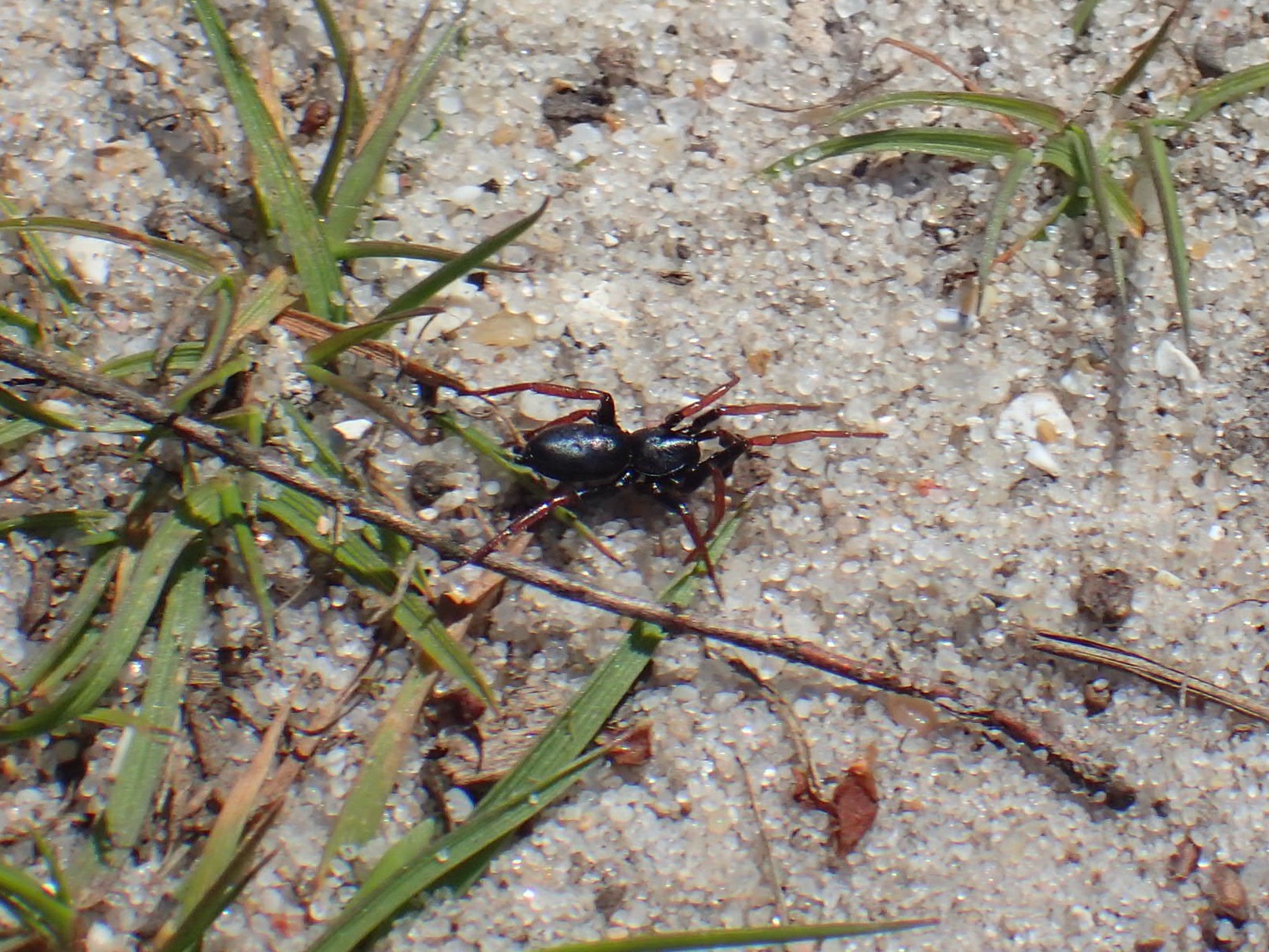
Buxton Heath is one of our favourite places to go for an afternoon walk, and even a family stroll down the main path along the heathland usually turns up something new. That was certainly the case on this occasion, where we must have seen about 20 Black-banded Spider Wasps, including one returning to a prey spider left motionless on the path. The spider Trachyzelotes pedestris was another new one for me, as was the beetle Onthophagus similis and leaf mines of the Pale Feathered Bright moth (Incurvaria pectinea). Throw in good views of Linnet, Stonechat and Yellowhammer, plus a flyby Cuckoo, and it was an eventful visit.


NORWICH: Mid-September commute wildlife

 Another miscellany of species found on my walks to and from work in Norwich.

Giant Willow Aphids along Lakenham Way
Angle Shades - a common moth but one of my favourites
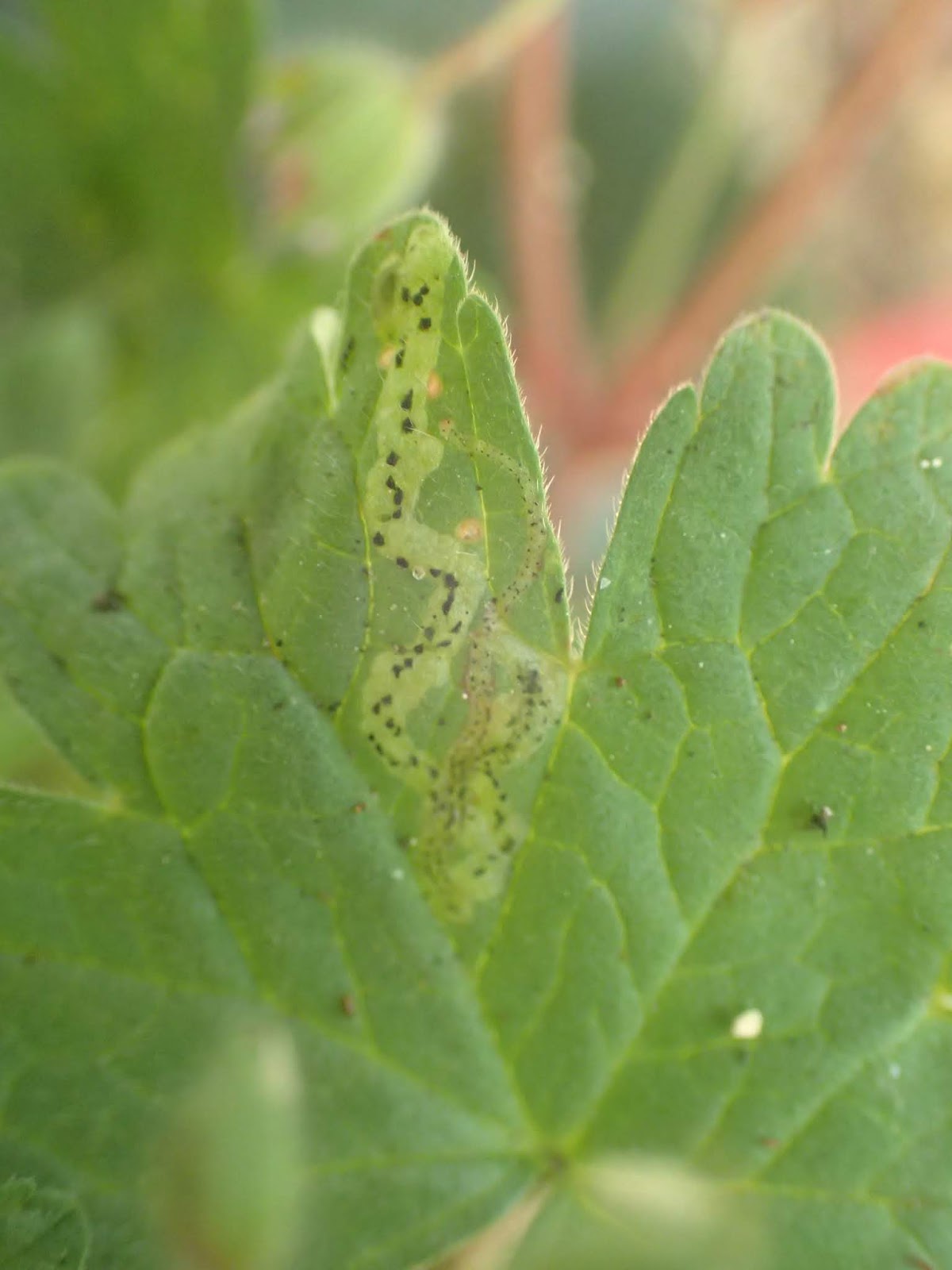
Phytomyza cytisi - leaf mines of a fly on Laburnum
Box-tree Moth
Laburnum Leaf-miner, Laucoptera laburnum leaf mine (showing circular frass feeding pattern)
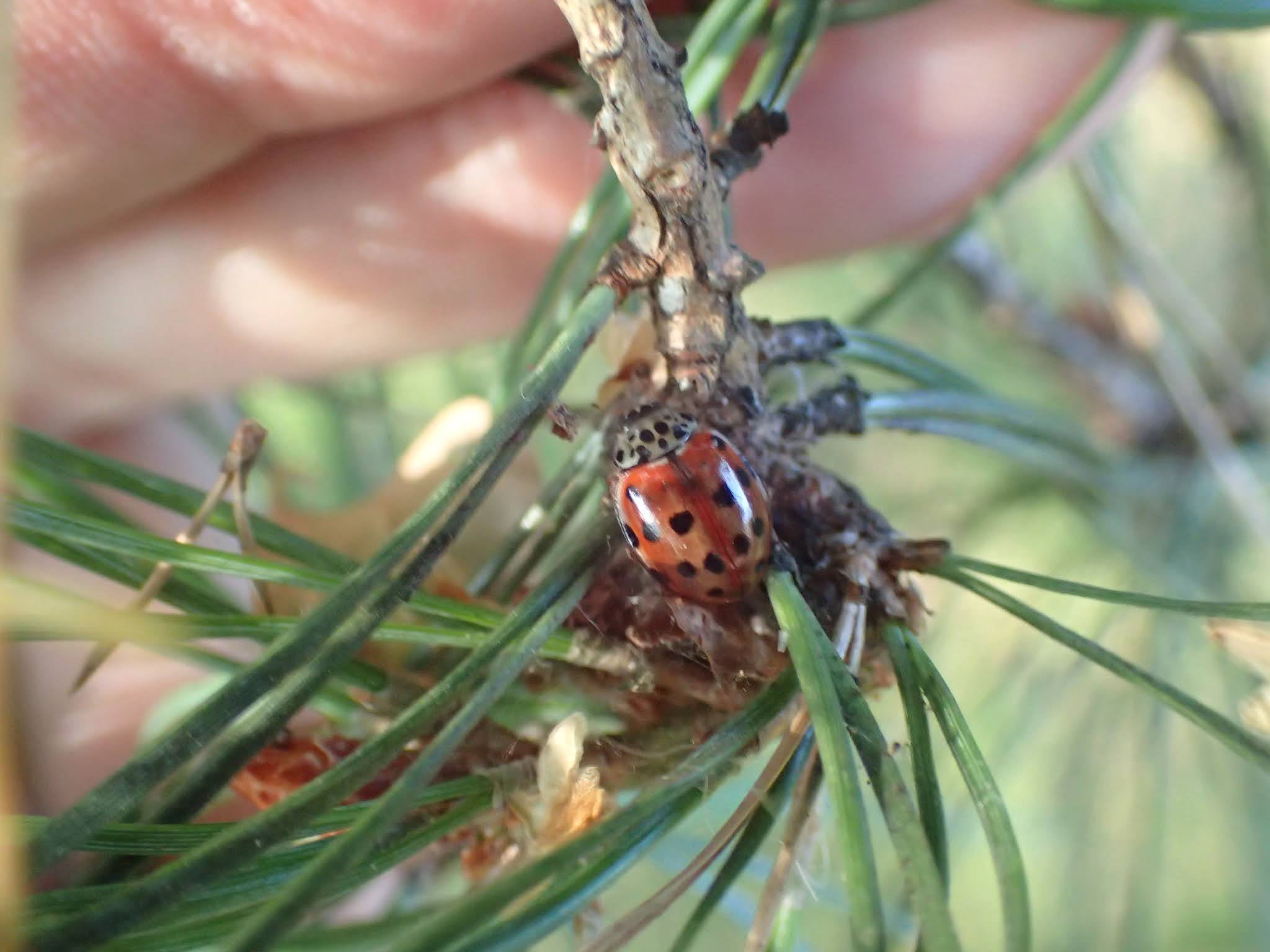
Cream-streaked Ladybird
Oxystoma pommonae - a weevil found on Scot's Pine
Balclutha punctata - a leafhopper found on Scot's Pine

NORWICH: Zombie aphids

8th July 2020

A rainy walk back from the city, but I decided to take a different route back and followed the river for a while. This paid off when I noticed a thin leaf mine in a patch of Winter Heliotrope. Back at home I checked it and found that it was caused by the Agromyzid fly Phytomyza tussilaginis, which based on the recording scheme database is new to Norfolk.


There was another interesting find a bit further along, when I found what looked like some very round brown aphids. Online they were recognised as 'aphid mummies', the outer shells of aphids that have been parasitised by tiny wasps. I wasn't able to identify the original aphid or the causer, but still of great interest and something I can now keep a look out for. I also saw the scarce Rustyback Fern in the same place I've seen it in previous years.


NORTH NORFOLK: A drizzly day at Holt C.P.

Mid-June 2020

For the second of our post-strict-lockdown family walks we decided to go to Holt Country Park. Unfortunately it was a drizzly day, but we stuck to the plan and had a nice walk around one of my childhood stomping grounds. Rose in particularly enjoyed splashing in some of the semi-permanent puddles that line one of the long rides. The weather meant we didn't see many butterflies, but there was still a smattering of interesting sightings, including a fairly scarce leaf mining moth in Rowan, Stigmella sorbi.

 White-barred Gold
 Mite gall on birch
 Barred Rowan Pigmy (Stigmella sorbi) leaf mine
 Agromyza johannae mine in Broom
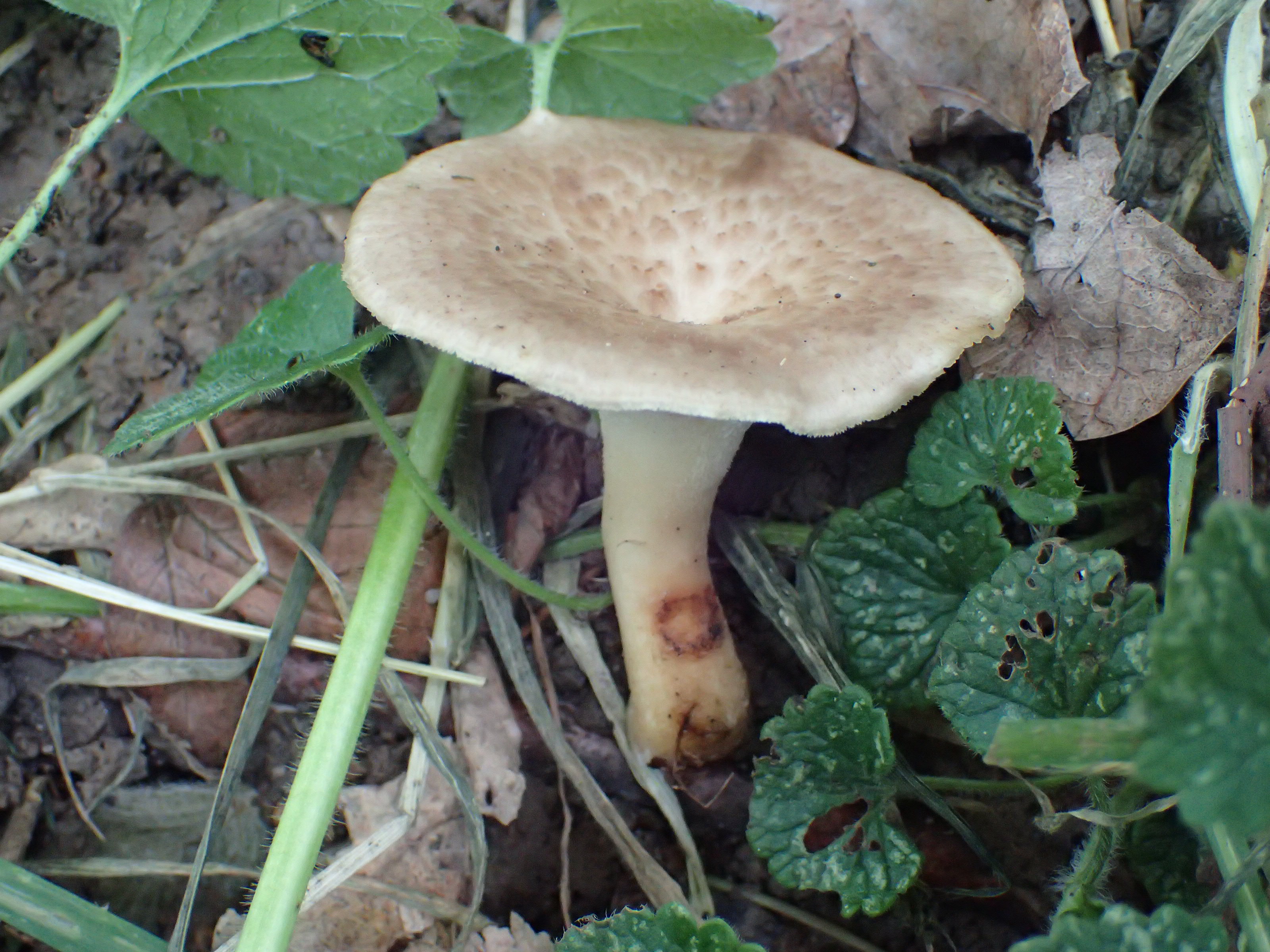
 Suillus sp (a type of Bolete)
 Blusher (Amanita rubescens)
Volucella bombylans

NORWICH: Garden lockdown list days 78-80 - some leaf mines

DAY 78 - 7th June 2020

No new additions

DAY 79 - 8th June 2020

No new additions

DAY 80 - 9th June 2020

A productive little spell outside, although most of the additions were leaf mines that I had been waiting to get big enough to confirm. There was also an interesting tachinid that looked like Mintho rufiventris with the exception that no red was visible. I've submitted it to the recording scheme so will hopefully get some feedback on it, but haven't listed it here.

 Stigmella aurella in Raspberry
 Agromyza nana in Black Medick
 Cerodontha iraeos in Yellow Flag Iris
 Phytomyza chaerophylli in Carrot
 Unconfirmed Tachinid sp.
 Hoverfly larva, probably Epistrophe sp.
Unknown aphid sp.

158. Dovesfoot Cranesbill
159. Stigmella aurella (moth)
160. Agromyza nana (fly)
161. Cerodontha iraeos (fly)
162. Phytomyza chaerophylli (fly)
163. Speckled Bush-cricket
164. Goldcrest

NORWICH: Garden lockdown list days 45 & 46 - another sawfly

DAY 45 - 4th MAY 2020

No new additions

DAY 46 - 5th MAY 2020

Butterflies have made a habitat of flying straight through our garden, ignoring our flowery offerings, which has kept the species list down a bit. Today a Speckled Wood at least had the good grace to flap up the outside of the living room window for long enough for Cathy & I to both see and identify it. Out in the garden a few leaf mines had begun to show themselves, including Agromyza abiens in Viper's Bugloss (the plant having been purchased from Natural Surroundings to go in our driest flower bed and we hope will flower for the first time this summer) and Agromyza nigrescens in the Round-leaved Cranesbill.


102. Speckled Wood
103. Agromyza abiens (occupied leaf mine caused by an Agromyzid Fly)
104. Agromyza nigrescens (occupied leaf mine caused by an Agromyzid Fly)

There was also more sawfly fun. I recognised this one as a smaller member of the Athalia genus (Athalia rosae is a common species regualrly encountered over the summer and there are another 8ish lookalikes). Fortunately this was one of the easier ones to identify as it has a black 'belt' that runs down the sides and underneath at the top of the abdomen. One of the larval foodplants is Bugle, which figures as we've got quite a bit of it in the garden.


105. Athalia cordata (a sawfly) (NEW)

WHITLINGHAM: January WeBS count (with bonus Goosander)

12th January 2020

The first WeBS count of the year at Whitlingham turned from a rather standard affair to an interesting one with the find of a drake Goosander in the conservation area bay. These sawbills have become a bit less regular in the Norwich area of late, althought there were quite a few sightings in 2019. In fact my last Whitlingham one was back in 2015, albeit I've not visited as much in the past couple of years. This bird appeared whilst I was scanning the bay from the path, giving the peachy glow that marks out the males, but then vanished by the time I tried to scan again from a different angle.


Other than the Goosander, selected species counts below (combined Great Broad/Little Broad):

Gadwall: 185 (2019: 430, 2018: 262)
Shoveler: 0 (2019: 7, 2018: 39)
Tufted Duck: 289 (2019: 307, 2018: 327)
Pochard: 14 (2019: 30, 2018: 59)
Coot: 87 (2019: 227, 2018: 192)
Little Egret: 5 (2019: 3, 2018: 0)

As you can see, the overwhelming trend is one of much lower numbers than the past few years. The mild weather this winter will undoubtedly be part of that - whilst I make cursory weather notes (windy, sunny etc) and record any ice cover, I wonder if I should be making a record of the temperature and weather pattern for each count to provide a bit more analysis of why numbers might be different. Tufted Duck numbers were only slightly down, but Coot numbers were only half the equivalent counts of late. The 2019 Gadwall count had been exceptional, but 185 is still well below the 2018 count, and the few Shoveler present on 1st Jan had departed.

A few other bits and bobs were noted on the walk. The common Agromyzid miner Phytomyza chaerophylli was evident in Cow Parsley, and there was a nice group of Common Inkcaps too. Alex Prendergast had asked naturalists to send him photos of winter-flowering Dandelions (most flower in April) because there are some rare/under-recorded species, and he initially wondered if I had found one of them called Taraxacum subericinum, but having consulted an expert it was decided that it wasn't. Dandelions, like Brambles, are actually an aggregate of many apomictic species (sometimes described as microspecies, although the term is frowned upon by those that study them).