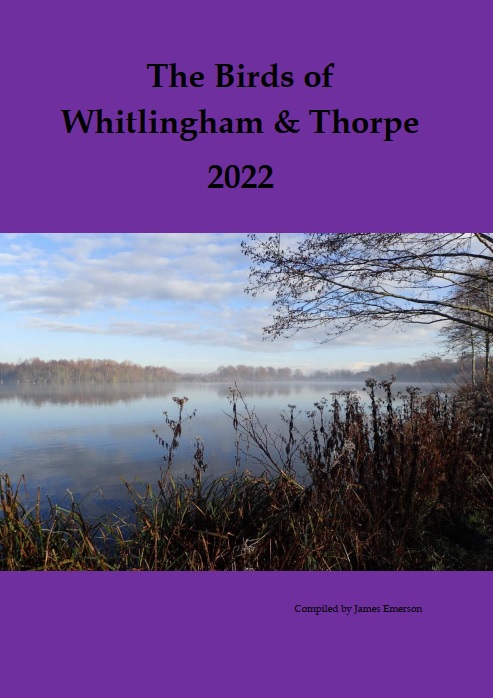
The Whitlingham Bird Report for 2025 is now available to download from the Bird Reports page or from here

NORWICH: Sweetbriar Marsh northern edge

25th February 2023

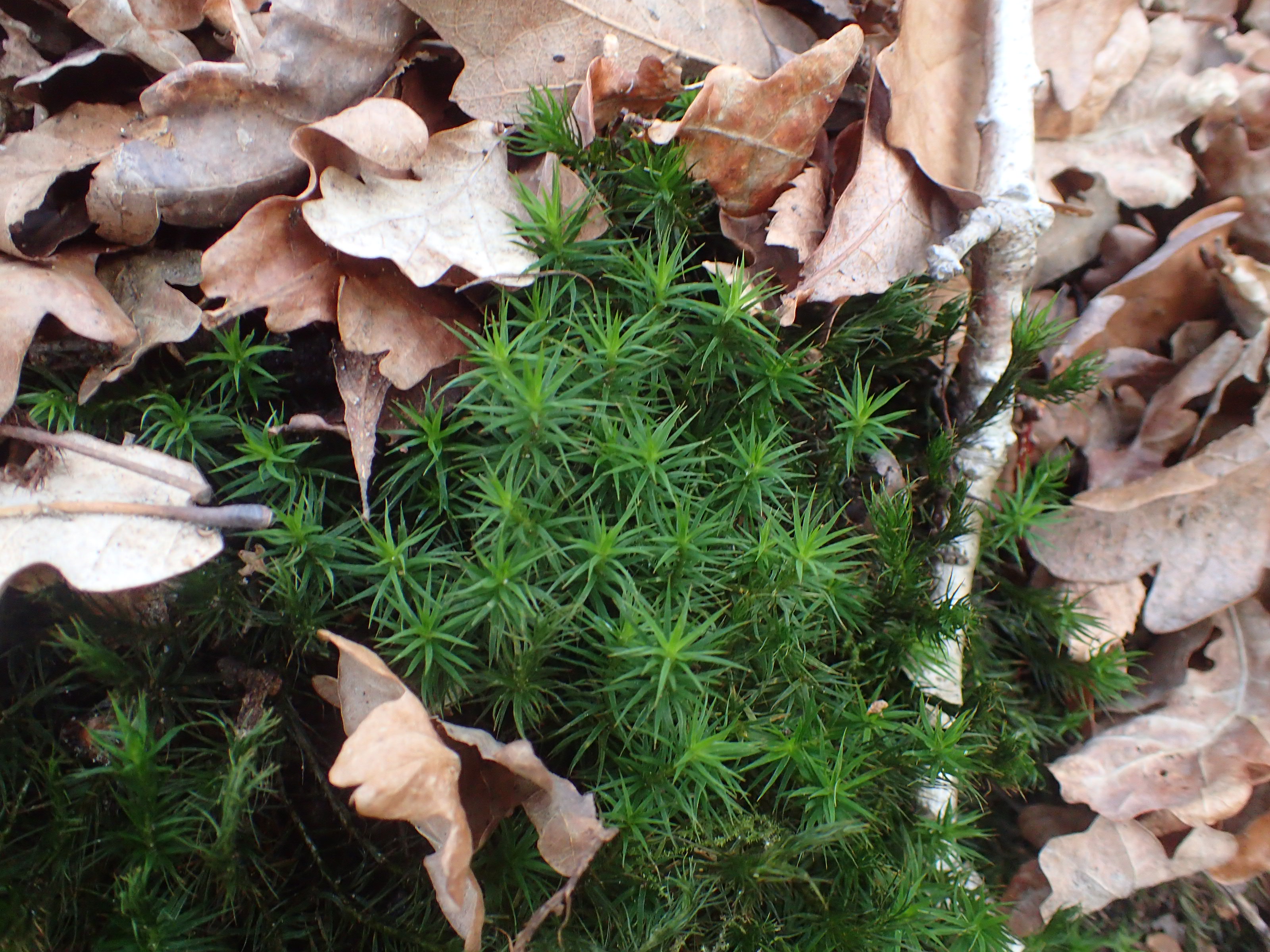
A rainy weekend, but to get out of the house for an hour or so I popped down to Sweetbriar Marshes. As the NWT land hasn't been opened to the public yet I made do with walking along the Marriott's Way edge, hearing a drone overhead presumably taking some pictures or doing some mapping. One patch of the bank up to the new land looked quite interesting, with a big patch of Bank Haircap moss and Bifid Crestwort. I also saw some Broom on sandy ground next to a path leading north away from the site. I had a look at it hoping for some psyllids, which I am now more actively searching for, not finding any but seeing the weevil Andrion regenstienense and the spider Mangora acalypha. I think the latter is a new 10km square record.



WHITLINGHAM: Lots of Little Egrets and a new psyllid

19th February 2023

Highlight of the February WeBS count was seeing 9 Little Egrets, a new record count for me. There were three roosting on the Little Broad plus one active bird, then another four roosting on the Great Broad with another one further along. A redhead Goosander was also of note, and a Coal Tit was singing alongside the path. I also got amazingly close up views of an Otter, having noticed it a few feet away before it saw me, and managed to find my first Spanioneura fonscolombii, a psyllid associated with Box.


SUFFOLK: Minsmere lichenicolous fungi

Mid-February 2023

We went on a family visit to Minsmere, the highlight of which was a new micro-moth for me - Heath Button (Acleris hyemana). Other than that I also noted a few lichenicolous fungi, Erythricium aurantiacum, Laetisaria lichenicola and Xanthoriicola physciae.


FENLAND: Welney swan feed

Mid February 2023

We headed out to the edge of the fens for a family trip to Welney, timed to see the midday swan feed. If you've never been there is a large, heated hide set up to provide views out over the flooded fenland, providing close-up views of Whooper Swans (the shyer Bewick's Swans are often visible in fields on the approach road but seldom come in for the feed) and large numbers of Pochard. Some species new for the year included Pintail, Dunlin, Black-tailed Godwit and Cattle Egret, although the Tree Sparrows weren't on the feeders when we were looking.


After lunch we went for a brief walk along to some of the other hides. We had a look at some Xanthoria/Caloplaca lichens, searched unsuccessfully for Mousetail and saw a few invertebrates. These included Water Ladybird, the larva of Endothenia gentianeana/marginata in an old Teasel seedhead (you have to examine them closely to see if they have a feature called an anal comb - I didn't) and cases of a snail - Bithynia tentaculata I think.


NORTH NORFOLK: Cley Spy Long-eared Owl

Mid February 2023

A Long-eared Owl had been roosting out in the open at Glandford for well over a month, but it's appearances were unpredictable and other commitments meant I'd not manged to see it until February. We all went and it was great to be able to show my daughter such a stunning bird. Thanks of course to the staff at Cley Spy for providing updates on when the bird was present and allowing access to their garden so that it could be viewed from a safe distance without disturbing it. Sadly at the time of writing (early March) a dead Long-eared Owl was found along a nearby road, which seems likely to have been the same bird. This was my fourth owl species seen in the 'Cley square' - the missing one being Little Owl.


NORWICH: February lichen, moss and aphids

Early February 2023

A few random sightings whilst walking around Norwich. In Wensum Park I had a closer look at some pale 'splats' on the concrete step handrails and think that the lichen involved is Aspicilia calcarea, which would be a new one for me. I hunted around for two of Leif Bersweden's 'Couch to 10 mosses' species - Common Tamarisk Moss (Thuidium tamariscinum) and Springy Turf Moss (Rhytidiadelphus squarrosus). I couldn't find the former, which is more associated with woodland, but did manage to find the latter in St Augustine's Churchyard. Whilst looking for the tamarisk moss I did find lots of Common Feather-moss (Kindbergia praelongia). Back at home some aphids had started to appear on the outside of the house. The small ones were Cinara tujafilina (this is a species associated with cypresses - I mistakenly thought these were Cinara cupressi nymphs when I first saw them last year) and some very large (for aphids) Cinara confinis.


WHITLINGHAM: Patch tick Iceland Gull

22nd January 2023

Whilst getting ready for lunch a message came through that Robin Chittenden had found an Iceland Gull resting on a frozen part of the Great Broad. Fortunately we didn't have plans for the afternoon so I was able to pop down, where a small group of local birders were in place watching it. The gull had spent much of its time face on, which would have made it difficult to pick out, but whilst I was there it turned side on for a bit and then flew up and round before going for a bathe in a bit of open water, allowing good spread wing views. It was aged as a 3rd-winter bird rather than a full adult. Also on the Great Broad were four Goosander, although when I walked past only three were visible. Iceland Gull was a new patch (and Norwich) bird for me. 


WHITLINGHAM: January WeBS count

21st January 2023

The first WeBS count of the year, and the cold spell meant there was quite a lot to count, albeit not much out of the ordinary (the Scaup present earlier in the week wasn't seen on this day, but later a redhead Goosander was seen). The highlight was probably 2 Goldeneye, one of which was a nice adult drake that was throwing it's head back in display, probably the only similarity Whitlingham Great Broad has with the Scottish lochs. Whilst scanning the banks of the Great Broad I also picked out a Muntjac Deer, which was the first one I've actually seen here, having only heard them this side of the river before.


Selected counts were as follows: 

  • Gadwall 179
  • Mallard 59
  • Teal 29
  • Shoveler 9
  • Tufted Duck 224
  • Pochard 4
  • Goldeneye 2
  • Coot 121
  • Grey Heron 9

In one of my periodic 'I should pay more attention to mosses and lichens' moments I pictured a fairly young Oak tree to scutinise over time. As well as a few common lichens I noticed some small black lumps, which Mark Powell identified as a fungus rather than a lichen - Ascodichaena rugosa. Stewart Wright has actually shown me this species a couple of times before, but it doesn't seem to be exciting enough to stick in my mind.


MID-NORFOLK: Brisley church wildlife safari

14th January 2023

There are not usually many outdoor wildlife events in January, but on the 14th county lichen recorder Rob Yaxley hosted a family wildlife safari at Brisley church. It was raining as we drove out to Brisley, but there was still a reasonable turnout for the event. After a brief talk in the church we went outside and had a look for some of the mosses and lichens present on the walls of the church and on the gravestones. Some of the highlights included the lichens Myriolecis (Lecanora) crenulata, Physcia tribacia and Bacidia rubella, plus the moss Orthotrichum anomalum. We then went back into the church for tea and biscuits, followed by a look in the old crypt room and a look at some bat droppings. We were made to feel very welcome and more events are planned for later in the year, so do keep an eye out for details of them.


NORWICH: Early January 2023

1st week of January 2023

I saw in the new year at home, 'celebrating' the stroke of midnight by trying to get my daughter back to sleep after people inexplicably began letting off fireworks from about 22:30. This inauspicious start continued later in the morning - usually I get my year list off to a nice start with 10-15 species seen from the living room window, but this year it was a paltry five, Woodpigeon, Collared Dove, Starling, Blackbird and Black-headed Gull.

We had a quick family walk at Whitlingham, racking up about 20 species, including Little Egret, Little Grebe and three colour-ringed Black-headed Gulls.

Over the next few days a steady flow of common birds were added - House Sparrow, Feral Pigeon and Jackdaw at my inlaws in south Norwich, a flock of Pink-footed Geese over the city centre on 3rd, Goldcrest, Wren and Jay at New Mills and a Song Thrush along Lakenham Way. I also heard and then spotted an Egyptian Goose high up on the office block on Queens Road, quite a way from water.

A noisy Egyptian Goose one morning on the former Marsh building opposite St Stephens multistory car park.


WHITLINGHAM BIRD REPORT 2022

I have finished working on the Whitlingham bird report for 2022, which you can now download here. A big thank you to everyone who reported sightings from Whitlingham last year and who allowed photographs to be used in the report.

In particular thank you to Justin Lansdell for providing an article about the changing number of Pochard overwintering, to Robin Chittenden for providing some excellent photos to help illustrate the articles and systematic list, and to Stephen Vickers for providing updates on the local ringing work.

A reminder that you can report locally ringed Mute Swans via Norwich Swan Project sighting submissions  and Black-headed Gulls, Greylag Geese etc here: Seen one of our birds? – Waterbird Colour-marking Group (waterbirdcolourmarking.org)