The Whitlingham Bird Report for 2025 is now available to download from the Bird Reports page or from here

WHITLINGHAM: New hide, fledged herons and another psyllid

21st May 2023

The most notable thing about May's Whitlingham WeBS count was getting to see the new hide. From a distance it looks very nice, blending in with the landscape. Unfortunately as an actual bird hide there are a few issues. The curved roof means that you cannot stand up near the edges of it, so you can only use it by sitting down. There is one moveable bench to allow you to do this - I really hope that this is treated respectfully and remains there, but the idea of having an unfixed bench on an urban nature reserve is not one I would have suggested.


In terms of birdlife, two sets of juvenile Grey Herons were visible (there were three nests this year, I'm not sure if young fledged from the third one), a Cuckoo was calling and I heard my first Reed and Garden Warblers of the year as both had been absent during my April visit.


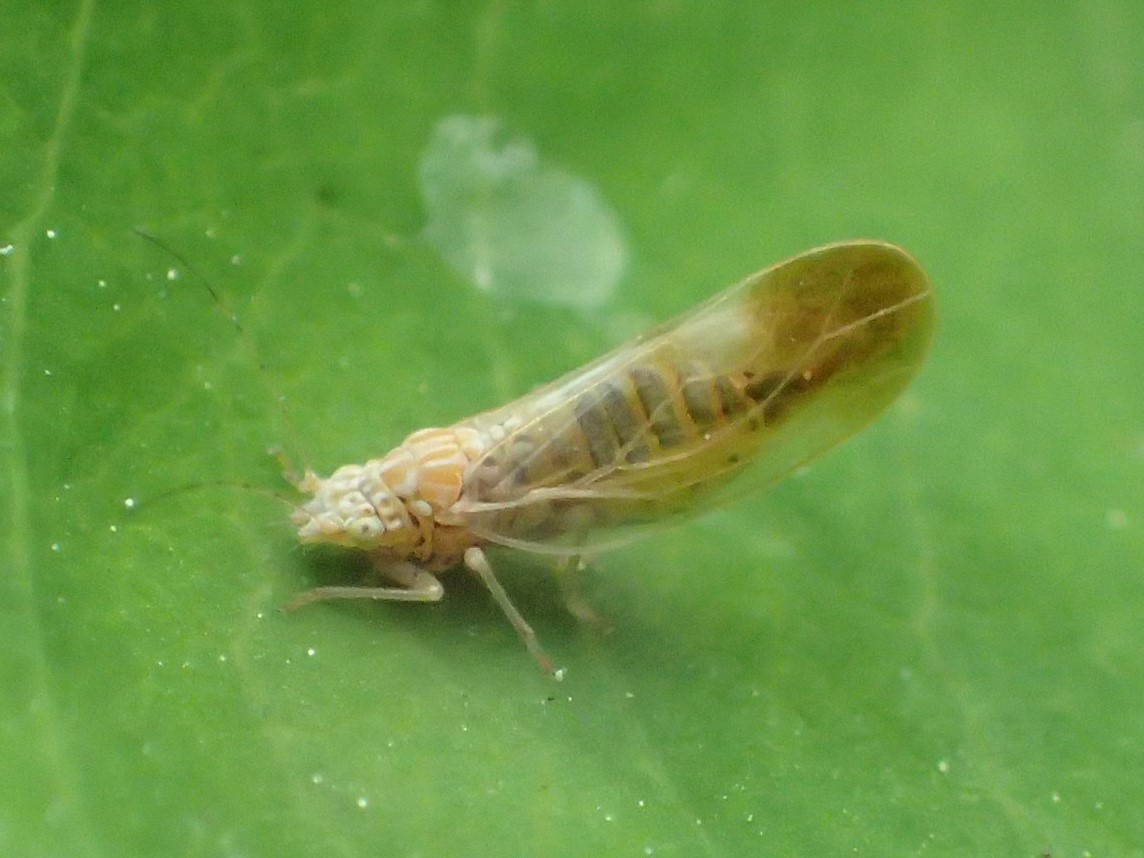
I checked quite a few willows for psyllids, and was rewarded with my first Cacopsylla ambigua.

NORWICH AREA: Broadland CP fungus foray & woodland invertebrates

20th May 2023

As part of the ongoing wildlife recording at Broadland Country Park, the Norfolk Fungus Study Group visited in May to look for spring fungi. The dry conditions meant that there was not too much found, however there was a nice display of Bog Beacons, a scarce species in East Anglia, and the highlight was a tiny fungus called Polycephalomyces tomentosus found growing on a slime mould.


There were some rather interesting invertebrates including a hopper on heather called Ulopa reticulata, a woodland cranefly Ctenophora pectinicornis, the weevil Attelabus nitens, Black-headed Cardinal Beetle and the beetle Elaphrus riparius.


NORWICH: Psyllid - Livilla variegata on Laburnum

Mid-May 2023

This year I have taken on the role of county recorder for psyllids, bugs resembling small leafhoppers although more closely related to aphids. An article and county list will be published in NNNS Transactions either late 2023 or early 2024.

All but a handful of gall-causing species are under-recorded in Norfolk, so I have been checking possible host plants all around the city. I had no luck checking the Laburnum trees in Waterloo Park, but one on the edge of Clapham Wood held a small population of Livilla variegata, a rather distinctive species due to the narrow wings and angle that the wings are held at.


NORWICH: Flatbug Aradus depressus

Mid-May 2023

Sometimes interesting species just turn up in the garden, and on this occasion I was locking up ready to go out when I noticed an interesting bug on an outside wall. It was one of the flatbugs, a group of very thin bugs resembling flakes of bark. This one is the commonest one, Aradus depressus, but was still a new species for me.


NORWICH: Rosary Cemetery Firebugs

Late April 2023

Near the end of the month someone found a Firebug in Rosary Cemetery. There are few records of this attractive red-and-black bug in Norfolk, although they are spreading northwards (and be aware there is another red-and-black bug that is common in Norfolk, Corizus hysoscyami). On my first visit to the cemetery I didn't see any Firebugs, but did find a Bordered Shieldbug, which was a decent sighting. Soon after both Vanna Bartlett and Chris Lansdell had seen large numbers of Firebugs, suggesting that there was a breeding colony. I returned for a quick visit and this time soon found them. The foodplants are Lime trees  (Tilia) and Mallow (Malva), both of which are plentiful around Norwich, so it is likely we will be seeing more Firebugs soon.


WHITLINGHAM: April WeBS highlights

Mid-April 2023

The April WeBS count turned up the expected range of common wildfowl, plus my first Sedge Warbler, Whitethroat, Common Tern, Swallow, Sand Martin and House Martin of the year. Two Cuckoos were present and at one point I watched one chase the other along the treeline. A Skylark singing opposite the large car park was unusual here despite their presence on nearby farmland. Five Pochard were still present, along with a scattering of Gadwall, Teal and Tufted Duck, whilst a Canada Goose had five goslings. The most notable observation of the visit however were several Cormorants on nests, which as far as I am aware is the first time here and is still unusual in a Norfolk context, despite the large numbers of wintering birds. Grey Herons also nested successfully, with three large young visible in the nest used last year. Other than birds, both Aglaostigma sawflies were seen in several places around the site.


NORWICH: April Earlham Cemetery visits

Early April 2023

I visited Earlham Cemetery twice in April, firstly for an event organised by the Friends of Earlham Cemetery to look at mosses, and secondly for a few hours on a sunny day looking for hoverflies. Most of the mosses were species that I had seen before, but a couple pointed out by East Norfolk bryophyte recorder Mary Ghullam that I hadn't seen were Hooded Bristle-moss (Orthotrichum cupulatum) and Streblotrichum convolutum (=Barbula convoluta).


On my second visit I failed to find any Criorhina species, but did find a few new bits and bobs. I typically don't pay much attention to bluebottle and greenbottle type flies because many need close examination for ID, but I had seen pictures of one called Eudasyphora cyanella that has a small area of white at the front of the thorax, and I amanged to find one of those. I also saw the tephritid fly Tephritis formosa, a leafhopper Acericerus heydenii, the bug Stygnocoris fuligineus and a caterpillar of the Tree Lichen Beauty moth.


BRECKLAND: Mezereon and a Rookery

2nd April 2023

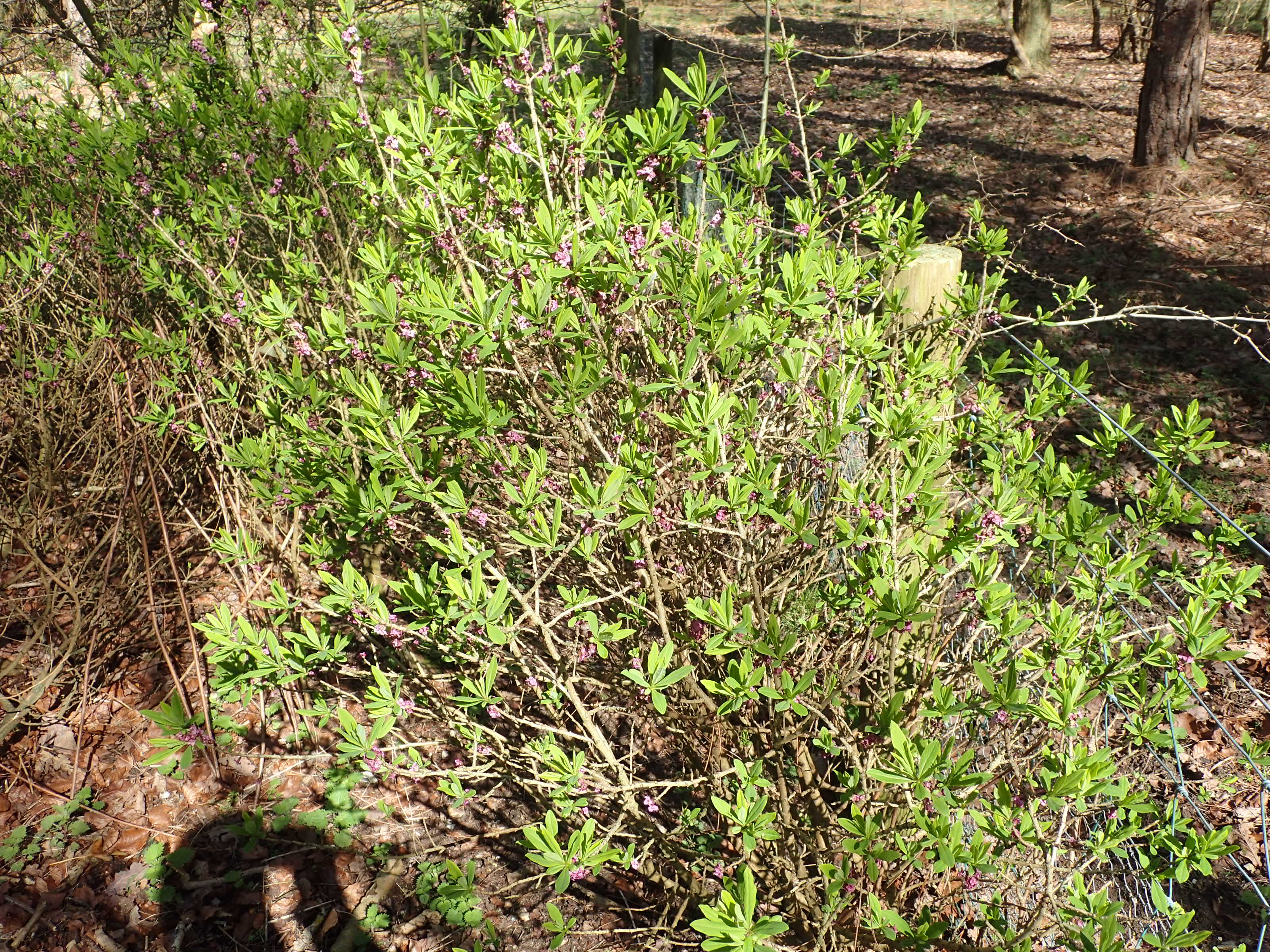
One of my target species for the spring was to see a pink-flowered plant called Mezereon, so we headed down to the Brecks and Weeting Heath, where thanks to some good directions we found quite a bit of it. The unexpected highlight was the rookery, which is stretched out either side of one of the paths. Rooks are one of our favourite birds (there is a picture of one up in the house!) and it was great to look up and see them wheeling overhead as they swooped down onto their nests. We also found several eggshells on the path, allowing us to get a close up view of an egg you would normally only see if you were in the treetops.


YARE VALLEY: Buckenham Carr March fungus foray

18th March 2023

My first Norfolk Fungus Study Group foray of the year saw the group return to Buckenham Carrs, a recent NNNS research project site. Whilst walking around the site multiple Chiffchaffs were singing, a Barn Owl flew silently over Buckenham Broad and in the distance Cranes were calling. I saw quite a few new species of fungi, but annoyingly I only got a poor record shot of the most pleasing one, Ruby Elf Cup (Sarcoscypha coccinea). In Norfolk we have two species of red elf cup, both almost identical to the eye but separable with care under the microscope. All of the ones I have checked, and most in the county in general are Sarcoscypha austriaca, so when we saw some I assumed that is what they would be. Fortunately Steve took one away to check and discovered that it was S. coccinea. Other highlights included Poplar Bell (Schizophyllum amplum), the second Norfolk record of Moss Ear (Chromocyphella muscicola), Thyronectria sinoptica on Ivy and Mollisia amenticola on Alder cones.


Ruby Elf Cup
Moss Ear
Mollisia amenticola
Poplar Bell

Thyronectria synoptica

WHITLINGHAM: March WeBS count

12th March 2023

The avian highlight of the March WeBS count was probably displaying Great Crested Grebes, although given the low numbers of Pochard in recent winters 8 of them wasn't to be snuffed at either. Whilst scanning trees on the meadows in the vain hope of seeing an owl perched up I noticed some Mistletoe in the Lime trees, the first time I'd seen it hear (although some is visible north of the river at Thorpe St Andrew). The Coltsfoot was in flower and I also noticed an as yet unidentified fungus on willow buds.


BROADLAND: Hickling pony checks

11th March 2023

I took my eldest daughter to Hickling for a Wildlife Watch event to see the ponies. As well as tracking down and visiting the Koniks, the group looked for tracks and signs, such as the poo of Red Deer and Chinese Water Deer. We heard and saw several Cranes, heard Bearded Tits and on the way back got excellent views of an Adder basking by the path.


NORWICH: Wensum Park clearance

Early March 2023

Random observations from the start of the month included a Muntjac Deer in Train Wood (I've seen them in Earlham and Rosary Cemeteries but not in Train Wood before) and a Mistle Thrush in Wensum Park one morning. The woodland area at Wensum Park underwent some quite drastic clearance, but all as part of a plan with the Norwich Fringe Project, which includes a new path and planting of a mixture of native trees. On the 3rd a brood of Egyptian Geese were watched walking in front of the diggers. fortunately they had fledged in time (this species nests in trees early in the year). Unfortunately a few days later they were down to two goslings, and the week after there were none.