The Whitlingham Bird Report for 2025 is now available to download from the Bird Reports page or from here

NORTH NORFOLK: Holt fungi workshop

9th November 2014

On Sunday I went to Holt Hall to attend a Norfolk & Norwich Naturalists Society workshop looking at fungi on wood. After an introductory talk and presentation we headed off into the woods for a short foray. Many of the fungi we saw were typical woodland species, but I still saw three new species (Peziza micropus, Rigidoporus ulmarius and Fiery Inkcap, Lactarius pyrogalus). The latter was on the lawn just outside of the woods, as were two White Spindles. An interesting pale agaric wasn't identified in the field, so that may perhaps add another species to my list.

 Peziza micropus
 Black Bulgar (Bulgaria inquinans)
Rigidoporus ulmarius

During the lunch break I nipped out for a look on the lawns around the hall for grassland species. These were beyond the scope of this course, but areas of ancient grassland are always of interest. Anne identified another new species for me, the unusually-named Crazed Cap. I found a Parrot Waxcap, Meadow Coral and some Yellow Spindles, whilst there were two other Waxcap sp. not identified with certainty at the time.

 Parrot Waxcap
 Yellow Spindles

In the afternoon we had another interesting presentation, this time about the commonest fungi on trees and their effects on the host wood. All in all an excellent day, many thanks to Tony Leech & Anne Crotty who led the workshop.

WHITLINGHAM: November bird counts

8th November 2014

Looking down my Twitter feed today it appears I may be one of only three Norfolk birders to have not either stroked a Desert Wheatear or seen a Whale today. How strange.

Anyway, I went to Whitlingham to carry out the monthly wildfowl counts, starting as always with the Little Broad. 30 Gadwall were present here, mostly at the east end, but there was no sign of the Shoveler that had been here previously. Moving on to the Great Broad I stopped to scan one of the floating platforms and noticed a Cormorant standing on it. As I looked across it was joined by a juvenile bird, which was noticeably smaller than the first one. My hopes were raised that this was a Shag, but having got it in the 'scope the head didn't look quite right, and after giving it a good look I suspected that the small size was down to a mixture of natural variation and subspecies (sinensis are on average smaller than carbo). This was confirmed when I got back by Dave & Justin, so the wait goes on for that particular Whitlingham tick.


One of the downsides to doing bird counts is not being able to wander off and look at other things, but I did allow myself a quick nip into the woods to look for some fungi under the beeches. There were several species around, including Milking Bonnet (Mycena galopus). Across the river at Thorpe nine Snipe were visible, with probably many more hidden from view. In the conservation area there were a large group of Tufted Ducks (66 in total) as well as 18 Gadwall and a female Goldeneye. The latter may well be the bird that has recently been at Strumpshaw. Two Little Grebes and a Great Black-backed Gull were also of note.


30 THINGS: 12/30 - Merveille de Jour and other moths

2nd November 2014

For a number of years one of the moths I was most interested in seeing was the Merveille de Jour, a green-and-black patterned moth that can be found in the autumn. I've never caught one, and regular lament the fact. Last night I was making one of my regular mothy complaints when David Norgate announced that he had just caught one if I was interested. I certainly was, so Cathy and I headed round on Sunday morning and weren't disappointed by the Merveille de Jour, which was excellent. David has also kindly kept some other moths from the previous night, including a December Moth, Spruce Carpet and Green-brindled Crescent, all of which were also new moths for me

 At last! Merveille de Jour
Green-brindled Crescent
December Moth - stubbier than I had imagined!

NORWICH: Blair's Shoulder Knot

1st November 2014

After our Sutton Hoo visit we popped round to Margaret's house, where we were greeted with the news that she had found a moth on the wall and had potted it for us. This turned out to be a good decision as it was a Blair's Shoulder Knot, a new moth for me (although I think I've seen the caterillar before). We stayed and put the moth trap out in the evening, but as is usually the case here in autumn we didn't catch any macros (3 Light Brown Apple Moths and a Diamond-back Moth were the micros).


SUFFOLK: Sutton Hoo

1st November 2014

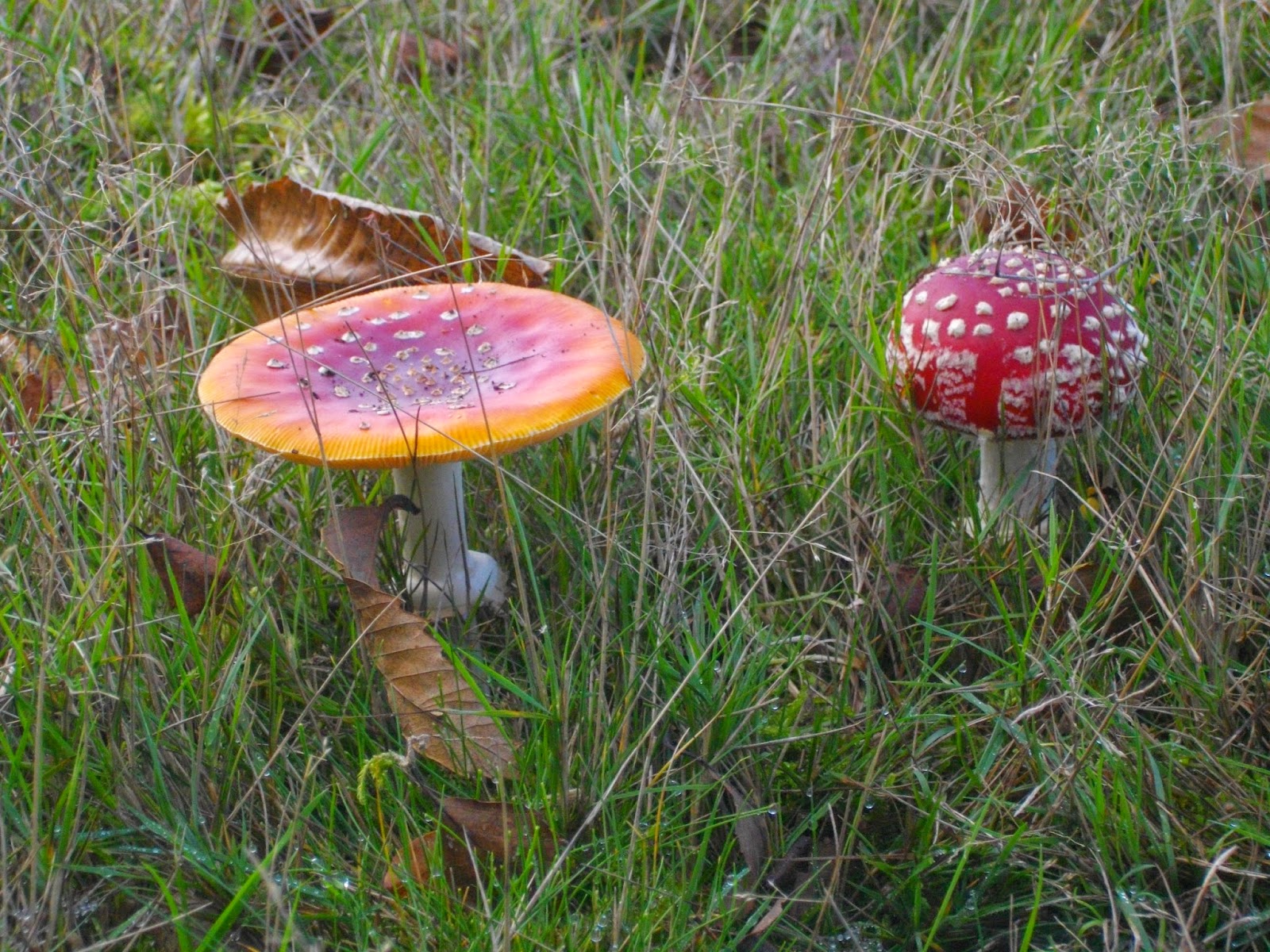
For a bit of a change (and to avoid the swarms of autograph hunters following my mention on Friday's Autumnwatch Unsprung) Cathy & I went into Suffolk to visit Sutton Hoo. We visited the main exhibition hall first and then had lunch before heading out to the burial mounds. The scenery on the walk out was beautiful, with hills rolling down to the river Deben. There was a fine crop of fungi too, including lots of Fly Agarics and Parasols. At the mounds themselves Cathy found at least another ten species, along with a Fox Moth caterpillar crossing the path.


NORTH-WEST NORFOLK: Holme fungi extravaganza

26th October 2014

At the start of the year when I was coming up with my target species for the year there were quite a few fungi, and in the end I settled up with a few either/or species. Several of the ones that I hadn't seen can be found at Holme Dunes NWT reserve, where this year Rob Smith and a group of local naturalists have been putting in a concerted recording effort. So far they have recorded over 2000 species between them, and the blog of their exploits is well worth a read - it can be found here. Anyway, Rob had very kindly offered to show me some of the dune specialties that I hadn't seen, and in return I hoped to identify some new species for their list.

I arrived at Holme just before 10:30 to find Rob, Andy and Adrian waiting for me at the visitors centre. After introductions we headed off for the pines to see what we could find. My first target was Scaly Stalkball, a relative of the Winter Stalkball that I had seen in February. On the way we stopped to admire an array of Collared Earthstars (Geastrum triplex), lots of Milky Bonnets (Hemimycena lactea) and a Hare's Ear (Otidea onotica). Emerging from the pines we puzzled over a couple of interesting bracket fungi and saw Snowy, Dune and Blackening Waxcaps (Hygrocybe virginea, conicoides and conica). Before moving on we inspected some Rabbit pellets for nail fungi without success, before arriving at the Scaly Stalkballs (Tulostoma melanocyclum).


Now into the dunes, we were looking for Dune Stinkhorn (Phallus hadriani). A stick marked the spot, but where was the fungus? It was still there, but it had been completely dessicated ("well it is a cold day" was muttered!) We carried on, seeing many more Dune Waxcaps and then another couple of sand specialists, Dune Cavalier (Melanoleuca cinerifolia) and Dune Brittlestem (Psathyrella ammophila) before heading back to the pines. Here we met Karla, who had just photographed a coral fungus. She offered to show us, and we went and had a look. It was small and beige, beneath the pines and the tips discoloured a blue/green, which I believe makes it Ramaria abietina. Nearby we also saw a few Sessile Earthstars and some Liver Milkcaps (Lactarius hepaticus), the milk of which discoloured bright yellow on white tissue.


After a quick bite to eat we went out into the west dunes, walking past a clump of Inocybe sp. We soon located the other species I had particularly wanted to see, Sea Buckthorn Bracket (Phellinus hippophaeicola). Several other species were seen along the path, including a rather out-of-place Collared Earthstar, before I spotted another species of Coral sp. growing amongst the short-cut grass. There were no nearby trees, and this one had brown tips to the branches. A couple of Blackening Waxcaps that were completely black were nice to see, and we also saw a numerous yellowy 'toadstool' type growing in marshy grassland that we couldn't identify. The last fungus of the day was a new one for me - Field Bird's Nest (Cyathus olla) - previously I had only seen Common Bird's Nest.


Many thanks to Rob, Andy, Adrian and Karla for the time, company and local knowledge, which contributed to an excellent days mycology.

NORTH WALSHAM: A bit of lawn fungi

25th October 2014

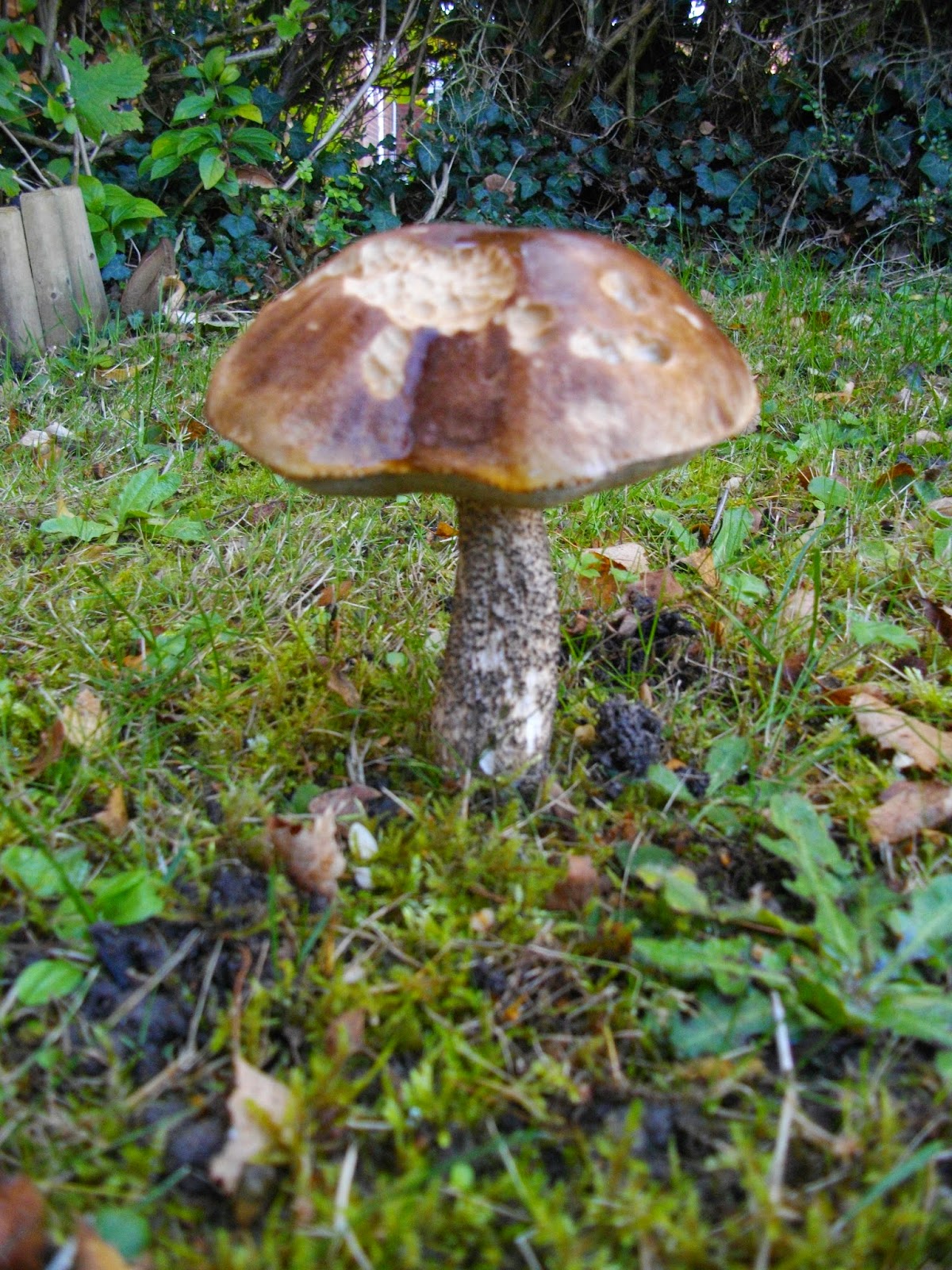
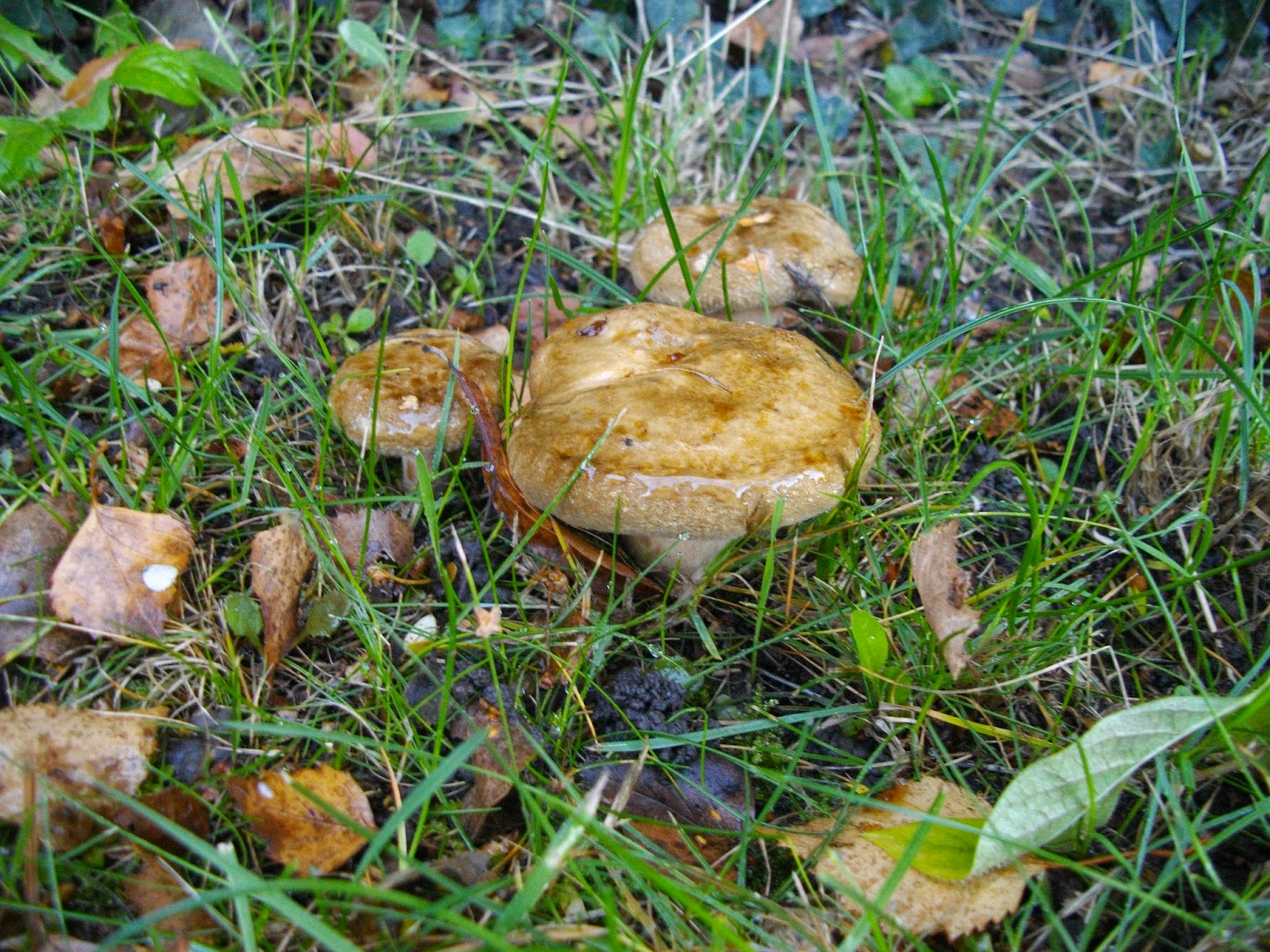
Having gone back to North Walsham to see friends, I was delayed a few minutes before going inside as I poked about on their lawn looking at the birch fungi present. There was a good crop of Brown Birch Boletes (Leccinum scabrum), some Brown Roll-rims (Paxillus involutus) and some Russula sp that I still haven't identified to my satisfaction, despite them coming up last year as well.

 Brown Birch Bolete
Brown Roll-rim
Russula sp.

SUFFOLK: Minsmere fungi

19th October 2014

On Sunday Cathy, Margaret & I had a leisurely look around Minsmere and Westleton heath. Birds of the day were probably a pair of Stonechats on the heath, but we did see some impressive-sized fungi, including Fly Agaric and some Parasols. There were also loads of Common Darters resting along the path edges.


30 THINGS: 11/30 Parrot Waxcap + Earlham Cemetery fungi

18th October 2014

Every month the Friends of Earlham Cemetery hold a walk around the cemetery to look for whatever the season has to offer. This one was led by Ian and focussed on fungi. Ian knew that I wanted to see Parrot Waxcap this autumn, and had kindly done a recce in the morning and located a couple of specimens. When I saw them I appreciated the effort - locating a small green fungus amongst the grass is no mean feat! The group spent around 2 hours walking on our tour, and despite the relatively dry autumn we still saw over 40 species. Some of the more interesting species included Striated Earthstar, Sessile Earthstar, Parrot Waxcap, Meadow Waxcap, Meadow Coral, Earthtongues and Sulphur Knight. There were also large amounts of the coral fungus Ramaria flaccida and Dog Stinkhorn.

Striated Earthstar
Sessile Earthstar
Parrot Waxcap
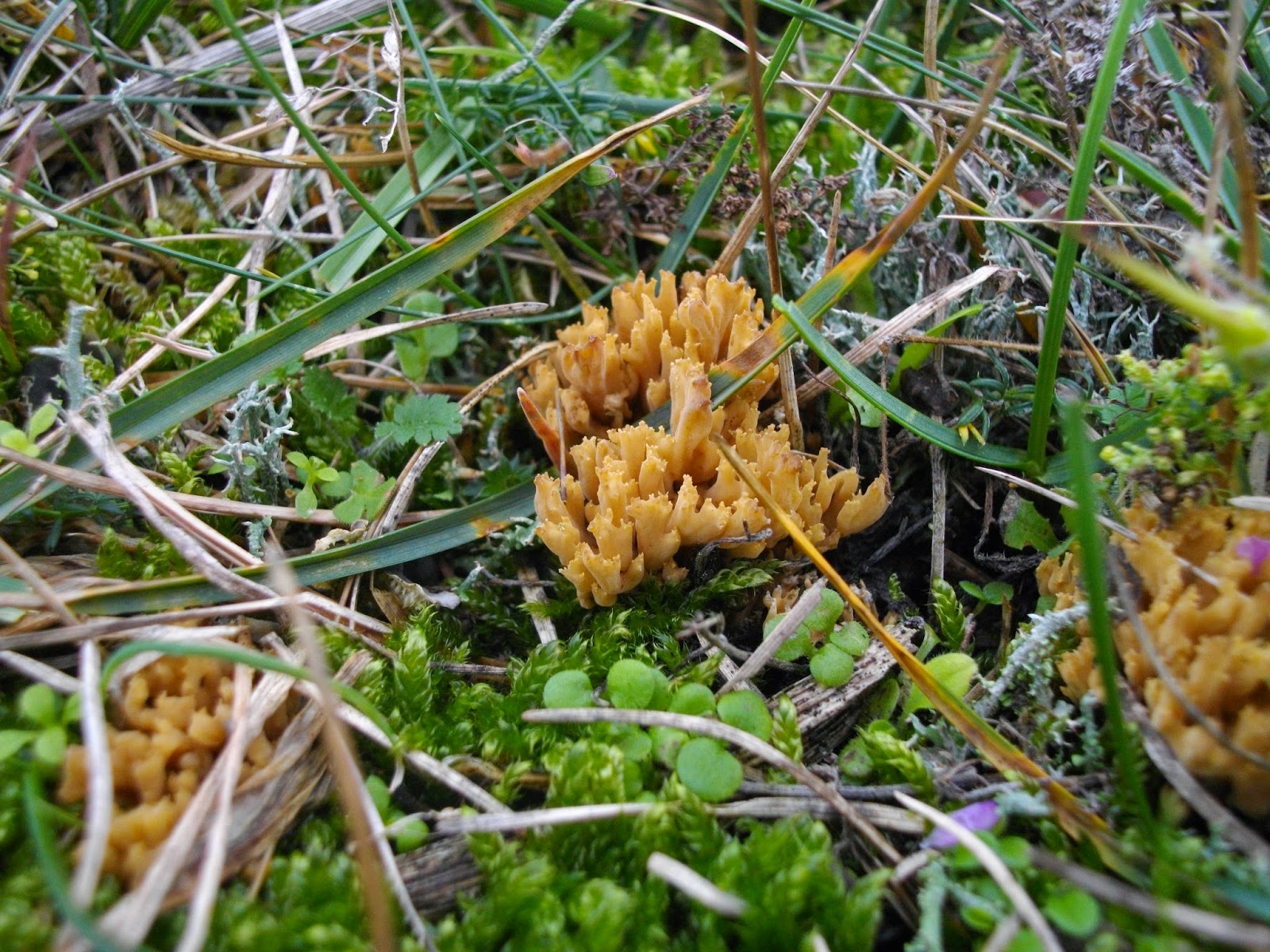
Meadow Coral
Earthtongue sp.
Sulphur Knight
Ramaria flaccida

WHITLINGHAM: October bird count

11th October 2014

On Saturday evening I carried out Octobers WeBS counts at Whitlingham, narrowly avoiding getting caught in the heavy rain and storms. Incidentally if you are an infrequent visitor to Whitlingham you may be interested to know that several extra bits of Whitlingham Lane have been double yellow lined, so double-check before parking (or if you're a regular buy a season ticket for the car parks - £35 or £30 direct debit).

Pleasingly duck numbers had increased from last month. The Little Broad held an eclipse male Shoveler, a female Teal and 23 Gadwall. These were split between the weedy areas at either end of the broad. On the Great Broad there were 102 Greylag Geese, 94 Mallard, 118 Coot and around 200 Black-headed Gulls. 10 Gadwall, 5 Tufted Ducks and a Little Grebe were also of note. Across the river at Thorpe a Green Sandpiper was on the end of the spit, particularly pleasing as I hadn't seen any on spring passage.

NORTH NORFOLK: Obligatory Shrike post

11th October 2014

Having not been to see Norfolk's first Steppe Grey Shrike* last Sunday, I had been admiring the many photos of it to hit the web. Thankfully it did the decent thing and stayed until the weekend, so Cathy & I headed to Burnham Norton to have a look. Luckily for us the forecast storms didn't happen until the evening and we got excellent views of the Steppe Grey Shrike with just a little bit of rain. This also allowed us to bust the myth that cows lay down when it's going to rain, as only one cow was laying down before and during the rain. The moral of the story? Don't trust cows. Oh, and take a waterproof coat with you when you go out in the autumn.


"Rain? We only sit down for hail or earthquakes"

* The name 'Steppe Grey Shrike' is a bit of a misnomer and may be changed in the future, along with much of the Grey Shrike taxonomy. Currently it is treated as a subspecies of Southern Grey Shrike.

THORPE MARSH: Buzzard but no Emeralds

5th October 2014

I made a brief visit to Thorpe Marsh to see if anything new had turned up. I scrutinised the trees that line the ditches in the hope of seeing my first patch Willow Emerald damselfly, without success. Most of the scrape was hidden from view by the vegetation, so I carried on along the path where I met another birder and we stopped to scan the marsh. A Common Buzzard flew in and landed on one of the dead trees, probably the first time I have actually seen one perched up here. It was mobbed by several Magpies, before they went and got some Carrion Crow backup to eventually shift the Buzzard. Whilst watching a Grey Heron fly over a Hobby flew past, but I missed it (well I saw it, but as an unidentified black dot, so I'm not counting it). I continued my lap, but the broad was almost devoid of birds and nothing much else was around.

WHITLINGHAM: Wrinkled Peach fungus

28th September 2014

A busy weekend, but I nipped out on Sunday afternoon to have a look for another interesting fungus. My target was Wrinkled Peach, an unusual looking species that grows on Elm. Michelle Hoare, a local mycologist, had found two in Trowse Woods on her way back from last weeks fungus foray and kindly given me directions. I failed to find the first one, but luckily the second was more obvious, growing on a log beside a footpath.