The Whitlingham Bird Report for 2025 is now available to download from the Bird Reports page or from here

CHILTERNS: The Duke of Burgundy

25th May 2019

Being keen to see some new butterflies this year I had booked onto Carl Chapman's tour to the Chilterns to look for Duke of Burgundy and Small Blue. The old car park on Bison Hill was closed, so we began at Dunstable Downs, where I saw a new species straightaway as a Slender-footed Robberfly landed on the roof of the car.


We headed down onto the chalky landscape and headed to a sheltered area of Hawthorn. A smal orangey butterfly flew past us without stopping - almost certainly my first Duke but not the sort of views I was hoping for. Luckily it didn't take long for much better ones, as I found one sitting up patiently nearby.


Carrying on around the rest of the site we saw Dingy Skippers and then eventually quite a few more Duke of Burgundies, including a pale one that seems to be the aberration leucodes. A Grizzled Skipper, Grass Rivulet moths, great views of a Red Kite and a metallic green chafer-type beetle (Cryptocephalus sp) completed a successful and pleasant visit.


WHITLINGHAM: May WeBS count & some butterflies

19th May 2019

A brief summary of the May WeBS count:

2 Gadwall and 17 Tufted Ducks still present. Mute Swan numbers up to 75, one pair of Canada Geese had two goslings and most pleasingly a pair of Great-crested Grebes had a least one young grebeling riding on the back of one of the parents. A Moorhen with a chick was also visible on the island. I had been told about a nesting pair of Treecreepers but didn't have much time, so I had to make due with watching one of them fly onto a dead tree and vanish Houdini-like into a crack in the bark.

Insect highlights included:

 Cheilosia variabilis
 Small Copper
 Orange-tip
Feeding signs of the micro moth Epinotia abbreviana

NORWICH: Some woolly Psyllid bugs

16th May 2019

On my way home from work I noticed some white 'fluff' on the branches of a Grey Alder. I looked closer and could see some small bugs in it, using the fluff as protection as they moved around the branches. I assumed, eroneously, that these would be a type of woolly aphid, but fortunately online Sally Luker recognised them as a type of psylloid bug, Psylla alni. This was a new species for me, and having found out about it I promptly went and found it at Whitlingham too.


NORWICH: Large Red Damseflies emerge

10th May 2019

One of my routes in to work takes me along a short stretch of the River Wensum, and on this occasion glancing at the foliage I noticed a Large Red Damselfly, recently emerged and having a rest.


NORWICH: Rue-leaved Saxifrage and my first Swift of the year.

8th May 2019

It was a rainy walk into work, but as I held my umbrella and looked down at the pavement I noticed a patch of the small but lovely plant Rue-leaved Saxifrage. I've seen it on some old buildings before, but seldom just amongst the old stones of Norwich. I know it does grow here, but it is just easy to overlook. Later on the showers abated and my first Swift of the year flew through, but even more pleasing was a Swallow, probably the first one I've seen in the city centre.


NORWICH: Bank holiday invertebrates

6th May 2019

Bank holiday Monday, and the main attraction was the Norwich City promotion parade and Hoolahan vs Martin testimonial match. Nevertheless it pays to keep looking around, and I saw a new Cranefly, Tipula rufina, resting on a bridge on our way into the city, and also saw a couple of Merodon equestris hoverflies in Margaret's garden.


WHITLINGHAM: Gull survey distractions

5th May 2019

Being a helpful type, I had agreed to survey three 1km squares as part of a national urban breeding gull survey. Two of these had been around the city, but the final one took in part of Whitlingham Sewage Works. This meant a dedicated visit, but also gave me a reason to visit one of the more neglected bits of my patch on the way, as the square in question also covered the far end of the woods.

Parking up in the woodland car park I tried to walk quickly to the part of the square that actually contains buildings, but naturally I did look at some insects on the way. These included two new Craneflies (Limonia phragmitidis and Tipula varipennis) for my patch list and a new ladybird, the bimaculata form of 10-spot Ladybird. I also found a sleeping nomad bee, which after consulting with Nick Owens turns out to be the rare-but-increasing Nomada ferruginata, which was new for me.


The sewage works turned out to have no visible breeding gulls, with only a handful of Herring Gulls loafing near the back (and some Black-headed Gulls, which aren't being counted for the survey). I did notice lots of Changing Forget-me-not and Bur Chervil, plus a Dolerus sp sawfly, before heading back to the car and home.


NORWICH: City centre Whitethroats

1st May 2019

Late April saw an arrival of Whitethroats across the country, and I noticed on Twitter that Mark Chipperfield had seen several in the castle gardens. Having not seen this species within the city centre (or on my walk to/from work - I know, so many lists) I made a detour after work and quickly located two, a singing male and a second more skulking bird. Only having my small camera with me these pictures fall into the 'record shot' category.


NORWICH: Lakenham Way basking insects

30th April 2019

With periodic sunny spells, I have been stopping at certain points on my way to or from work where there are patches of leaves that attract basking insects. I've seen some interesting species, including some I've never encountered before, although quite a few have only been identifiable to genus level. One of these was a Brachyopa hoverfly, a scarce genus usually associated with sap runs but identified by examining the shape of a tiny pit on the inside of the antennae.

 Anthomyia fly, possibly A. procellaris
 Unidentified sawfly sp
 Speckled Wood
Brachyopa sp, probably B. scutellaris

MID-NORFOLK: Buxton Heath in the rain

27th April 2019

A group of insect enthusiasts in the county are in the process of forming a Norfolk Entomological Group, and I had been invited to attend a meeting at Buxton Heath. I was pleased with the choice of venue, partly because its relatively close to Norwich, but also because there are quite a few heather-related species I've not seen before like Heather Shieldbug, Heather Ladybird and Hieroglyphic Ladybird. All of this was rendered rather academic though, as the weather was wet and windy.

We did stay for a couple of hours, seeing lots of Minotaur Beetles and a few other beetles in dung. Jeremy & Vanna caught a nice micro moth, Neofaculta ericetella, and I sweep-netted a spider I'd not seen before called Mangora acalypha. There were also some good specimens of Nail Fungus (Poronia punctata) growing on the pony dung. Until recently this was quite a scarce fungus, because the medication given to horses and ponies often kills it off. A couple of singing Woodlarks rounded off the trip.


NORWICH: Perfoliate Alexanders

25th April 2019

I received an email from Jo Parmenter to say that she had found the invasive non-native species Perfoliate Alexanders growing along the shady bit of riverside path near Pull's Ferry. I went along after work to have a look so that I would recognise it again, and this immediately paid off as I found another six plants about 1km along the river. This species is sometimes grown in gardens, but it is illegal to allow it to spread into the wider environment. By the time this blog is posted hopefully the plants will have been removed to prevent further spread.


WHITLINGHAM: April WeBS count & insects

21st April 2019

An online discussion that arose from Nick Moran's monthly patch species graph suggested that April is the most species-rich month for inlnad patches, and a quick number crunch showed that this was true for me too. So lots of potential for a good find on the April WeBS count?


With that build up, the quietness was almost inevitable. The tame Wigeon was still around the slipway, and looks like it might even oversummer. The reason for its tameness is unknown - I don't think it's ringed (although typing this I can't actually remember seeing it out of the water) so perhaps it has just attached itself to the Mallard. Certainly earlier in the year a flock of 8 Wigeon arrived and it didn't link up with them. Of the other ducks:

Tufted Duck 13
Gadwall 4
Teal 1

A Mute Swan was visible on a nest on the Great Broad, level with the ruined hall but the other side of the ditch so affording at least some protection from predators. A Great-crested Grebe was also on an easily-visible nest in thr conservation area. Two broods of Mallards were noted (both different to a brood seen on my last visit) and an Oystercatcher flew over. A Common Tern had a metal ring on its leg - no chance of reading it, but I'd be interested to hear where the nearest place is that rings Terns? There were no hirundines, but I did see my first Reed Warbler and Whitethroats of the year.


Amongst the other things noted, several Pied Shieldbugs showed well and I saw an interesting caterpillar with a pink stripe down the back. Very shoddily I forgot to record the foodplant (I suspect it might be a freshly-opening Sycamore based on the pictures) - if you recognise the caterpillar please let me know!


NORWICH: Catton Park hoverflies

Mid-April 2019

Local naturalist Susan Weeks had told me about some of the hoverflies that she had seen at Catton Park during April, and two of them were species that I'd not seen before, Parasyrphus punctulatus and Melangyna cincta. The former seems to be having a good year judging by online sightings. I had made a brief visit to Catton Park earlier in the month, but conditions were overcast and there were few hoverflies about. This time it was sunnier and I was more successful, finding Melangyna cincta basking on some leaves.


A circuit around taking in some more likely basking spots and flowers turned up some other insects, although no Parasyrphus. The highlight was a new plant bug for me, Deraeocoris lutescens, whilst some Common Oak Purple moths, Adonis Ladybird and a mating pair of 10-spot Ladybirds (a very variable species - I initially mistook them for Cream-streaked Ladybirds) were also seen.


WHITLINGHAM: Little Gull & diptera

18th April 2019

A quick evening visit to Whitlingham to catch up with some of the birds that had been passing through the valley recently was successful, with a single adult Little Gull hawking over the Great Broad and two Arctic Terns also present. Fortunately my vantage point was level with a large bank of brambles, and in a quiet moment I caught the rattle of a Lesser Whitethroat, whihc I eventually saw skulking about near the middle. Some insects were basking in the evening sun, including this Syrphus torvus and another that probably can't be identified from photos.


YARE VALLEY: Strumpshaw insects

Mid-April 2019

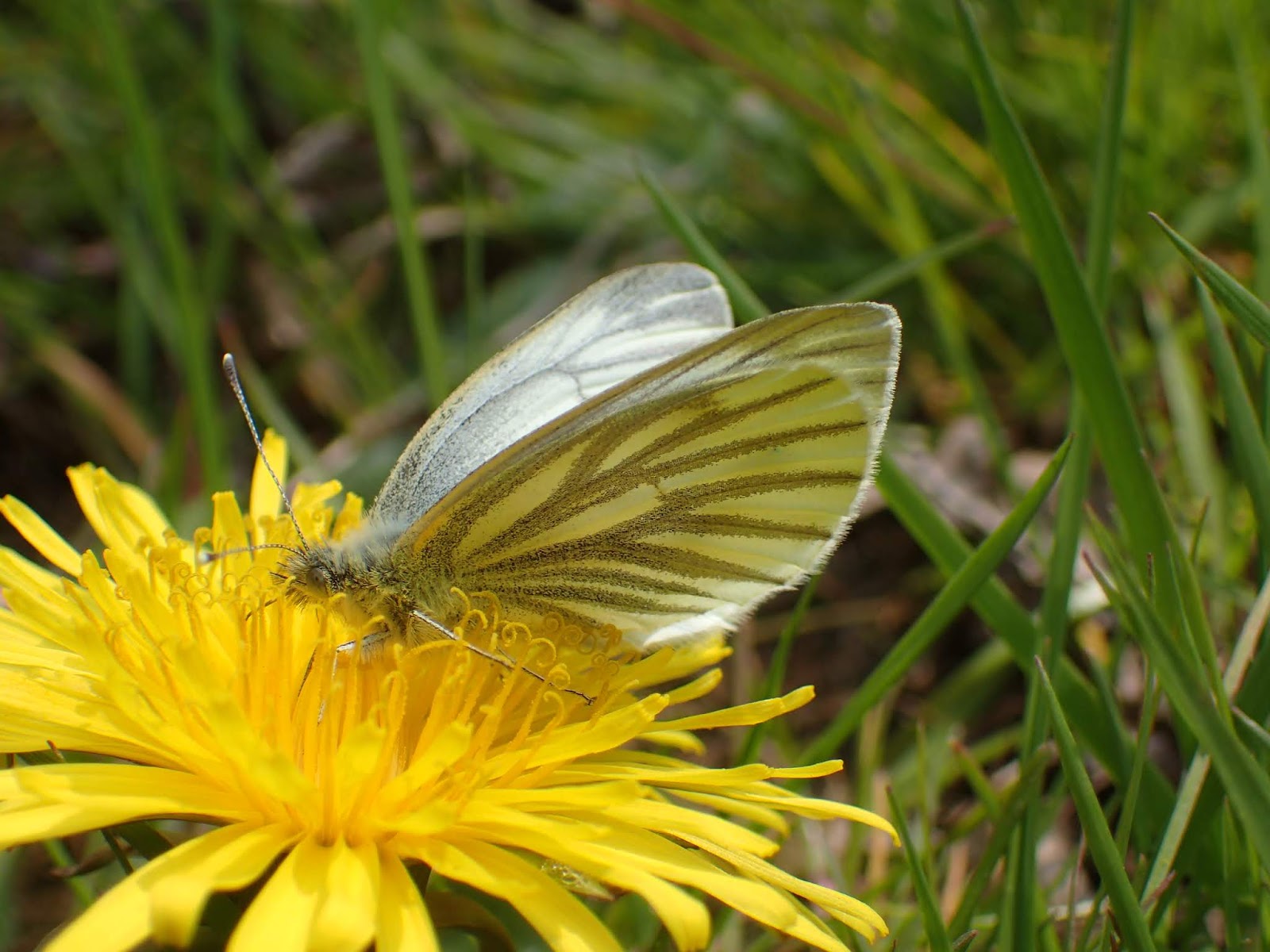
With a few hours spare one afternoon, we went for a family visit to Strumpshaw Fen. It was a lovely warm day and we saw quite a few butterflies, including my first Orange-tip, Speckled Wood and Green-veined White of the year. There was quite a bit of birdsong too, with my first Willow Warbler seen and Sedge Warbler heard. I kept an eye out for hoverflies but only saw a handful of common species, however there were a good range of bees including Andrena clarkella, Andrena nitida and Nomada leucophthalma. The beetle Silpha atrata was also seen and I did manage one new species, the fly Saltella sphondylii (kindly identified from images by Tony Irwin).

 Saltella sphondylii


Ferdinandea cuprea