The Whitlingham Bird Report for 2025 is now available to download from the Bird Reports page or from here

BROADS: Golden-haired Robberfly and the same Deerfly again...

 Early August 2020

Next up on the family walk schedule was Hickling, where the reserve was open for a one-way walk aroudn the reserve. We hadn't got too far when some wild west-style hoof noises started echoing around. We stepped away from the gate we had just come through and turned to look. A Konik Pony soon trotted into view, pausing at the gate to look at us before carrying on and meeting up with two other ponies.


It was a sunny day and quite a few insects were basking, including Golden-haired Robberfly and a Marsh Damselbug. A Twin-lobed Deerfly tried to bite me but fortunately was doing it through a hat. Norfolk has three fairly common Deerflies, but whenever I discover one trying to bite me it is always this species.


In a surprising turn of events we actually saw some birds too. A Kingfisher flew across Hickling Broad from the viewpoint, whilt three Black-tailed Godwits followed a small flock of Lapwing over the reserve. On the way back three Great White Egrets were also seen at the back of one of the scrape areas.

WEST NORFOLK: Southern Migrant Hawker

Early August 2020

For the past few weeks people had been posting pictures of Southern Migrant Hawkers at Thompson Common. This species was formerly a rare migrant to the UK, but in recent years has colonised in the Essex and been appearing with a bit more regularity elsewhere. At Thompson reports had been of at least six males and a mating pair, so perhaps there seemed like a reasonable chance of bumping into one.

We emerged from the woods and turned our attention to a dried out pingo where many of the sightings had been made. A hawker soon flew in and perched up, but it was a 'normal' Migrant Hawker. A couple of other naturalists were also looking - one had seen a Southern Migrant Hawker in flight a few hours earlier but that was it. We spent a while watching the very active dragonflies, hoping they would land, but it appeared that everything we saw was Migrant Hawker or Brown Hawker. Trying around the corner I saw a very blue looking dragonfly, and it briefly perched up on some bur-reed, enabling me to confirm it was our target species, Southern Migrant Hawker! It gave great flight views (down to a few feet) but barely settled. My bridge camera takes a while to focus, so I had to make do with a few not-quite-in-focus record shots. We also saw one of the site specialties, Scarce Emerald damselfly. A few more people turned up, including Vanna, Jeremy & Ian, and they managed good views too.

By now Rose was getting bored, so rather than explore further we headed back to the car. I had seen a water-dropwort species in the first dry pingo so double checked it was Fine-leaved Water Dropwort, a second new species of the day. A sedge generated much comment online, but was eventually decided as Carex otrubae by people much more knowledgeable than me about these things. Platycis minutus (a net winged beetle) was a nice find on the way back to the car.


BRECKLAND: A Lynford wander

 Early August 2020

We went for a family walk around Lynford Arboretum, which was pleasant if not wildlife-filled. A Black Snail Beetle (Silpha atrata) crossed the path in front of us, whilst I noticed an area of Nettle-leaved Bellflower, which appears to be a new species for me. Near the lake I spotted what I assume is quite a distinctive looking Cranefly, but unfortunately in the absence of a field guide I've not managed to identify it (the most usful guide to craneflies is Shropshire Craneflies, but that is mostly set out as a key so doesn't have pictures of all of the species).


WHITLINGHAM: Early August insect bonanza

 Early August 2020

The timing of the WeBS counts meant that there was a 6 week gap between the July count and the August one, so I made time to go and have a walk round early in the month. There was the added motivation of a Lesser Emperor dragonfly photographed around the Little Broad the previous day by Gary White, but despite starting in that area there was no sign of it. Some recompense came in the form of a flyover Green Sandpiper that came up from the direction of the river and flew off over the Great Broad. Unlike my last visit there were plenty of swans around the slipway so I took the time to read some rings, managing 14 diffferent combinations.

I had considered walking up towards Whitlingham Hall and back via Trowse Woods, but as is so often the case I found too many interesting things around the CP to have to the time to complete that route. The first 'batch' of species came from the end of the Little Broad and the Alders along the path to the slipway, and included the interestingly shaped tiny fly Camarota curvipennis, the hoverfly Dasysyrphus albostriatus, the hopper nymph Eupterycybe jacunda and the plant bug Psallus salicis.


Moving on to the meadow I decided to see if Six Belted Clearwing was present in a likely area, and managed to confirm that it was indeed (a new site record). I also saw an interesting hoverfly that I was sure would be a new one for me if I could identify it. Unfortunately despite some good views I couldn't be sure that it was Cheilosia proxima - Roger Morris commented on the Hoverflies Facebook page that he doesn't think that they can usually be confirmed from photos because of overlaps with several similar species. Bee-wolf was another site tick for me nearby.


Heading for a quick walk up the lime tree avenue I had a good look at a small Oak tree, adding a beetle leaf mine to the site list (Orchestes quercus) and also Silk Button Gall, a common species that I must have overlooked here before. I saw a Eumerus hoverfly, likely to be E. strigatus here based on habitat but again not confirmable from pictures. Overall a very productive morning.


NORWICH: A few garden moths

 2nd August 2020

Despite the low catches this year I put the moth trap out again, and was rewarded with a new garden species, Nut Tree Tussock. A dark form Willow Beauty was also nice, and Golden Argent (Argyresthia goedartella) was new for the year.


MID-YARE: Back to Strumpshaw

 Late July 2020

Strumpshaw had remained closed for a while after lockdown, but now with the trails open again we chose a sunny day to go for a nice family walk. It turned out that the visit was particularly productive both in terms of seeing interesting things and getting nice views. The wildlife spotting started in the car park, with several Halictus luteicollis bugs on the vegetation near the car. Moving on to he bird feeding station I noticed a harvestman, Dicranopalpus sp. This species pair are particularly distinctive as they hold the legs out straight each side of the body and have 'tuning fork' type palps. Up until fairly recently there was only one species known, but it turned out there were two very similar ones so now they have to be put down as an aggregate unless examined.


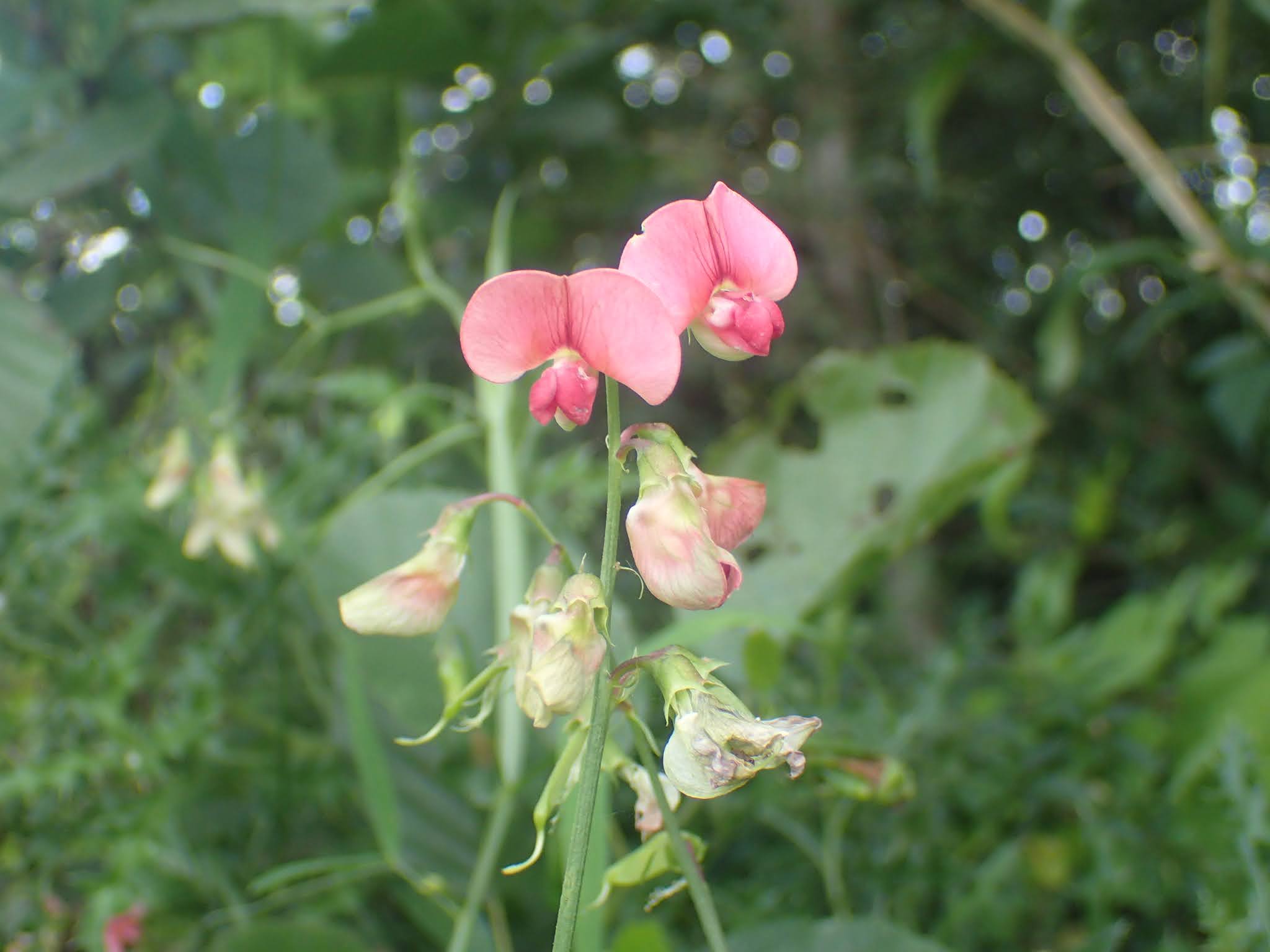
Walking along the sandy wall I was keeping a close lookout for yellow-face bees, hoping to see Reed Yellow-face. In the end I did manage to find one, but I ended up being more pleased with a second yellow-faced bee, White-jawed Yellow Face. Fortunately it stayed still enough for me to photograph the pale jaws and other distinguishing features. There was a nice patch of Marsh Pea, a fairly rare plant, and a very photographic lizard (it even stayed put whilst Rose bent down to look at it and waved it goodbye) was a highlight, as was the tiny green-and-black striped soldierfly Three-lined Soldier.


The rest of the loop round (the reserve was operating a one-way system) was less eventful, but still very pleasant with boats on the river and lots of butterflies around, including a brief glimpse of a Silver-washed Fritillary in the woodland. 

NORWICH AREA: St Faith's Common

 Late July 2020

We decided to go on a walk at St Faith's Common, just north of Norwich. I was hoping we might come across Yellow Bird's-nest, a long term plant target of mine, but walking along one of the main paths the area of promising looking woodland had loads of the trees painted with "private" or "keep out" on. I don't recall that bit being off limits before, I can only assume that this section of the woodland is privately owned and they can't afford a fence, but it looked horrible and quite frankly isn't the sort of thing you want to see daubed about in the woods. Part of this area has been bought by the council to make it a country park, so perhaps that has been the spur to assert ownership over this bit. Despite the frustration we obeyed the signs and after a while decided to head back and instead walk along the open ride along the edge of Houghen Plantation. The only sighting of interest was a new tortrix for me, Epagoge grotiana.


This latter open area was much better for insects. Cathy had a large insect land on her back, and wondered if it was a damselfly - fortunately it landed nearby and I could confirm it was actually a Sabre Wasp, Britain's largest ichneumon wasp. A couple of Crossbills flew over (this is a good area for them and has also attracted Parrot Crossbills in the past) and other interesting insects included the bugs Alydus calcaratus and Rhombic Leatherbug.


NORWICH: Dot ladybird and a lacebug

 Mid-July 2020

Since the release of the recent Richard Lewington illustrated ladybirds field guide there has been a bit of an upturn in interest in 'inconspicuous' ladybirds - the half of our ladybird species that are very small and often not very clearly marked. One person taking an increased interest in these is Vanna Bartlett, and indeed she has written about them in the latest Norfolk Natterjack (the NNNS quarterly bulletin, sent out to members but made available to everyone as back issues via www.norfolknaturalists.org.uk > publications > Natterjack) and on her Arthropedia blog here: https://arthropedia.co.uk/inconspicuous-ladybirds/

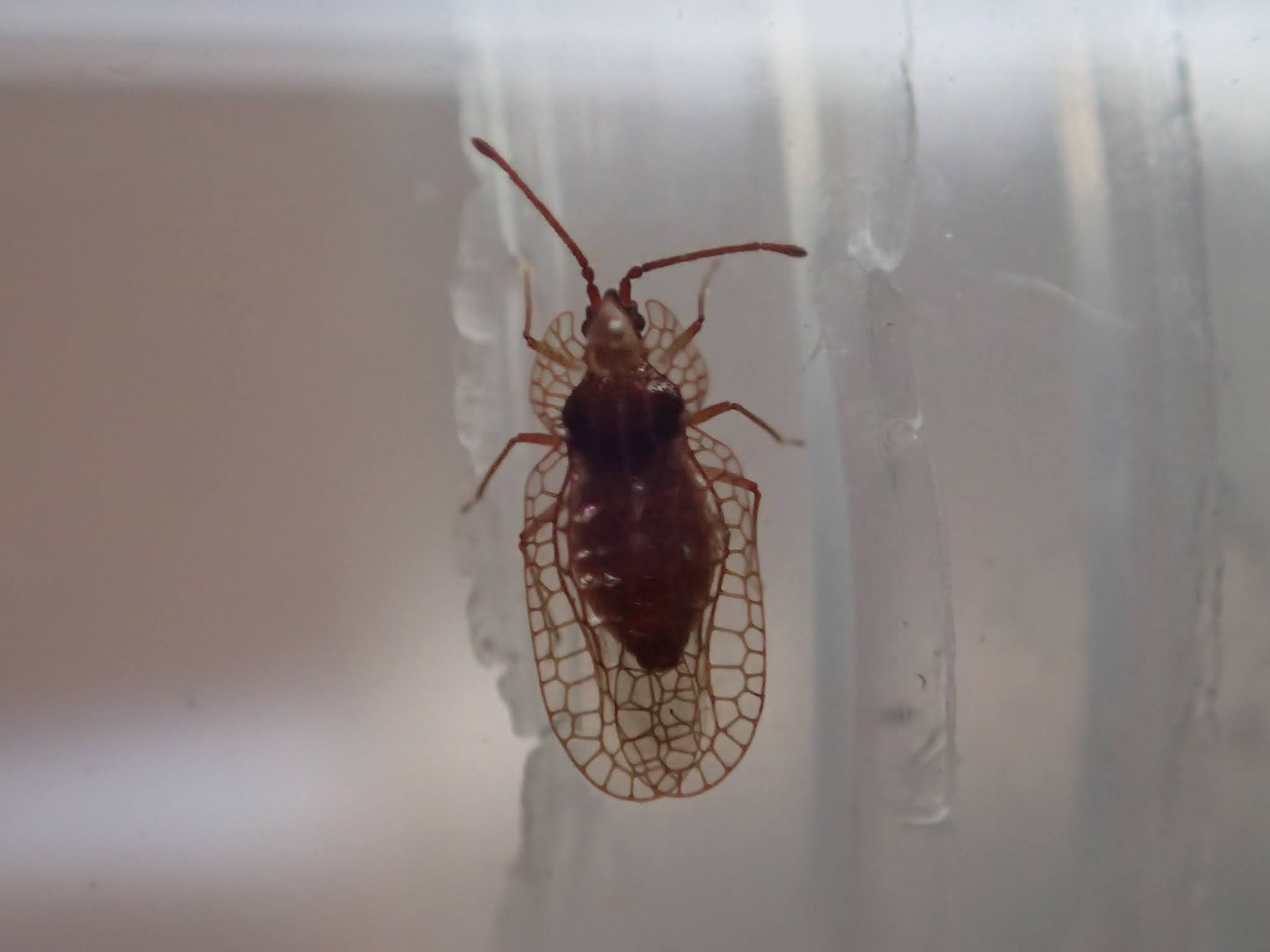
One evening Vanna called me to say that she had found one of smallest inconspicuous ladybirds, an all black species (albeit with tiny hairs), given the appropriate name of Dot Ladybird. In addition, she had also found a lacebug, another group that I am interested in, so I popped round after tea to have a look at both. The ladybird was just as tiny as you would expect, looking all black to the naked eye but covered in golden hairs under a microscope. I had seen several lacebugs, two on thistles and Andromeda Lacebug, but this one, Derephysia foliacea, was a new one for me.


WEST NORFOLK: Grimston & Roydon

Mid July 2020

Having not seen my dad during lockdown, I arranged to meet up outside so we could go for a walk. Having spent the past few months in east Norfolk I decided to head west to Roydon Common and Grimston Warren. I'd not visited the latter site before, so Lukas from the wardening team had very kindly agreed to meet us to show us some of the more interesting bits. We had an excellent morning, including great views of both male and female Black Darter dragonflies, plus various other odonata.


After lunch we checked out an area for Raft Spiders, a relative of the more commonly mentioned Fen Raft Spider, and after a bit of scanning of pools I managed to find one. The site has lots of Round-leaved Sundew so I kept checking for Sundew Plume moth caterpillars, an unusual species that eats this insectivorous plant. At one point I thought I'd found one, but it turned out to be a hollowed-out husk, which had been parasitised by the ichneumon wasp Campoletis trichoptili. Whilst not the species I was looking for, this ichneumon is understandaly rarer than the moth, with only a handful of UK records and new for Norfolk.


A big thank you to Lukas for his help. Both sites are large and we didn't cover too big an area, so another visit next year might be in order to see things like Bog Asphodel and some of the scarcer bee species.

NORWICH: Some mid-July garden wildlife

 Mid-July 2020

A few more additions to the garden list. Some aphids on the Flag Iris on our small pond were fortunately one of the easier to identify species, Aphis newtoni. I was particularly pleased with our first garden record of Anthophora quadrimaculata, one of the flower bees, that was attracted to our Viper's Bugloss. Whilst most of the butterflies in the garden were White spp, I was pleased to see a Meadow Brown. Arge pagana, a sawfly, was also new for the garden.

Next up was a common bug, but again one I'd not recorded in the garden before, Heterotoma planicornis.

A couple of days later and there was some more additions to the garden year list, starting with a Southern hawker flying briefly around the garden. Having seen some female Sphaerophoria hoverflies before it was good to see a male one and confirm that it was Sphaerophoria scripta. A Rosy Tabby moth (Endotrichia flamealis) was disturbed from the lawn. The most interesting species was tiny beetle, with a weird-shaped head. I thought it looked a bit like a trunkless elephant, whilst the books say it is like a monk's cowl. It was a type of Furniture beetle, although having checked with Martin Collier there are apparently two similar species.