The Whitlingham Bird Report for 2025 is now available to download from the Bird Reports page or from here

NORWICH: Dot ladybird and a lacebug

 Mid-July 2020

Since the release of the recent Richard Lewington illustrated ladybirds field guide there has been a bit of an upturn in interest in 'inconspicuous' ladybirds - the half of our ladybird species that are very small and often not very clearly marked. One person taking an increased interest in these is Vanna Bartlett, and indeed she has written about them in the latest Norfolk Natterjack (the NNNS quarterly bulletin, sent out to members but made available to everyone as back issues via www.norfolknaturalists.org.uk > publications > Natterjack) and on her Arthropedia blog here: https://arthropedia.co.uk/inconspicuous-ladybirds/

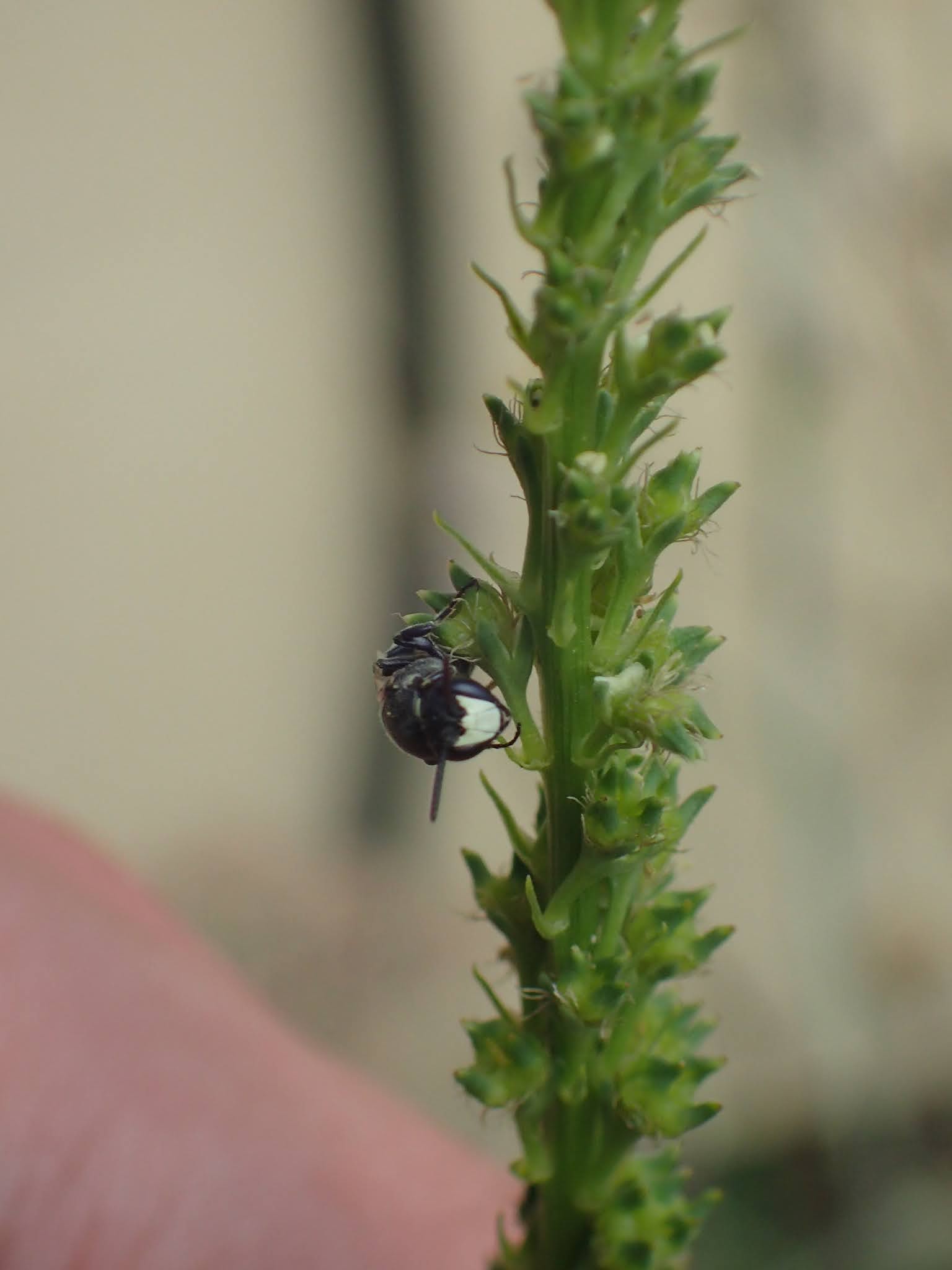
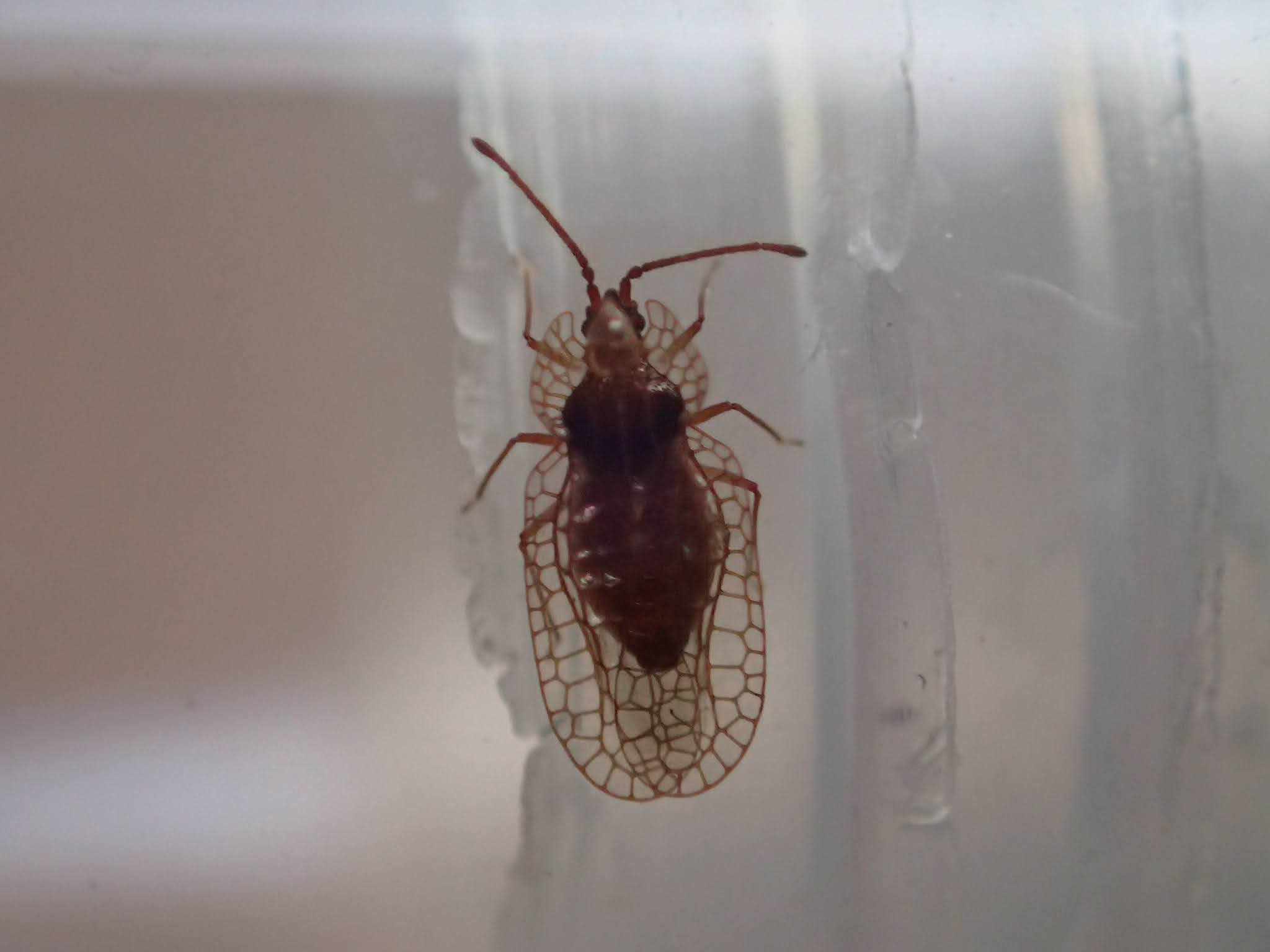
One evening Vanna called me to say that she had found one of smallest inconspicuous ladybirds, an all black species (albeit with tiny hairs), given the appropriate name of Dot Ladybird. In addition, she had also found a lacebug, another group that I am interested in, so I popped round after tea to have a look at both. The ladybird was just as tiny as you would expect, looking all black to the naked eye but covered in golden hairs under a microscope. I had seen several lacebugs, two on thistles and Andromeda Lacebug, but this one, Derephysia foliacea, was a new one for me.


WEST NORFOLK: Grimston & Roydon

Mid July 2020

Having not seen my dad during lockdown, I arranged to meet up outside so we could go for a walk. Having spent the past few months in east Norfolk I decided to head west to Roydon Common and Grimston Warren. I'd not visited the latter site before, so Lukas from the wardening team had very kindly agreed to meet us to show us some of the more interesting bits. We had an excellent morning, including great views of both male and female Black Darter dragonflies, plus various other odonata.


After lunch we checked out an area for Raft Spiders, a relative of the more commonly mentioned Fen Raft Spider, and after a bit of scanning of pools I managed to find one. The site has lots of Round-leaved Sundew so I kept checking for Sundew Plume moth caterpillars, an unusual species that eats this insectivorous plant. At one point I thought I'd found one, but it turned out to be a hollowed-out husk, which had been parasitised by the ichneumon wasp Campoletis trichoptili. Whilst not the species I was looking for, this ichneumon is understandaly rarer than the moth, with only a handful of UK records and new for Norfolk.


A big thank you to Lukas for his help. Both sites are large and we didn't cover too big an area, so another visit next year might be in order to see things like Bog Asphodel and some of the scarcer bee species.

NORWICH: Some mid-July garden wildlife

 Mid-July 2020

A few more additions to the garden list. Some aphids on the Flag Iris on our small pond were fortunately one of the easier to identify species, Aphis newtoni. I was particularly pleased with our first garden record of Anthophora quadrimaculata, one of the flower bees, that was attracted to our Viper's Bugloss. Whilst most of the butterflies in the garden were White spp, I was pleased to see a Meadow Brown. Arge pagana, a sawfly, was also new for the garden.

Next up was a common bug, but again one I'd not recorded in the garden before, Heterotoma planicornis.

A couple of days later and there was some more additions to the garden year list, starting with a Southern hawker flying briefly around the garden. Having seen some female Sphaerophoria hoverflies before it was good to see a male one and confirm that it was Sphaerophoria scripta. A Rosy Tabby moth (Endotrichia flamealis) was disturbed from the lawn. The most interesting species was tiny beetle, with a weird-shaped head. I thought it looked a bit like a trunkless elephant, whilst the books say it is like a monk's cowl. It was a type of Furniture beetle, although having checked with Martin Collier there are apparently two similar species.


NORWICH: Zombie aphids

8th July 2020

A rainy walk back from the city, but I decided to take a different route back and followed the river for a while. This paid off when I noticed a thin leaf mine in a patch of Winter Heliotrope. Back at home I checked it and found that it was caused by the Agromyzid fly Phytomyza tussilaginis, which based on the recording scheme database is new to Norfolk.


There was another interesting find a bit further along, when I found what looked like some very round brown aphids. Online they were recognised as 'aphid mummies', the outer shells of aphids that have been parasitised by tiny wasps. I wasn't able to identify the original aphid or the causer, but still of great interest and something I can now keep a look out for. I also saw the scarce Rustyback Fern in the same place I've seen it in previous years.


NORWICH: Some nice bees

5th July 2020

After completing the WeBS count I detoured home via Jeremy and Vanna's garden. The main reason for the visit was to pick up my copy of Vanna's book "Arthropedia" (previously reviewed on this blog but using a digital copy as publishing and then lockdown restrictions meant I couldn't get a physical copy). True to form there were lots of bees in the garden including a little and large double act with the Hylaeus (Yellow-face) bees. Several male Large Yellow-face Bees (Hylaeus signatus) were on some Weld, whilst Vanna had just caught a Small Yellow-face Bee (Hylaeus pictipes). Also in the garden was one of the beautiful Hedychrum nobile/niemelai ruby-tailed wasps, and because it would be rude to go home without seeing something new Vanna caught and confirmed a Colletes similis bee that was feeding on some flowers in the garden (a species I've probably seen before but has to be caught and keyed to be sure).


WHITLINGHAM: July WeBS counts plus some Fiddle Dock

5th July 2020

Another early-in-the-month WeBS date, and back into the swing of things now. Nothing out of the ordinary seen in terms of birds, although the Barnacle Goose is still present - it will be a whole year next month. There were still large numbers of summer wildfowl, the 2020 counts below along with those from the past three years. In particular note that both Greylag and Canada Goose numbers are double the 2019 counts, which were already higher themselves than the previous two years. Egyptian Goose numbers are roughly stable, whilst Mallard numbers were lower.

Selected counts:
Mute Swan 84 (2019: 108, 2018: 114, 2017: 85)
Greylag Goose 186 (2019: 91, 2018: 72, 2017: 26)
Canada Goose 137 (2019: 71, 2018: 9, 2017: 32)
Egyptian Goose 25 (2019: 31, 2018: 8, 2017: 33)
Mallard 68 (2019: 91, 2018: 83, 2017: 155)

I should also mention that several of the Mute Swans had orange leg rings with black lettering. This is a long standing East Anglian ringing project that has received new emphasis recently, with UEA Ringing Group member Stephen Vickers ringing around 50 swans locally. If you do see one and can read the ring then please report it to the scheme organiser Mike Reed using the details on this link http://www.cr-birding.org/node/1413 (if you see it at Whitlingham I would appreciate hearing about it too!)

As always I kept a look out for anything of interest on my way round. Batia lunaris was a smart little moth on the hedge near the car park, whilst Fiddle Dock was a new species for my site plant list, as was Short-fruited Willowherb (I'd genuinely not seen the former here before, whilst I had seen the latter but not identified it correctly). The small soldierfly Pachygaster atra was already on the site list having been recorded by Tim Hodge but was new for me, and finally using the new ALS lure I confirmed that Lunar Hornet Moths are present on site. I had long thought they probably were, but had been unable to find any exit holes - perhaps they are lower down the trunk than Hornet Moth, and therefore hidden in the udnergrowth.

Batia lunaris

Fiddle Dock

Short-fruited Willowherb
Pachygaster atra
Ceratapion gibbirostre (a long pointy weevil on thistles)
Lunar Hornet Moth

NORTH NORFOLK: Overstrand beach

Early July 2020

We hadn't been to the coast since the start of February, so decided that instead of going for a woodland walk we would have a stroll on the beach. Deciding to avoid the busier ones we picked Overstrand, which worked out quite nicely. There were surprisingly few shells and things along the strandline, but the groynes proved interestingly. They were covered in Sprial Wrack, and with a bit of searching we found several Sea Slaters tucked away in the cracks. I also noticed a thin orangey sandhopper, which unfortunately could only be identified down to a species pair. In addition there were lots of interesting flies on the beach with white flashes on their faces. Tony Irwin identified them as Aphrosylus celtiber, a scarce species with few Norfolk records.


NORWICH: Some more commute highlights

1st July 2020

A pleasant walk back from work, no particularly scarce species seen but some things of note, including a Bee-wolf and only my second sighting of the hoverfly Riponnensia splendens.

Flowering Rush - a rubbish picture of a fairly scarce plant, growing in the river near Barn Road
A young Field Grasshopper, developing a nice pink colour
Rose Campion - a naturalised garden plant
Common Yellow-face Bee
Volucella zonaria
Riponnensia splendens
Bee-wolf

BIRDS ON BEER: Magpie Brewery

End of June 2020

During May I had placed an order for some beer from Northumbria, including some of the excellent From The Notebook seabird themed beers. For June I decided to get a mixed order from Magpie Brewery, which as you'd expect specialise in Corvid-themed beers. As well as a variety of Magpie beers I got to try Jay IPA and Raven Stout, all of which were very good. The other brewery that I'd love to order from are Thames Side Brewery who do Egyptian Goose, Cormorant and Wryneck ales amongst others, but at the moment they don't ship their bottles around the country.


NORWICH: Garden lockdown list days 98 to 101 (the last day by day summaries)

DAY 98 - 27th June 2020

A Sphaerophoria hoverfly was present in the back garden, but it was a female, which cannot be assigned to species.

DAY 99 - 28th June 2020

Nothing new added

DAY 100 - 29th June 2020

205. Red Admiral - one flew through the garden

DAY 101 - 30th June 2020

A handful of new additions, plus a fly that looks like it should be fairly distinctive. There were beginnings of a rust on Creeping Buttercup, but with several rusts on that host I've not added that. An Ophiomya sp mine also hasn't made it onto the list.


206. Nemorimyza posticata (leaf mine in Canadian Goldenrod)
207. Dicyphus epilobii (a small bug associated with Great Willowherb)
208. Common Earwig
209. Nephrotoma flavescens (cranefly)
210. Steatoda nobilis (spider)


Given the various milestones - the country no longer being in full lockdown, over 100 days passes and over 200 species seen, I shall continue into July noting the new gardn species seen, but no longer note the day number or post for days when nothing new is added from here onwards.


NORTH-EAST NORFOLK: The best of Bacton Woods

Late June 2020

In the third of our family woodland walks, we decided to go to Bacton Woods, one of my old haunts. Having crossed over one of the main paths we crossed onto a ride with a mixture of coniferous and deciduous trees with some nice dappled sunlight. There were some nice areas of bramble, and a Silver-washed Fritillary flew across the path (you didn't get them here when I was growing up). Further along we saw the first of many White Admirals, probably my favourite butterfly although I've not seen Marsh Fritillary yet.


Rose was enjoying herself, with some running backwards and forwards, bark rubbings and splashing. She even handled both losing a welly in some thick mud and a nettle sting with admirable stoicism. I found some nice insects too, including the micro moth Tinea fulvella, the hoverfly Volucella inflata, the spider Diaea dorsata and the longhorn beetle Stictoleptura rubra.


On the way back to the car I noticed some interesting galls on Red Oak, which I think are caused by Taphrina caerulescens. We had lunch in the car, where a Wasp Beetle briefly landed, and whilst eating my food I was watching insects on the bramble nearby. I decided that it looked like an interesting bramble so I took a series of photos, from which Alex Prendergast (the BSBI Rubus referee for this area) was able to identify it as Rubus adamsii, a scarce species in East Anglia but one known from Bacton Woods.